Chapter one · Kombucha Singapore
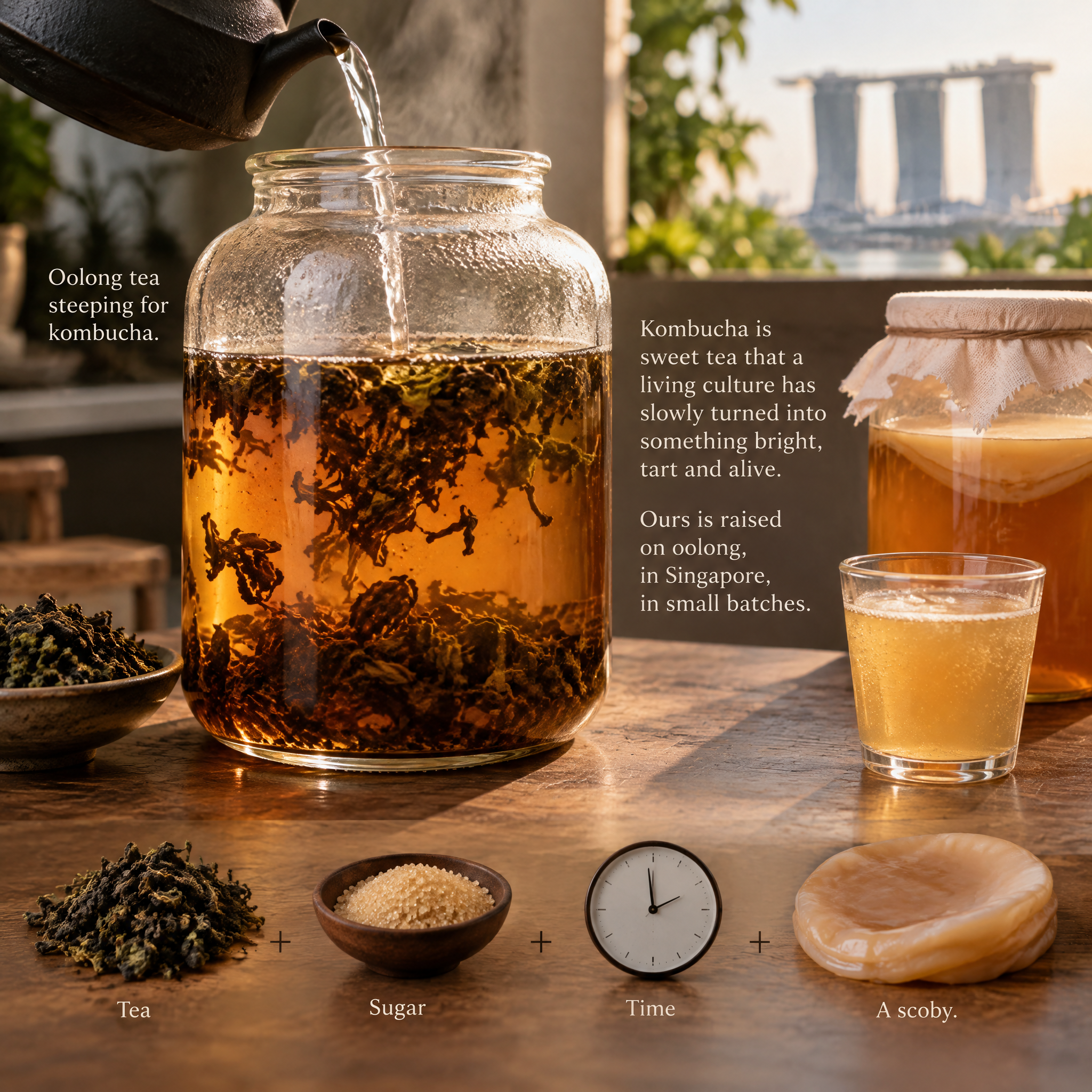
Tea, sugar, time, and a mother.
Kombucha is sweet tea that a living culture has slowly turned into something bright, tart and alive. Ours is raised on oolong, in Singapore, in small batches.
A short history
Two thousand years of a very patient drink.
~220 BC
First records of fermented tea in north-east China, prized for its lift and long keeping.
1900s
The drink travels the Silk Road west through Russia and central Europe; the mother is passed hand to hand.
Today
Our kombucha Singapore is raised in a licensed brewery on oolong and black tea, one 21-day batch at a time.
How we raise it
Twenty-one days, no shortcuts.
1
Alive, unpasteurised
Billions of live cultures in every bottle. We never heat-treat, so it must stay chilled — and it tastes like it.
2
Less sugar, more time
The mother eats most of the sugar over a 21-day ferment. Under 4g per 100ml, no sweeteners added after.
3
Brewed in Singapore
Small-batch kombucha Singapore, bottled the week it ships, delivered cold. Never more than a few days from tank to fridge.
The range
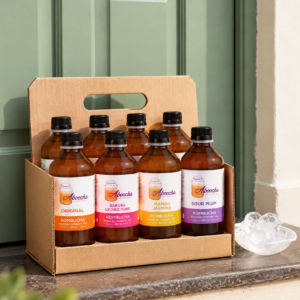
Kombucha Singapore: pick your flavour
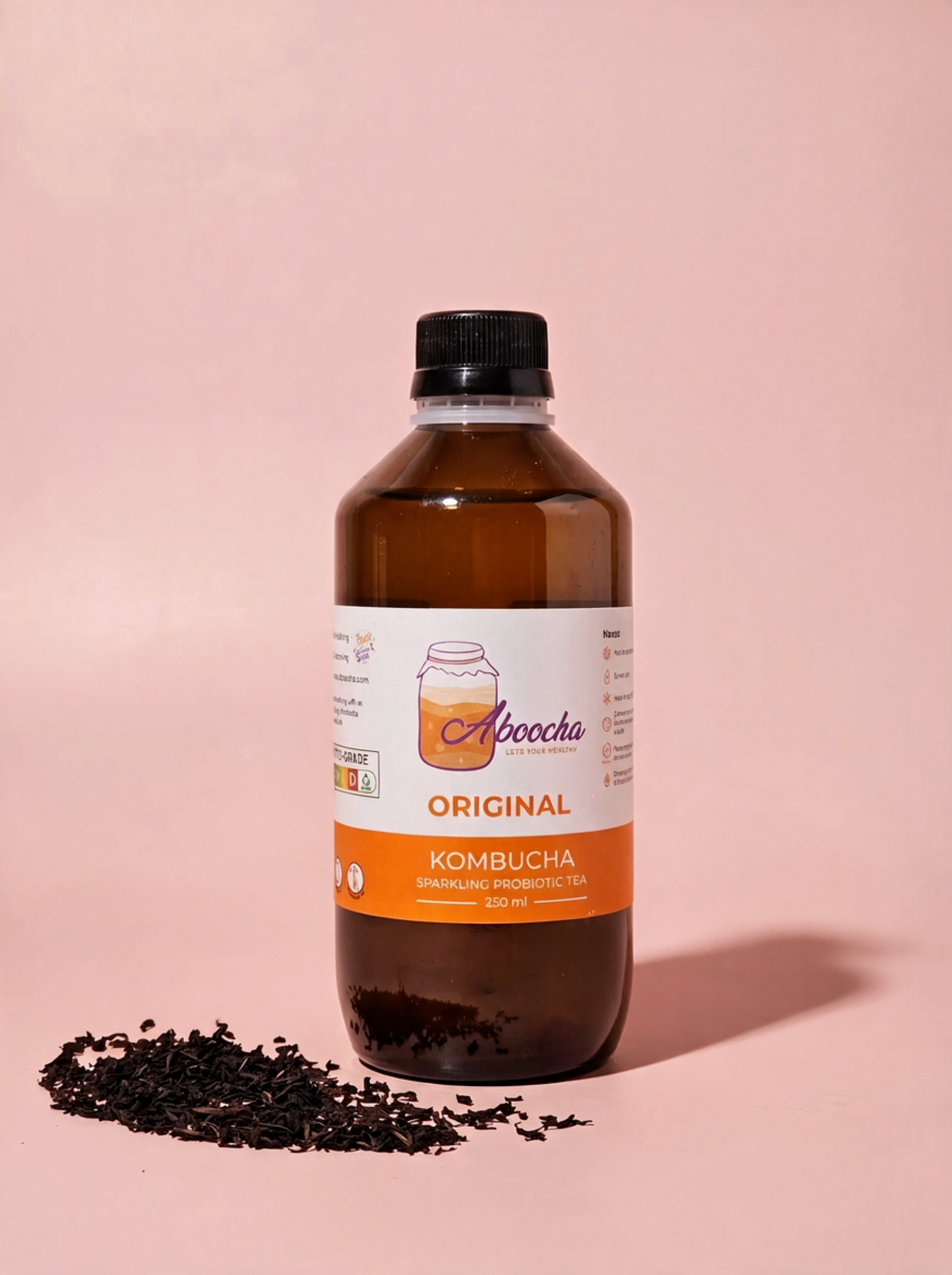
No. 01 · Kombucha
Original — $6.80
Oolong-based, clean and bright
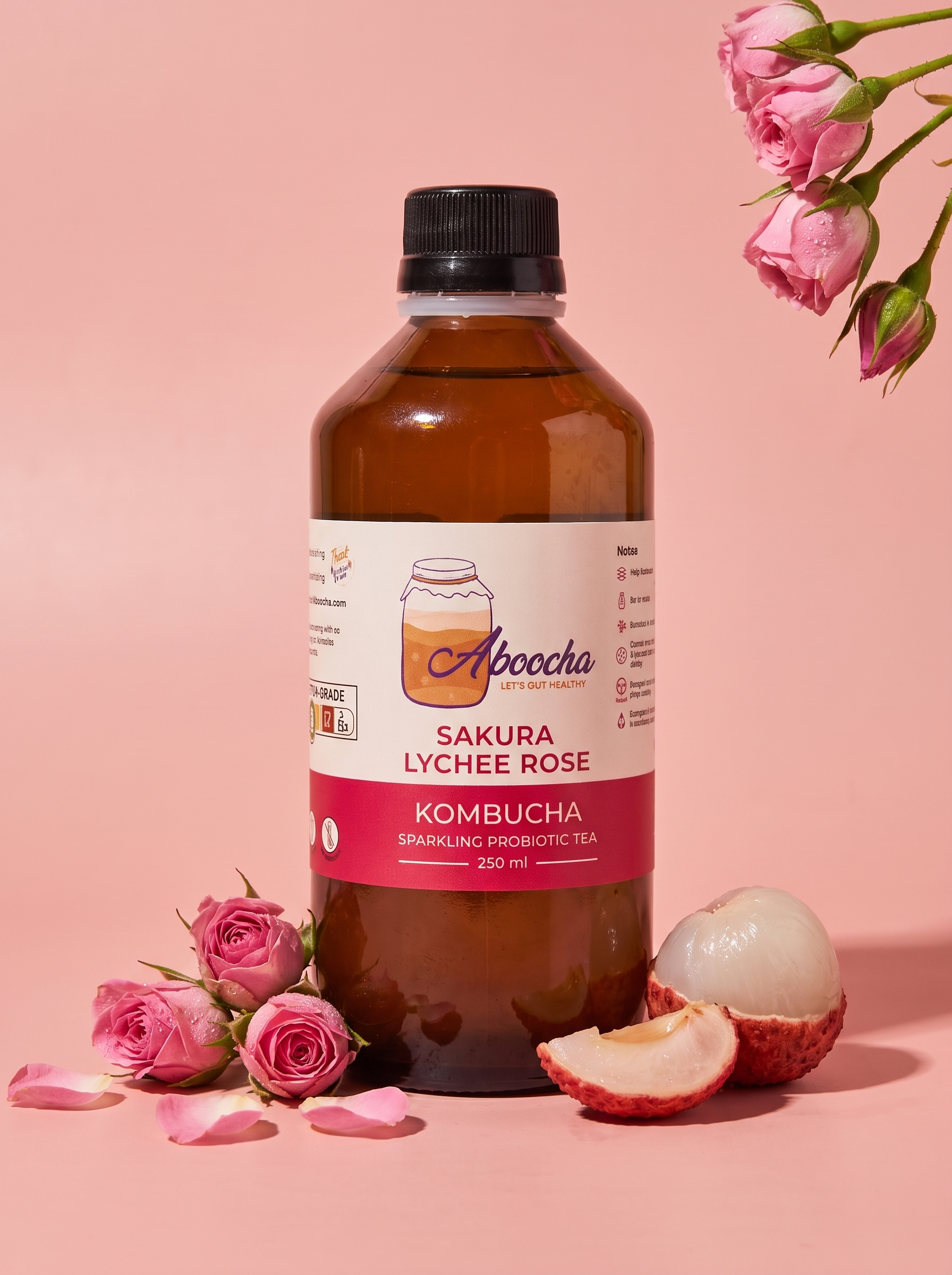
No. 02 · Kombucha
Lychee Rose — $6.80
Floral, soft, a little sweet
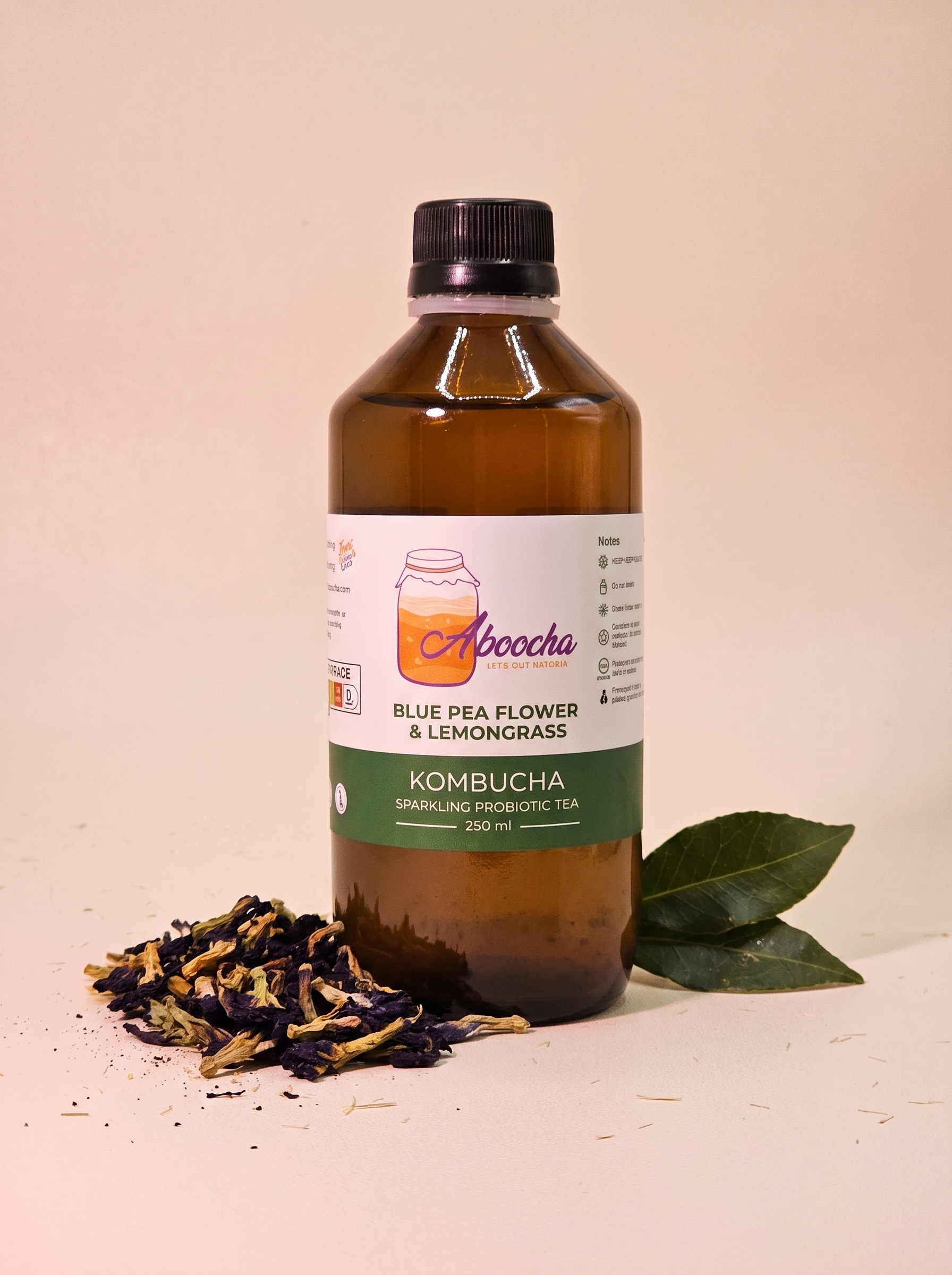
No. 03 · Kombucha
Blue Pea & Lemongrass — $6.80
Bright citrus-grass, violet pour
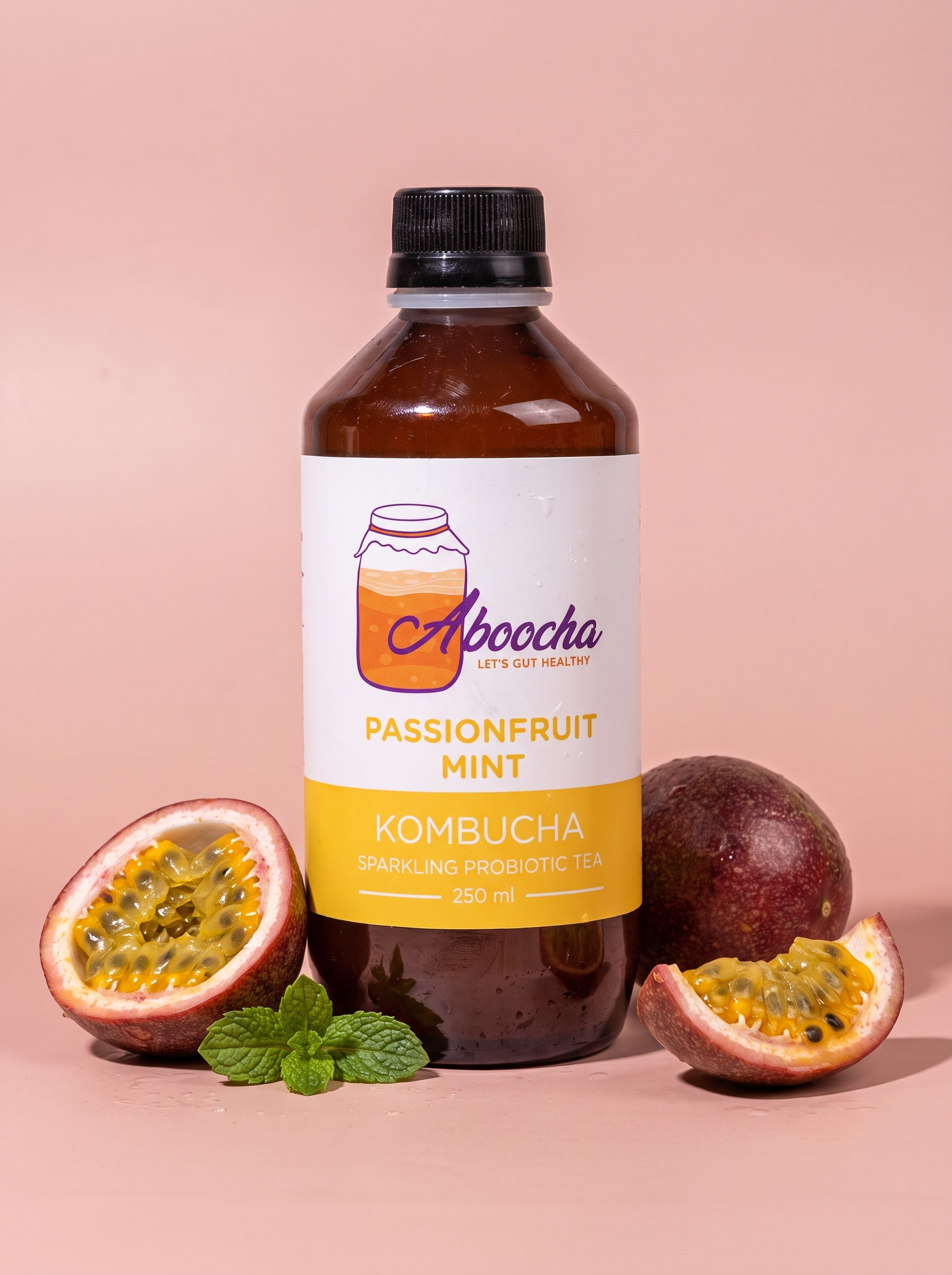
No. 04 · Kombucha
Passionfruit Mint — $6.80
Tart passionfruit, garden mint
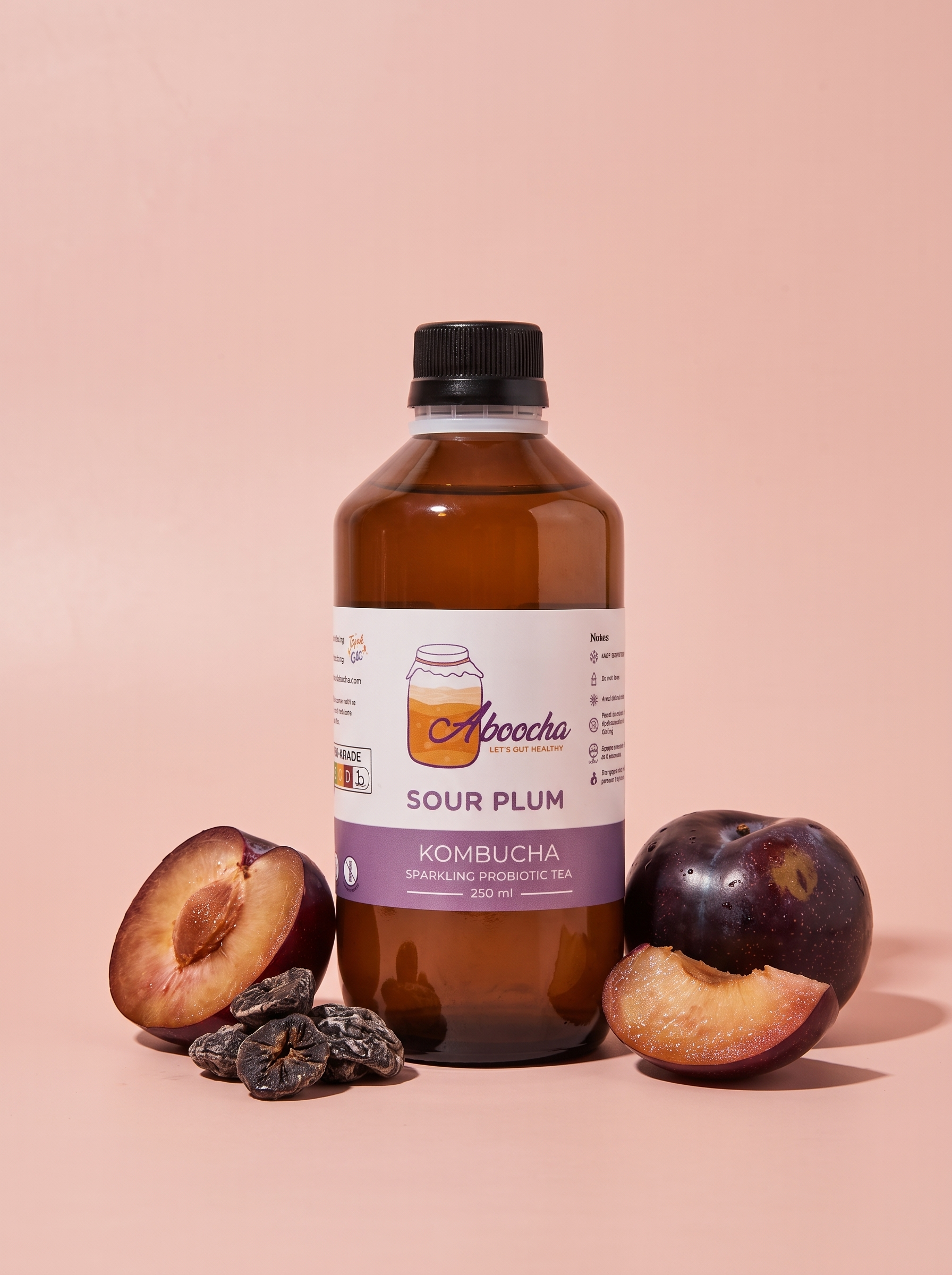
No. 05 · Kombucha
Sour Plum — $6.80
Tangy · crowd favourite
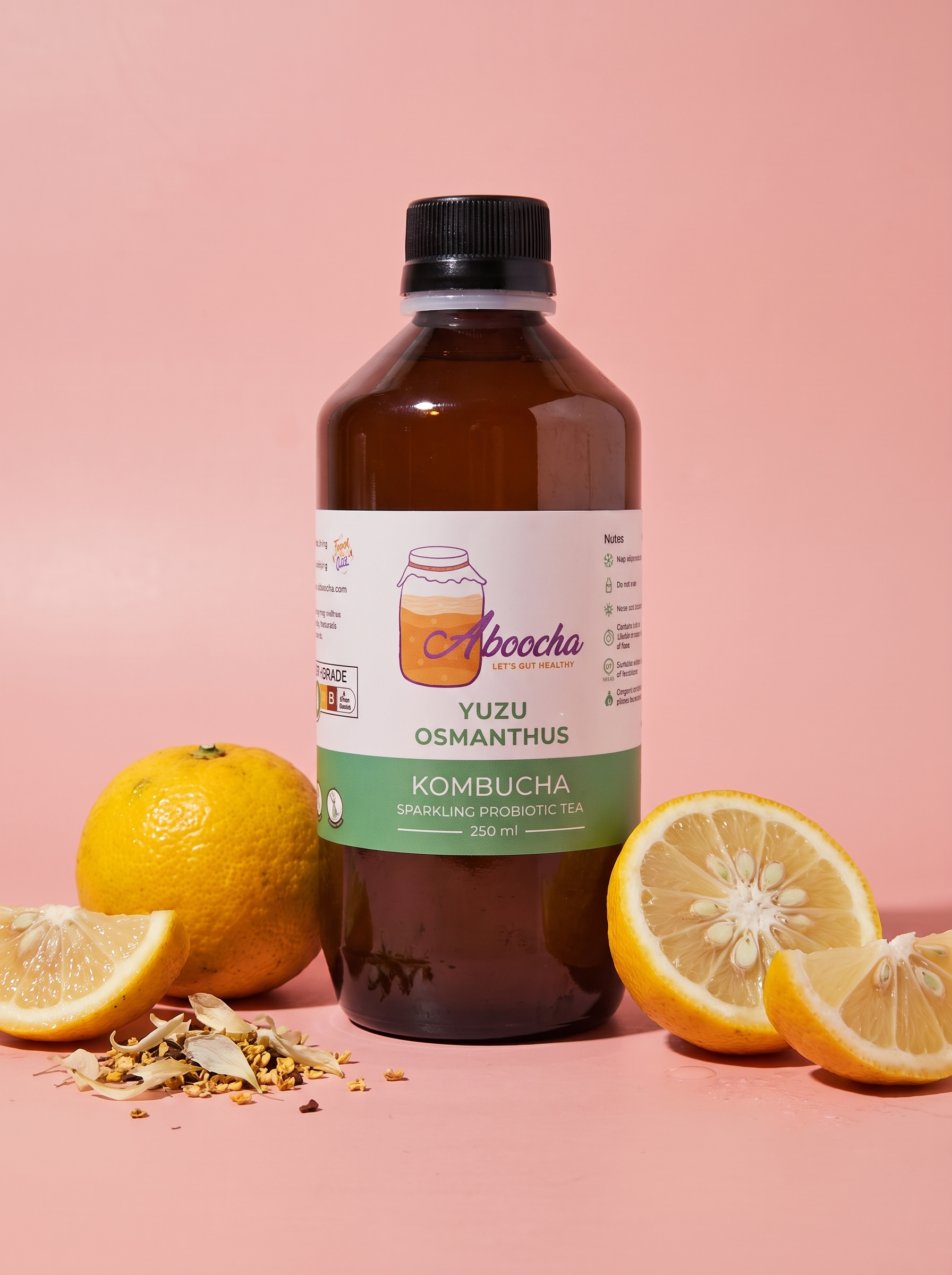
No. 06 · Kombucha
Yuzu Osmanthus — $6.80
Citrus · new
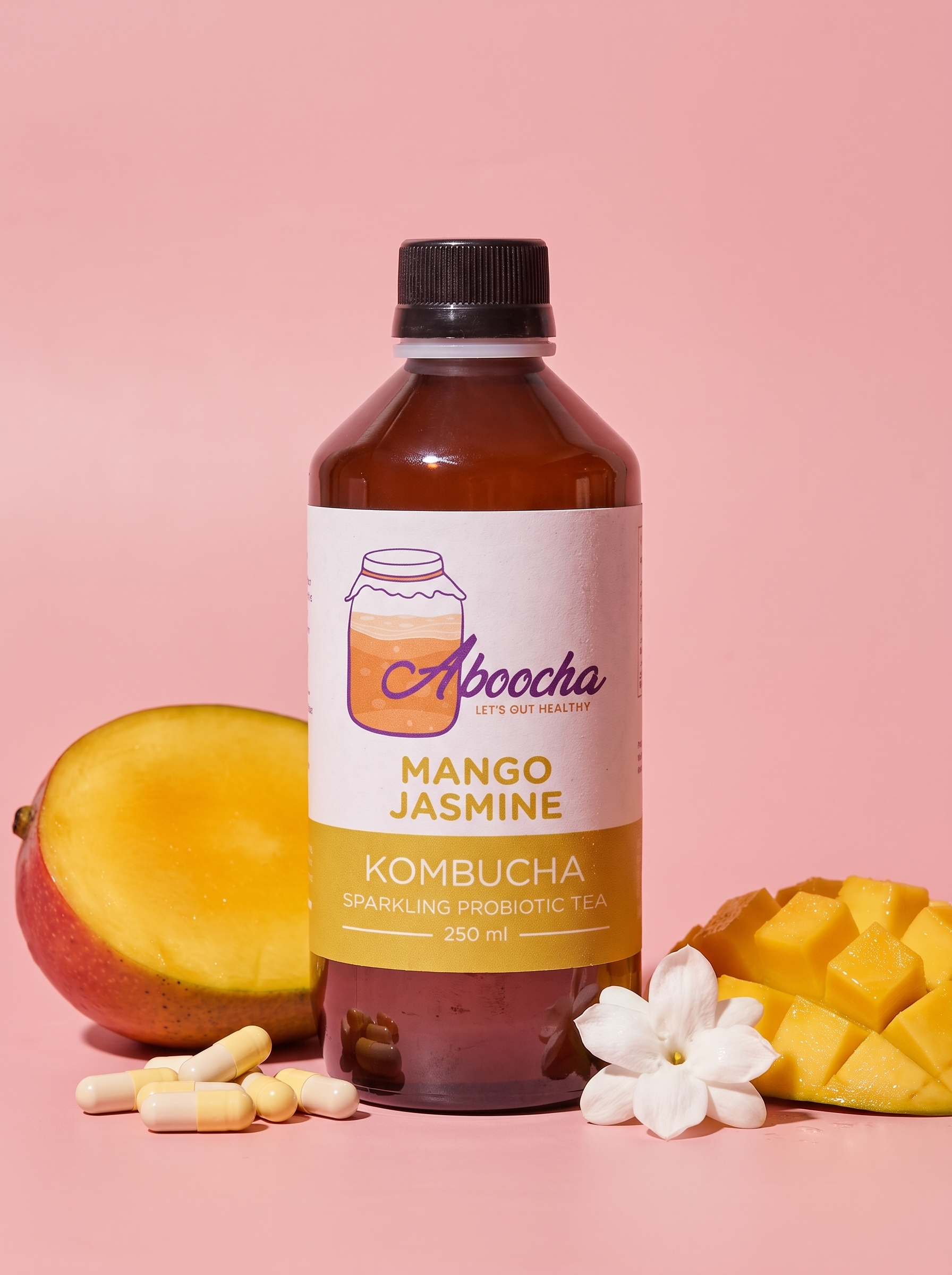
No. 07 · Kombucha
Mango Jasmine — $6.80
Sweet-floral
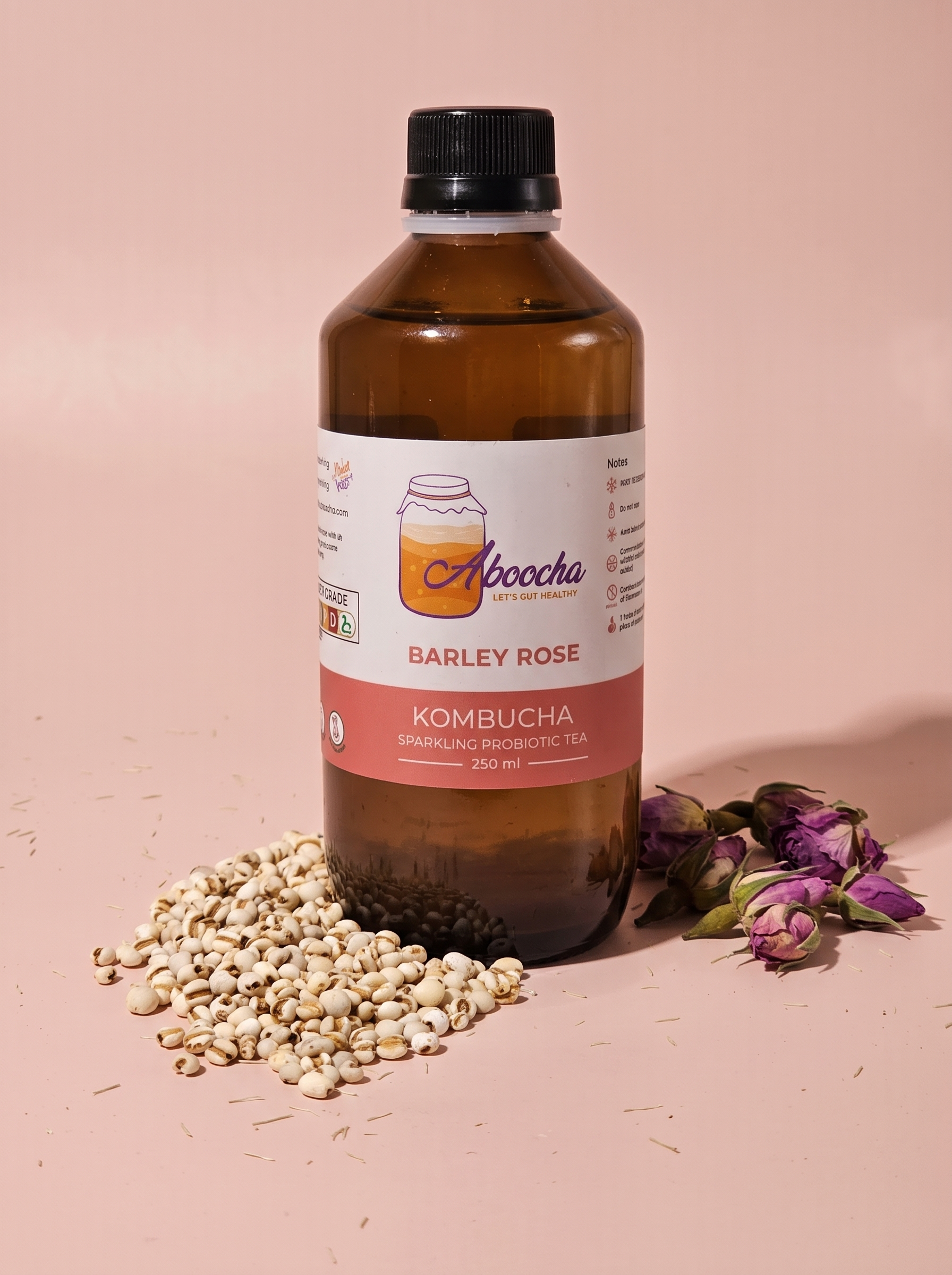
No. 08 · Kombucha
Barley Rose — $6.80
Roasty · rosy
Why people drink it
What a living drink does for you.
We are brewers, not doctors. Here is what is in the bottle, and what the research so far suggests it does — no more, no less.
- Live cultures — a diverse mix of bacteria and yeasts, the same family found in yoghurt and kefir.
- Organic acids — acetic and gluconic acids from the ferment, behind the tartness and the long shelf life.
- Tea polyphenols — the antioxidants of oolong and black tea carry through the ferment.
- A soda swap — a fraction of the sugar of a soft drink, with real fizz and real flavour.
Kombucha is a food, not a medicine. It contains trace alcohol (under 0.5% ABV) and caffeine from the tea. If you are pregnant, immunocompromised or unsure, ask your doctor first.
In every bottle
Five things. You can pronounce all of them.
Filtered water, oolong and black tea, organic cane sugar, our mother culture, and whatever real fruit, flower or root gives each flavour its name. Nothing else.
Filtered water · Oolong & black tea · Organic cane sugar · Mother culture · Real fruit & flower
The benefits, in short
What drinking kombucha can offer.
The short version, backed by published research where it exists. The small numbers link to the sources below.
- Live cultures in every bottle. Raw, unpasteurised kombucha carries the living bacteria and yeasts of its ferment. Researchers define fermented foods by exactly this microbial activity.[2]
- Part of a fermented-food diet. In a Stanford trial, adults who ate more fermented foods, kombucha among them, ended up with a more diverse mix of gut microbes.[1]
- Polyphenols from real tea. Brewed on black and oolong tea, a natural source of catechins and other tea polyphenols, some of the most studied plant compounds in the human diet.[3]
- Organic acids from fermentation. The culture turns sugar into acetic, gluconic and other organic acids, which give kombucha its clean, tart bite.
- A lower-sugar swap for soft drinks. 1–3% sugar across our range and Nutri-Grade A–B, with natural fizz instead of syrup.
- A grown-up alcohol-free option. Complex enough to replace a beer or wine at dinner, with only trace alcohol (under 0.5% ABV).
- Honest about the science. Human research on kombucha itself is still early; most studied effects come from lab and animal work, and reviewers have called for more trials in people.[4]
Sources
- Wastyk et al. (2021). Gut-microbiota-targeted diets modulate human immune status. Cell. Stanford University. Read the study →
- Marco et al. (2021). The ISAPP consensus statement on fermented foods. Nature Reviews Gastroenterology & Hepatology. Read the study →
- Khan & Mukhtar (2018). Tea polyphenols in promotion of human health. Nutrients. Read the study →
- Kapp & Sumner (2019). Kombucha: a systematic review of the empirical evidence of human health benefit. Annals of Epidemiology. Read the study →
This summary describes published research on fermented foods and tea, not the effects of Aboocha products, and is not medical advice. Kombucha contains caffeine and trace alcohol. If you are pregnant, immunocompromised or have a medical condition, check with your doctor before adding fermented drinks to your diet.
Keep reading
Kombucha Singapore, answered.
Guides from our journal on buying, storing and drinking kombucha in Singapore, each written from the sources we could verify.
- Kombucha liver and kidney risks: what the case reports found and who should ask a doctor.
- Kombucha Singapore price: what a bottle costs, bundles and delivery.
- Kombucha delivery in Singapore: prices and service compared.
- Kombucha at Singapore supermarkets: what we could verify about NTUC, Cold Storage and RedMart.
- Best kombucha in Singapore: what to look for and where to buy.
- Is kombucha halal and legal in Singapore: and who to ask to be sure.
- Kombucha side effects: the reported risks and who should be careful.
- Kombucha and medication interactions: what to ask your pharmacist first.
- Is kombucha safe for kids: a parent's guide.
- Can you drive after kombucha: what the alcohol content means.
- Does kombucha need refrigeration: label first, then storage.
- Does kombucha have caffeine: real numbers.
- Kombucha calories: per 100 mL, per bottle and versus cola.
- Kombucha and blood pressure and cholesterol: what the research does and does not show.
- Can you drink kombucha at work: what to know about raw bottles and the office.
- Kombucha mocktail recipes for parties: non-alcoholic ideas.
- Kombucha for athletes: does it help post-workout recovery.
Buy kombucha Singapore online.
Order kombucha Singapore online with delivery across the island, or subscribe and save 15% — a case of 12, any mix of flavours, every fortnight, delivery always free.
Subscription bundles
Mix any flavours across Kombucha and Jun Tea in a monthly subscription box.