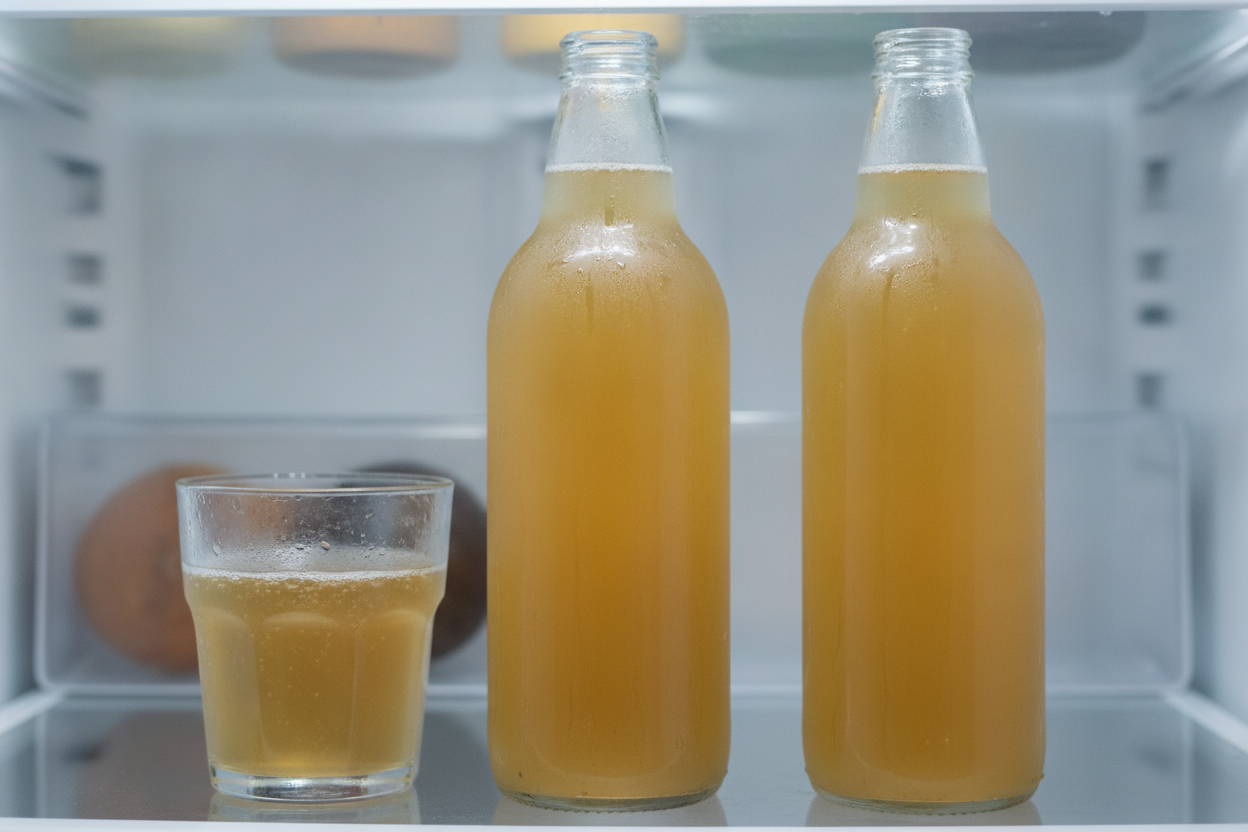
Kombucha liver and kidney safety is a fair question, and the honest answer is short: the evidence is a handful of case reports, not studies. A case report describes one patient. It can raise a warning, but it cannot tell us how often a problem happens or prove that kombucha caused it. This guide sets out what the reports say, what they do not show, and who should ask a doctor first.
We brew kombucha in Singapore, so we are not neutral. We sell kombucha Singapore and we label which statements are our own and have not been independently audited. We make no claim that kombucha protects or harms the liver or kidneys. We only report what we could read, and we mark what we could not verify.
TL;DR: Kombucha liver and kidney evidence comes from case reports only. One 2023 report describes severe liver injury in a woman who drank about 32 ounces of kombucha a day for three months, alongside wine. A 2009 report describes lactic acidosis and acute kidney failure in a man with newly diagnosed HIV. These reports cannot show how common problems are. If you have liver or kidney disease, take medicines or are immunocompromised, ask your doctor before making kombucha a habit.
Table of contents
Kombucha liver and kidney risks: the short answer
If you only read one section, make it this one. Here is where the evidence stands on kombucha liver and kidney questions, based on the sources we could read:
- Liver: we found case reports of liver injury in people who drank kombucha, including one with severe damage.
- Kidney: we found one case report that mentions acute kidney failure, in a person with another serious condition.
- Frequency: case reports cannot tell us how common any of this is.
- Cause: they cannot prove kombucha was the cause, and some involve other factors.
- Benefits: nothing here is a claim that kombucha helps either organ.
The sections below go through each report so that you can judge the kombucha liver evidence yourself rather than rely on our summary.

What kombucha liver evidence exists? Case reports only
When people search for kombucha liver risks, they usually find strong claims on both sides. The evidence is narrower than either side suggests. In the sources we read, the kombucha liver literature consists of individual case reports, plus reviews that repeat them.
A case report is a useful early signal. It tells doctors that a pattern may exist and is worth watching. It is the weakest form of evidence for judging risk, because it has no comparison group and no denominator. We do not know how many people drank kombucha without any problem. Anyone judging kombucha liver safety should start from that limit.
The 2023 liver case report itself points out that two systematic reviews it cites found no studies showing kombucha-related health benefits. We are repeating that as the authors state it, because we did not read those reviews. The same paper lists reported problems including allergic reactions, mild liver toxicity and lactic acidosis.
The kombucha liver case report: 32 ounces a day
The most detailed kombucha liver report we found is a 2023 case report in Gastro Hep Adv titled "Kombucha-Induced Massive Hepatic Necrosis". It describes a 42-year-old woman with no past medical history who was referred for abnormal liver tests after weeks of fatigue.
During three months at home in the pandemic, she drank 10 to 15 ounces of wine and 32 ounces of kombucha daily. That is about 946 mL of kombucha a day by our own arithmetic. She had yellowing of the eyes. Tests for hepatitis A, B and C were negative, and paracetamol and alcohol were undetectable in her blood on arrival.
A biopsy showed massive liver cell death. Kombucha was stopped, she received treatment for suspected drug-induced liver injury, and she was discharged after six days. Her liver tests kept improving, and at the last follow-up in the paper she had not needed a transplant. This is the strongest kombucha liver signal we found. The authors judged the kombucha the likely cause, but they also say her heavy alcohol intake may have contributed.
That caveat matters. A person drinking close to a litre of kombucha and wine every day is not a typical drinker. Still, the authors conclude that much is unknown about how much can be safely ingested, and that people should be cautious. We think that is a fair reading.
Other kombucha liver reports, as quoted
The liver paper cites earlier reports, and we repeat them only as quoted, because we could not read all of them. It says another patient developed cholestatic hepatitis after drinking kombucha. We could read the abstract of a 2016 case report in South Dakota Medicine on hepatotoxicity linked to kombucha, which says the few case reports available raise concern about life-threatening or adverse effects.
The liver paper also describes two people in Iowa in 1995 who drank large amounts of kombucha and developed an unexplained illness with lactic acidosis, one of whom died. It cites a US government report for this. We did not open that report, so we cannot add detail beyond what the case-report authors wrote.
Finally, the paper says the US Food and Drug Administration relates reported cases to existing medical conditions, overconsumption and poor handling of fermented products. We did not verify that statement at its source. Taken together, the kombucha liver picture is a few reports across about three decades, which is why we call it a signal and not a rate.

Kombucha kidney evidence: one case report
On the kidney side, the evidence is thinner. The clearest example we found is a 2009 case report in the Journal of Intensive Care Medicine describing a 22-year-old man, newly diagnosed with HIV, who developed fever, breathlessness and confusion within about 12 to 15 hours of drinking kombucha.
His lactate was 12.9 mmol/L and his creatinine was 2.1 mg/dL, and the authors describe hyperthermia, lactic acidosis and acute renal failure. They conclude that the limited evidence raises concern and that consumption should be discouraged. Notice what that person had: a new diagnosis of a serious infection, which is itself a reason for kidney and metabolic problems.
We did not find a kombucha-specific case report of kidney injury in an otherwise healthy person, and we found no kombucha kidney study in people with chronic kidney disease. That is a statement about our search, not proof that none exists. If you have kidney disease, the practical step is to ask your kidney doctor or a renal dietitian rather than rely on any article, including this one.
Lactic acidosis: the report behind many kombucha warnings
Both the liver paper and the kidney report mention lactic acidosis, a build-up of acid in the blood. A 2017 case report in BMJ Case Reports describes a 54-year-old woman with mild asthma who had been breathless for 10 days. Her blood tests showed severe lactic acidosis, with a lactate of 14.0 mmol/L.
She drank kombucha daily for several months, and she fermented it at home from the same culture for many months. Her kidney and liver function were normal. No other cause was found. The authors judged the small dose of salbutamol she received unlikely to explain it. Her lactate normalised within 18 hours with fluids, and she was advised to stop kombucha.
Two things stand out. First, this report involves home-brewed kombucha, which varies far more than a commercial product. Second, the authors state that there is little scientific data on kombucha side effects. A single case cannot settle whether kombucha causes lactic acidosis, but it is why doctors ask about it.
What these kombucha liver reports do not show
It is easy to read too much into case reports, in either direction. These are the limits we want you to keep in mind:
- No rate: there is no count of how many people drink kombucha without harm.
- No proof of cause: other factors, including alcohol and illness, were present in some cases.
- No product match: they do not tell us anything about one brand over another.
- No safe dose: the authors themselves say the safe amount is unknown.
- No benefit: nothing here suggests kombucha helps the liver or kidneys.
Trials of kombucha in healthy people do not fill this gap. A 2026 randomised trial in beginner runners of green tea kombucha excluded people with hepatic or renal disorders, according to its methods. So the usual research tells us little about kombucha liver or kidney safety in people who already have those conditions.

Home brewing, overconsumption and kombucha liver safety
The reports point to three patterns: heavy daily intake, home brewing and pre-existing illness. We cannot say any of them caused harm, but they are sensible things to avoid or discuss with a doctor.
Quantity first, because it stands out in every kombucha liver report we read. The liver patient drank about 946 mL a day for three months. The kombucha liver report says that, in earlier cases, people drank excessive amounts for more than a couple of weeks. For context, a 2026 randomised trial of green tea kombucha in people with excess weight gave participants 200 mL a day for 10 weeks, and the authors describe the group as having no apparent comorbidities. That is a research dose, not a recommendation.
Home brewing next. The BMJ patient used a home culture. Brewing at home can allow contamination or an unmeasured ferment, which is why our guide to whether kombucha needs refrigeration and our post on kombucha alcohol matter. We do not claim a commercial bottle is risk-free.
Who should ask a doctor before drinking kombucha?
We found no authoritative list of who should not drink kombucha that we could verify, so we will not invent one. What we can say is that the reports involve people with other conditions, and our own pages ask certain people to check first. Please ask a doctor or pharmacist if any of these apply to you:
- Liver disease or abnormal liver tests: any kombucha liver concern should go to your hepatologist.
- Kidney disease: ask your kidney doctor or renal dietitian.
- A weakened immune system, including HIV: our own page says to ask a doctor first.
- Pregnancy: our own page says to ask a doctor first.
- Regular medication: read our guide to kombucha and medication interactions and ask your pharmacist.
- Heavy alcohol intake: the liver case combined kombucha with daily wine.
Our guide to kombucha side effects covers the wider list of reported effects. For babies and children, see our article on whether kombucha is safe for kids.
Warning signs worth taking seriously
We are not doctors, so this is general caution drawn from the symptoms in the reports. The liver patient had weeks of fatigue and yellow eyes. The lactic acidosis reports involved breathlessness, fast breathing, fever and confusion.
If you feel unwell after drinking kombucha, and especially if you notice yellowing of the skin or eyes, unusual breathlessness or confusion, stop drinking it and seek medical care promptly. Tell the doctor exactly what and how much you drank. Do not wait to see whether it passes. These are signs taken from the reports, not a checklist for diagnosing a kombucha liver problem at home.
This is not a diagnosis tool, and most people who feel an upset stomach after a new drink have nothing serious. Our point is only that these particular signs deserve a proper check.
Our own statements about kombucha and the liver
Aboocha brews kombucha and jun tea in small batches in Singapore. These are our own statements and have not been audited by an independent party.
| Item | What we state |
|---|---|
| Health claims | We make no claim that kombucha helps or harms the liver or kidneys |
| Live culture | Raw and unpasteurised |
| Alcohol | Trace, under 0.5% ABV, our own stated figure, not independently audited |
| Sugar | About 1-3%, Nutri-Grade A-B, per our nutrition panels |
| Storage | Keep chilled; we deliver cold |
| Who should ask first | People who are pregnant or immunocompromised should ask a doctor first |
Our position on kombucha liver safety is simple: we do not claim benefit, we do not claim harm, and we tell you to ask a doctor if you have a condition. Because alcohol matters for the liver, read our plain-language guide on kombucha and alcohol. It explains why the figure is a trace and not zero. You can browse the Original kombucha or the shop if you decide kombucha is right for you.
Common mistakes with kombucha liver and kidney claims
- Treating case reports as a rate: they cannot say how common problems are.
- Treating case reports as proof: other causes were present in some.
- Using kombucha to treat liver or kidney disease: we found no evidence for that.
- Ignoring quantity: a litre a day is not the same as a small glass.
- Skipping the doctor: your own liver and kidney tests matter more than any article.
Avoiding these keeps the kombucha liver question in proportion, neither alarming nor dismissive.
What we checked and what we could not
- Checked: the 2023 liver case report, the 2017 BMJ lactic acidosis case report, the abstract of the 2009 kidney case report, the abstract of the 2016 hepatotoxicity case report and the methods of a 2026 trial of green tea kombucha.
- Quoted, not read: the earlier Iowa 1995 report, the FDA statement and the systematic reviews, which we repeat only as the case-report authors describe them.
- Could not find: a kombucha-specific study of kidney disease, a safe daily amount, and any rate of liver or kidney problems.
- Our own statements: everything labelled as ours.
This article is general information, not medical advice. If you have liver or kidney disease, take medication or feel unwell, talk to a doctor or pharmacist.
Is kombucha bad for your liver?
We found case reports of liver injury in people who drank kombucha, including one with severe damage after about 32 ounces a day for three months alongside wine. Case reports cannot show how common this is or prove cause. We found no evidence that kombucha helps the liver.
Can kombucha cause liver damage?
It has been reported, but not proven in general. A 2023 case report links severe liver injury to heavy kombucha intake, while noting heavy alcohol intake too. Earlier reports describe cholestatic hepatitis and mild liver toxicity. The authors say the safe amount is unknown.
Does kombucha detox the liver?
We found no evidence for kombucha liver detox claims. The only kombucha liver evidence we found is case reports of harm, and the authors of those reports say much is unknown. Do not use kombucha to treat liver disease, and ask your doctor about any liver concern.
Is kombucha safe for kidneys?
We found no kombucha-specific kidney study. One 2009 case report describes acute kidney failure with lactic acidosis in a man with newly diagnosed HIV. If you have kidney disease, ask your kidney doctor or a renal dietitian before drinking it.
What are kombucha poisoning symptoms?
The reports describe fatigue and yellow eyes, breathlessness, fast breathing, fever and confusion. These are general signs and not a diagnosis. If you feel unwell after drinking kombucha, stop and seek medical care, and tell the doctor what and how much you drank.
Who should not drink kombucha?
We found no verified official list. The reports involve people with other conditions, and our pages ask pregnant or immunocompromised people to ask a doctor first. If you have liver or kidney disease or take medication, check with a doctor or pharmacist.
How much kombucha is too much?
Nobody has established a safe daily amount, and the liver case authors say the safe amount is unknown. One report involved about 946 mL a day for three months. A 2026 trial used 200 mL a day for 10 weeks in people with excess weight and no apparent comorbidities.
Does kombucha contain alcohol that affects the liver?
It contains a trace from fermentation. Our own stated figure is under 0.5% ABV, not independently audited. Lab studies of other kombucha have found higher values, so treat it as not zero, and read our guide on kombucha and alcohol.
Is store-bought kombucha safer than home-brewed?
We cannot say it is risk-free, but home brewing varies more. The lactic acidosis report involved home-fermented kombucha. Keep raw bottles chilled and read the label. Our shop page has our own storage guidance.