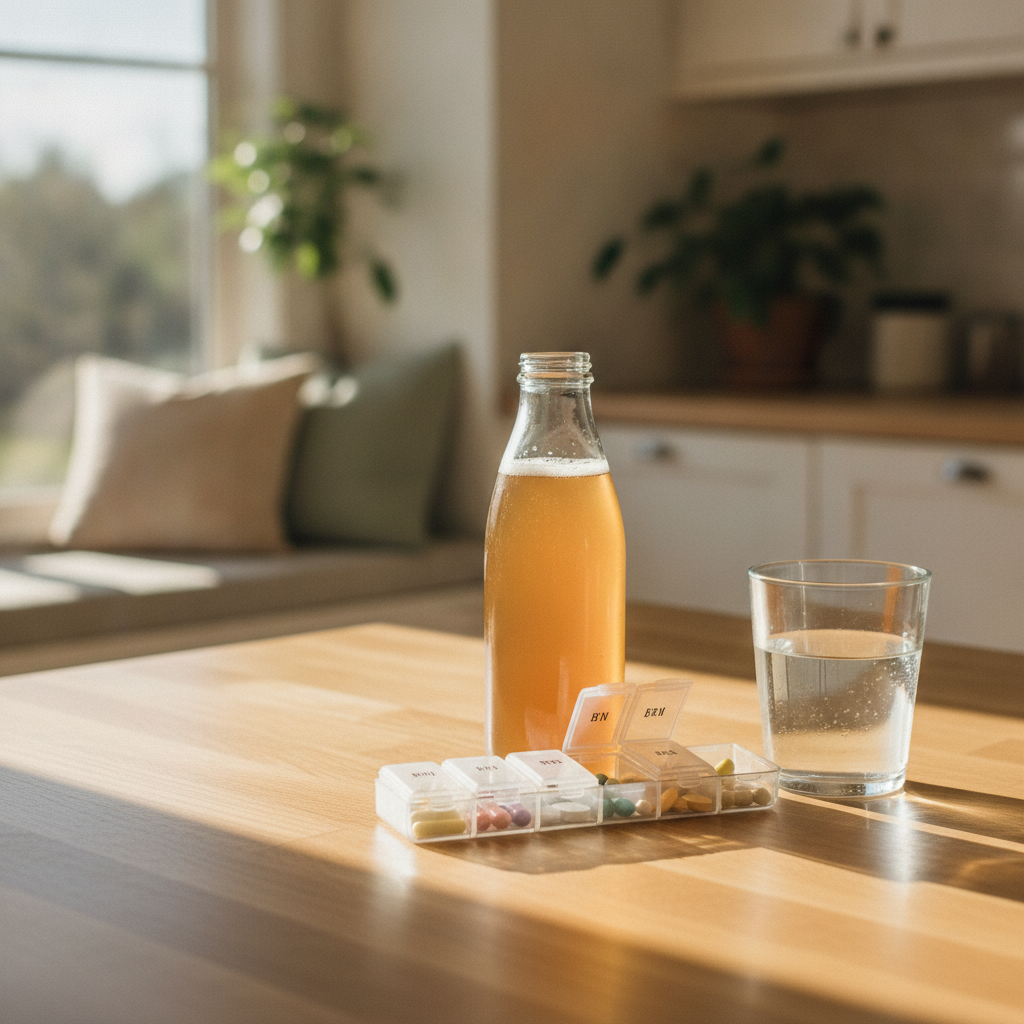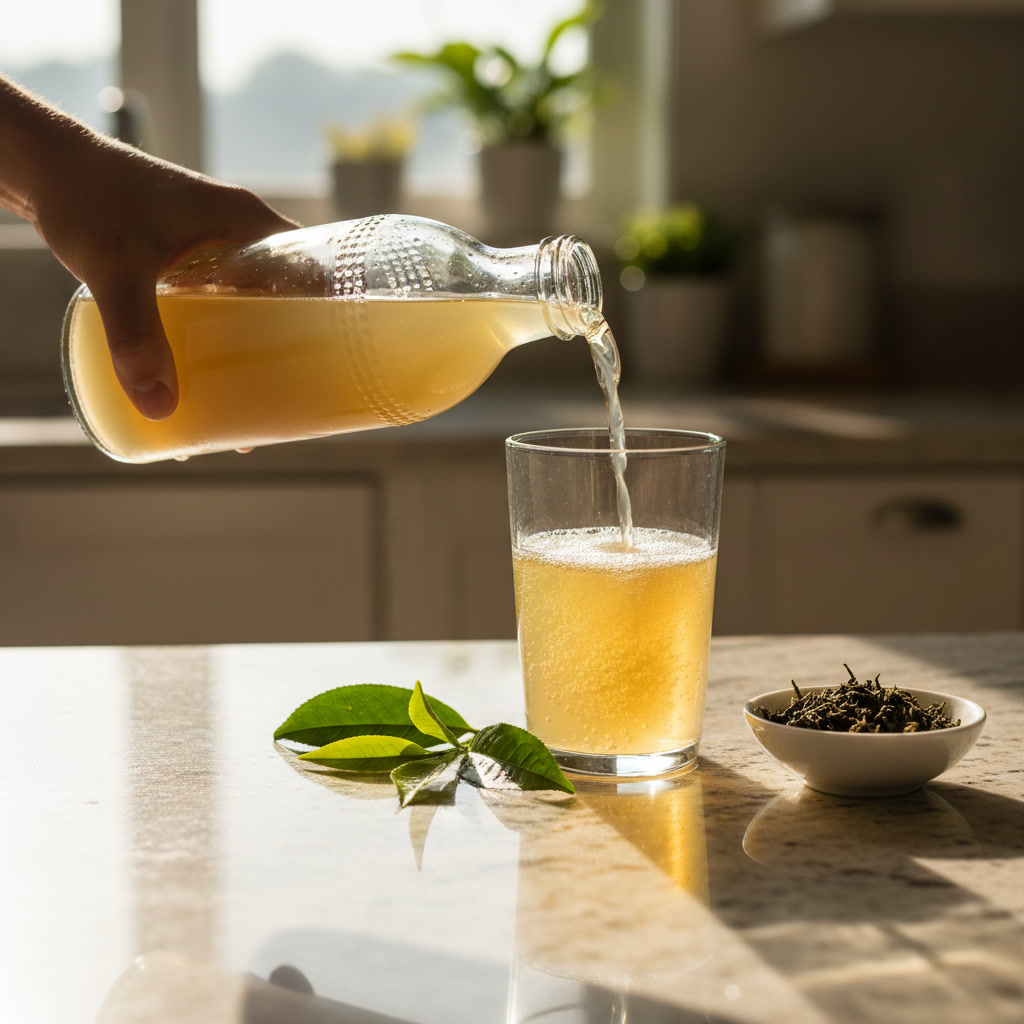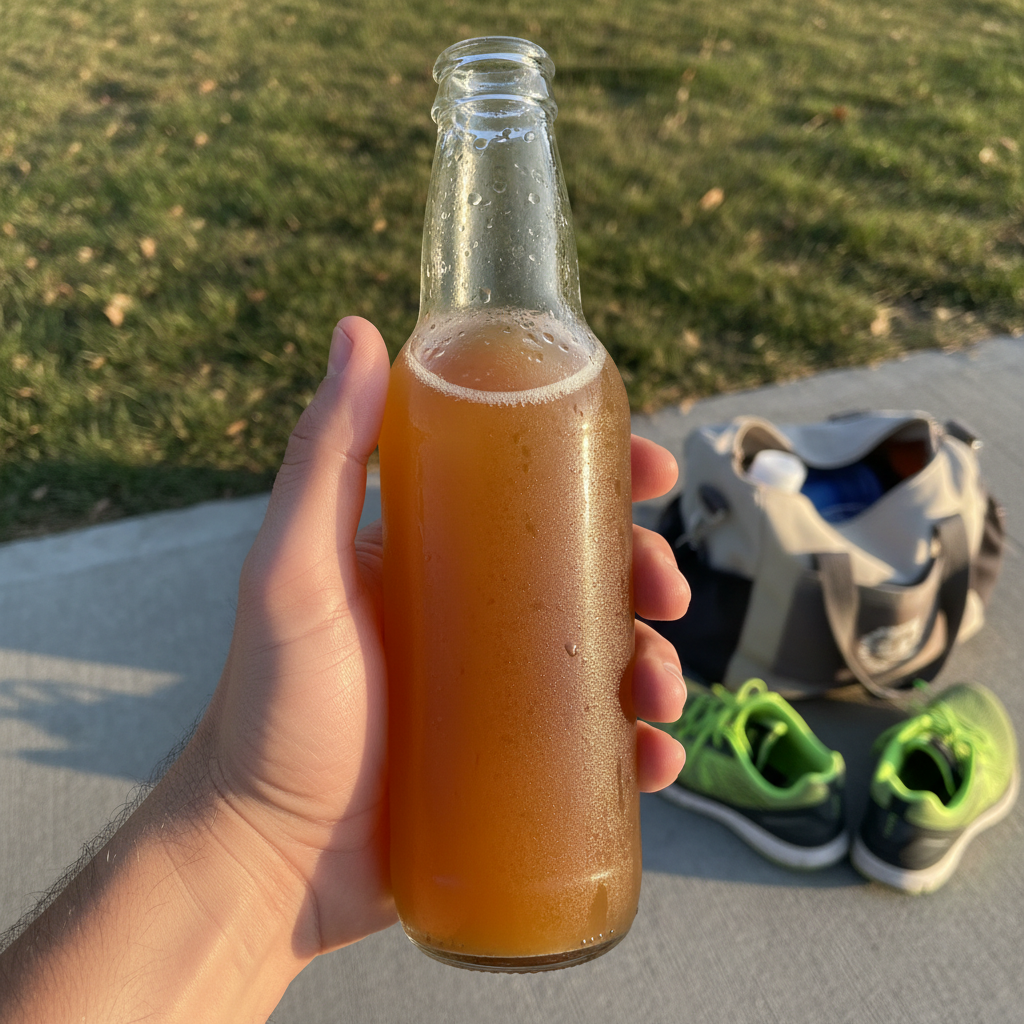
Kombucha post workout has become a common swap for sports drinks and soda in gym bags, but does it actually help recovery, or is it just a trendy fizzy drink with good marketing? The honest answer sits between the two: kombucha offers a few genuinely useful properties for after exercise, but it is not a sports-science-backed recovery drink, and some of what makes it appealing (probiotics, polyphenols) has little to no research specific to post-exercise recovery. Here's what the evidence actually supports.
TL;DR: Kombucha post workout can help with hydration and mild electrolyte/mineral intake (from the tea and fermentation process), and its polyphenols and organic acids may support general antioxidant and gut-health goals relevant to athletes. But there is no kombucha-specific clinical research on exercise recovery, muscle soreness, or athletic performance -- claims linking kombucha directly to faster recovery are extrapolated from general fermented-food and probiotic research, not tested on kombucha itself. It's a reasonable, lower-sugar alternative to soda or sports drinks after a workout, not a proven recovery supplement.
Table of contents
- Why athletes are asking about kombucha
- Hydration and electrolytes: what's actually in the bottle
- The gut-health and immune angle
- What's not proven: the recovery-specific evidence gap
- Kombucha versus traditional sports drinks and soda
- How to actually use it around a workout
- Frequently asked questions
Why athletes are asking about kombucha
Kombucha's rise among gym-goers and athletes tracks with a broader shift away from sugary sports drinks and towards "functional" beverages -- drinks perceived to do more than just taste good or rehydrate. Kombucha checks several boxes at once: it's fermented (associated with gut health), lower in sugar than most sports drinks and sodas, mildly carbonated, and contains tea-derived polyphenols. None of that is specific to exercise recovery, but it's easy to see why a drink with a "healthy" halo gets reached for after a workout instead of a can of cola.
Hydration and electrolytes: what's actually in the bottle
Kombucha is mostly water, so it does contribute to fluid intake the same way any non-alcoholic beverage does. It is not an electrolyte-replacement drink in the way a dedicated sports drink formulated with sodium, potassium, and sometimes magnesium is. Kombucha does contain small amounts of minerals carried over from the tea leaves and produced during fermentation, but at levels far below what's in a purpose-built electrolyte drink. For light-to-moderate exercise in normal conditions, plain hydration matters more than electrolyte replacement, and kombucha covers that reasonably well. For prolonged, high-sweat-loss exercise (long runs, hot-weather training, multiple hours), a dedicated electrolyte drink or added salt is still the more evidence-based choice -- kombucha isn't designed or tested to replace that.
The gut-health and immune angle
Fermented foods and drinks, as a category, have real research behind gut microbiome benefits -- a frequently cited 2021 Stanford study (Wastyk et al., published in Cell) found that a diet higher in fermented foods increased microbiome diversity and lowered markers of inflammation over 10 weeks. Kombucha was one of several fermented foods included in that study's fermented-food arm (alongside yogurt, kefir, kimchi, and others), so it's fair to say kombucha as a category of fermented food has some supporting evidence for gut and inflammation markers. Athletes in particular have a documented interest in gut health because heavy training can temporarily disrupt gut barrier function and immune markers -- this is a real, researched phenomenon in exercise physiology, sometimes discussed under "exercise-induced gastrointestinal syndrome" in endurance athletes. Whether kombucha specifically helps that population recover faster or train harder has not been directly tested.
What's not proven: the recovery-specific evidence gap
This is the important distinction: there is no published clinical trial testing kombucha specifically against exercise recovery outcomes -- not muscle soreness (DOMS), not inflammation markers post-exercise, not performance in a subsequent training session, not glycogen replenishment. Searches of PubMed and Cochrane databases for kombucha combined with exercise, athletic performance, or recovery return essentially nothing at the level of a controlled human trial. What exists instead is: (1) general fermented-food/probiotic research not specific to kombucha, and (2) kombucha's own general health research (largely rodent studies and small human studies on metabolic markers, not exercise-specific) reviewed in papers like Kim & Adhikari's 2020 review in Fermentation. Any claim that kombucha "speeds up recovery" or "reduces muscle soreness" is not something a real kombucha-specific trial has shown -- it's an inference from adjacent research, and it should be treated as a reasonable hypothesis, not an established fact.
Kombucha versus traditional sports drinks and soda
Where kombucha does have a defensible edge is in direct comparison to what it's often replacing. A typical sports drink or soda has considerably more added sugar per serving, no fermentation-derived compounds, and no polyphenol content from tea. Swapping a post-workout soda for kombucha is very likely a net positive for overall sugar intake and adds some polyphenols and organic acids you wouldn't otherwise get -- that's a real, defensible benefit, just not the same claim as "kombucha aids recovery." For genuine electrolyte replacement during heavy sweat loss, kombucha is not a substitute for a formulated electrolyte drink; the two serve different purposes and aren't really in competition for that specific job.
How to actually use it around a workout
A practical, evidence-consistent approach: use kombucha as a lower-sugar, gut-friendly alternative to soda or juice after training, alongside (not instead of) plain water or an electrolyte drink if the session was long or heavy-sweat. It's a reasonable everyday habit for general gut-health goals that happens to fit well into a post-workout routine, rather than a targeted recovery intervention. Aboocha's kombucha and jun tea both work well this way -- as part of a broader fluid and nutrition routine, not as a replacement for it. If sleep, protein intake, and hydration basics aren't already covered, no drink -- kombucha included -- is going to meaningfully move recovery on its own.
Frequently asked questions
Is kombucha good post workout?
Kombucha post workout is a reasonable lower-sugar alternative to soda or juice, contributing to hydration and offering polyphenols and organic acids from fermentation. It is not a proven recovery aid -- no clinical trial has tested kombucha specifically against exercise-recovery outcomes like muscle soreness or performance.
Does kombucha help with muscle soreness or DOMS?
There's no published research testing kombucha against delayed onset muscle soreness (DOMS) specifically. Some fermented foods and polyphenol-rich foods have general anti-inflammatory research behind them, but that hasn't been tested on kombucha in an exercise-recovery context.
Can kombucha replace an electrolyte or sports drink?
No. Kombucha contains only small amounts of minerals from tea and fermentation, well below the sodium and potassium levels in a formulated electrolyte drink. For long or high-sweat-loss training, a dedicated electrolyte drink is still the better-evidenced choice.
Does kombucha's probiotic content benefit athletes specifically?
Fermented foods as a category have research (such as a 2021 Stanford study) linking them to increased microbiome diversity and lower inflammation markers. Athletes have documented interest in gut health due to training-related gut stress, but no study has isolated kombucha's effect on athletic populations specifically.
What's the best time to drink kombucha around a workout?
There's no research establishing an optimal timing window for kombucha around exercise. As a general fermented beverage, most people drink it after training as a soda or juice replacement rather than immediately before, since the carbonation and acidity can feel less comfortable on an empty, pre-workout stomach.