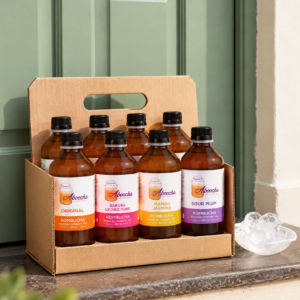
Chapter two · Jun Tea Singapore
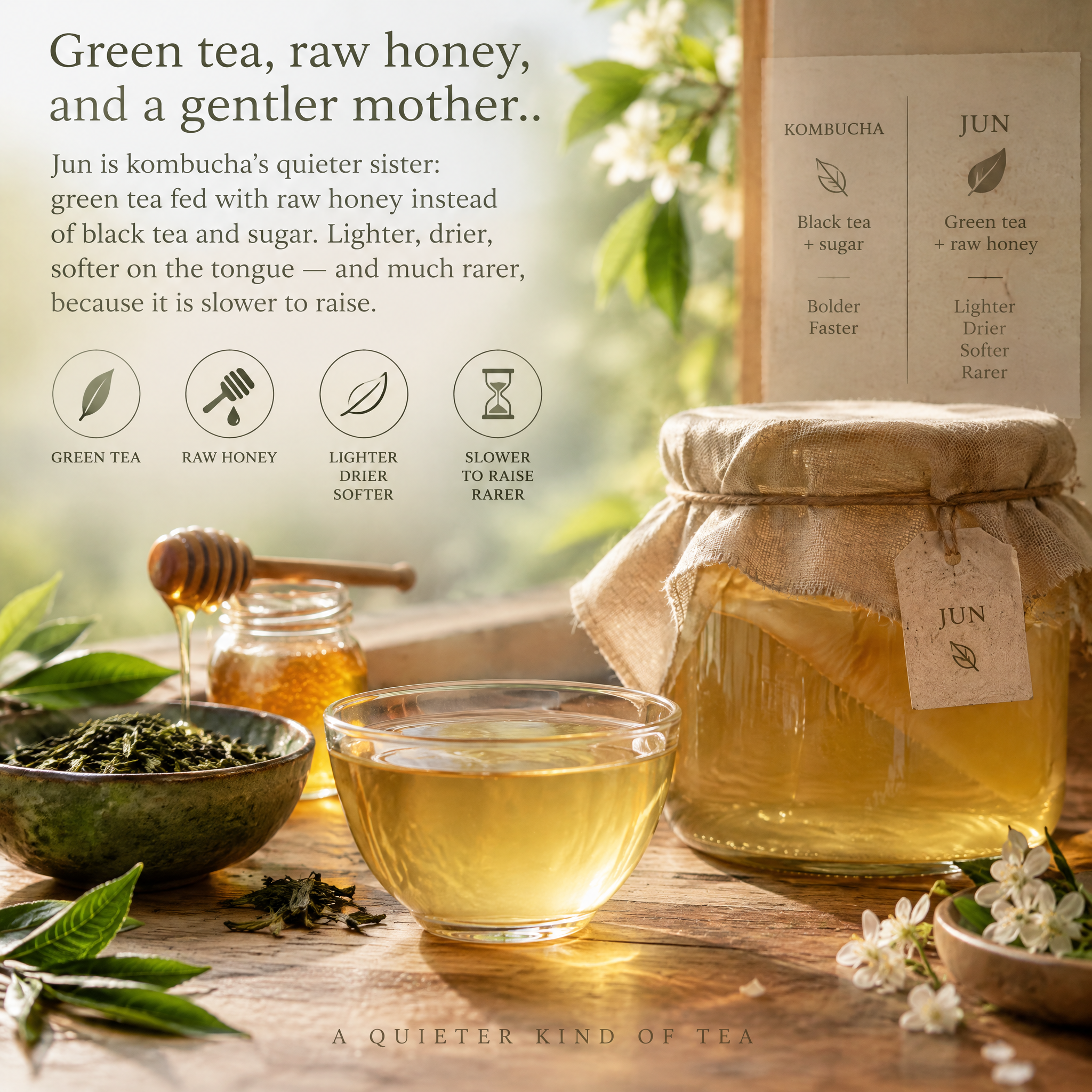
Green tea, raw honey, and a gentler mother.
Jun is kombucha's quieter sister: green tea fed with raw honey instead of black tea and sugar. Lighter, drier, softer on the tongue — and much rarer, because it is slower to raise.
A short history
A mountain ferment with a short written history.
Folklore
Said to come from the Himalayan foothills, where honey was easier to keep than sugar and green tea grew close by.
1990s
First appears in Western brewing circles as a “champagne kombucha” — prized, and rarely sold.
Today
One of very few jun tea Singapore brews, bottled here and fed on honey from a single apiary.
How we raise it
Cooler, slower, sweeter to begin with.
1
Raw honey, not sugar
Fed on unpasteurised honey, so the finish is rounder and drier — with honey's own enzymes along for the ride.
2
Green tea base
Lighter tannins and a softer body than black-tea kombucha. Naturally lower in caffeine.
3
Slower to raise
Jun ferments cooler and takes longer, so we make less of it. That is why it is rarer, and a little dearer.
Four flavours
Jun tea Singapore: pick your jun
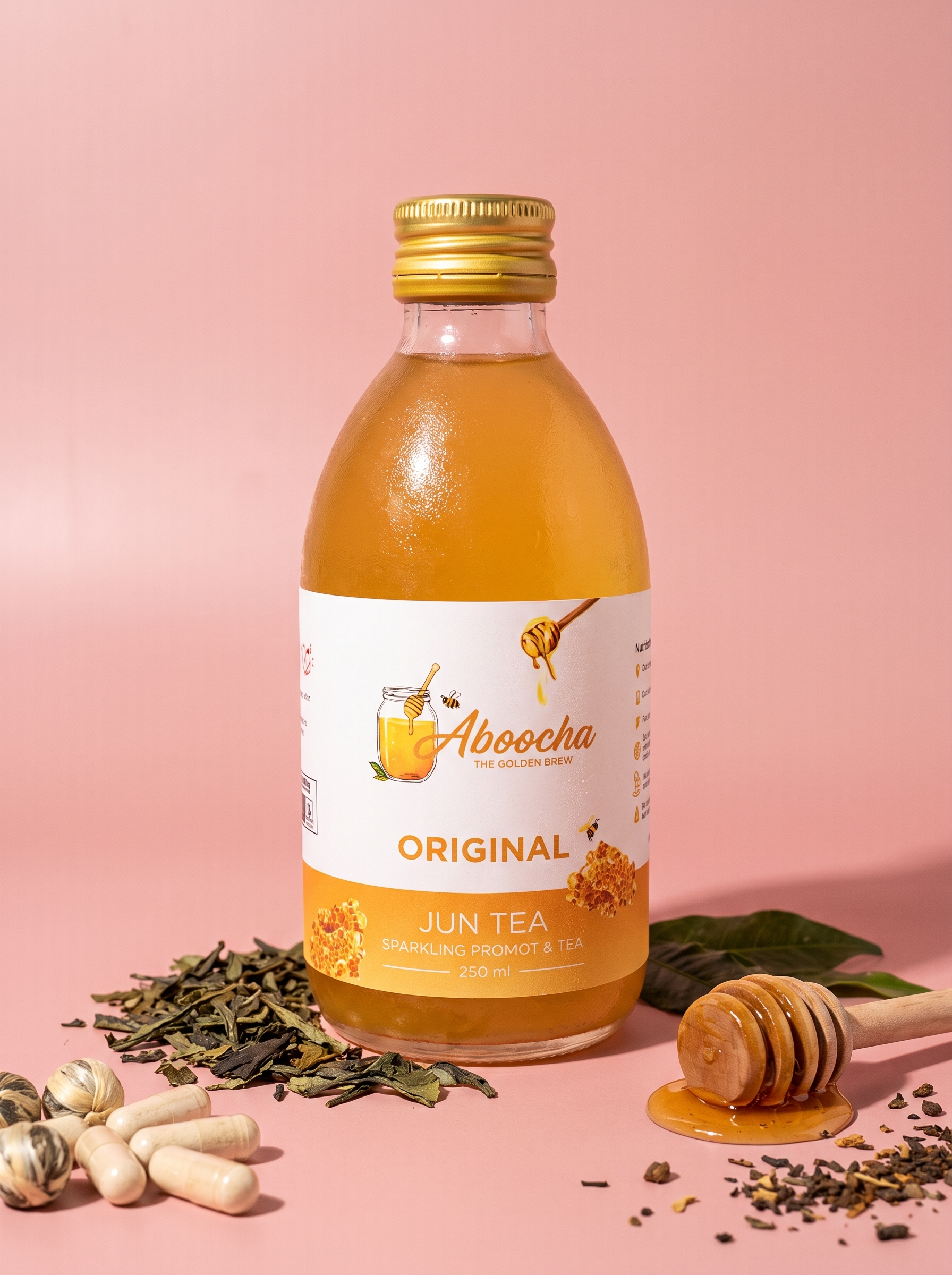
No. 08 · Jun tea
Original — $7.50
Green tea & raw honey · light, dry
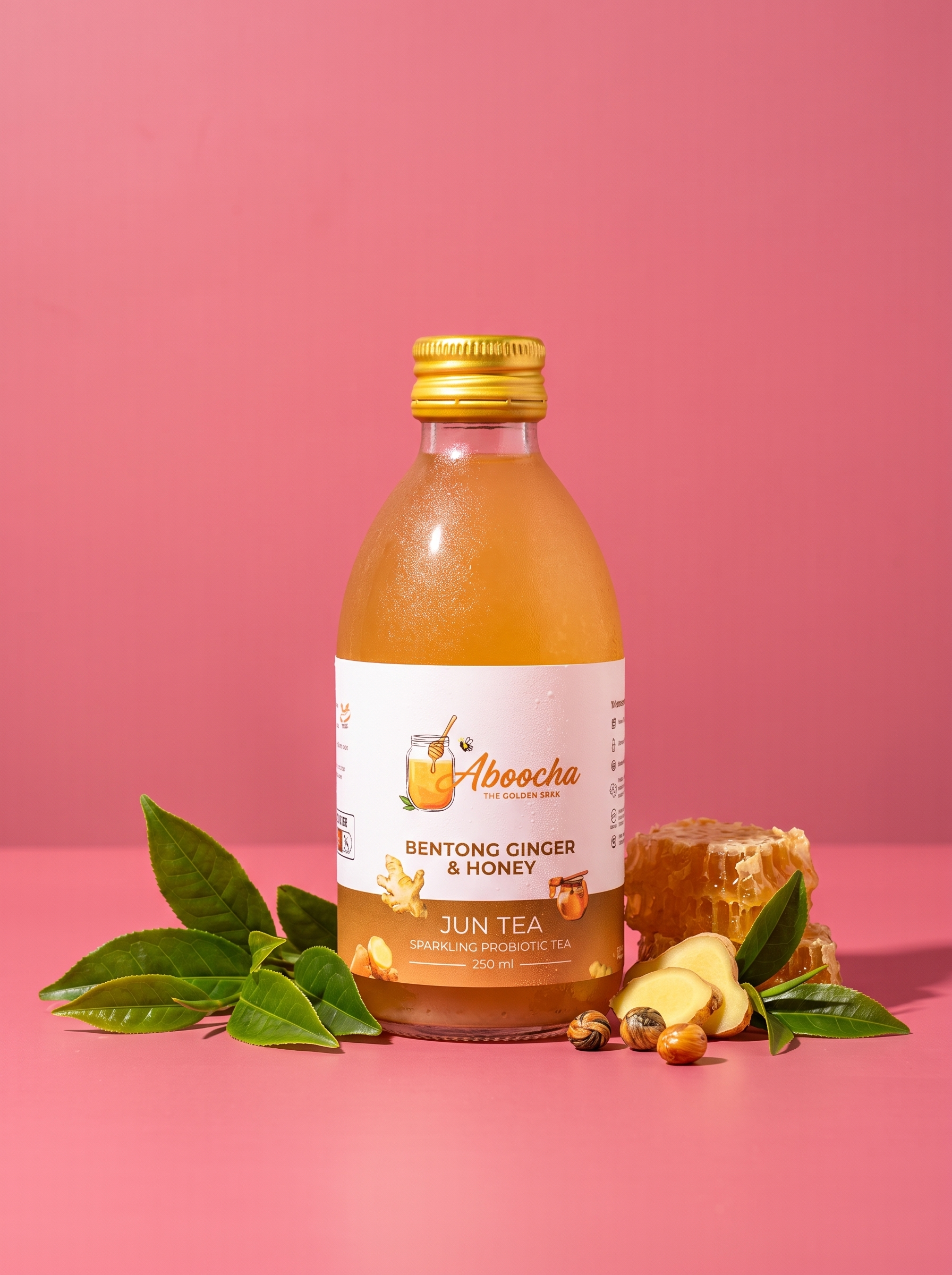
No. 09 · Jun tea
Bentong Ginger & Honey — $7.50
Warm Pahang ginger · light body
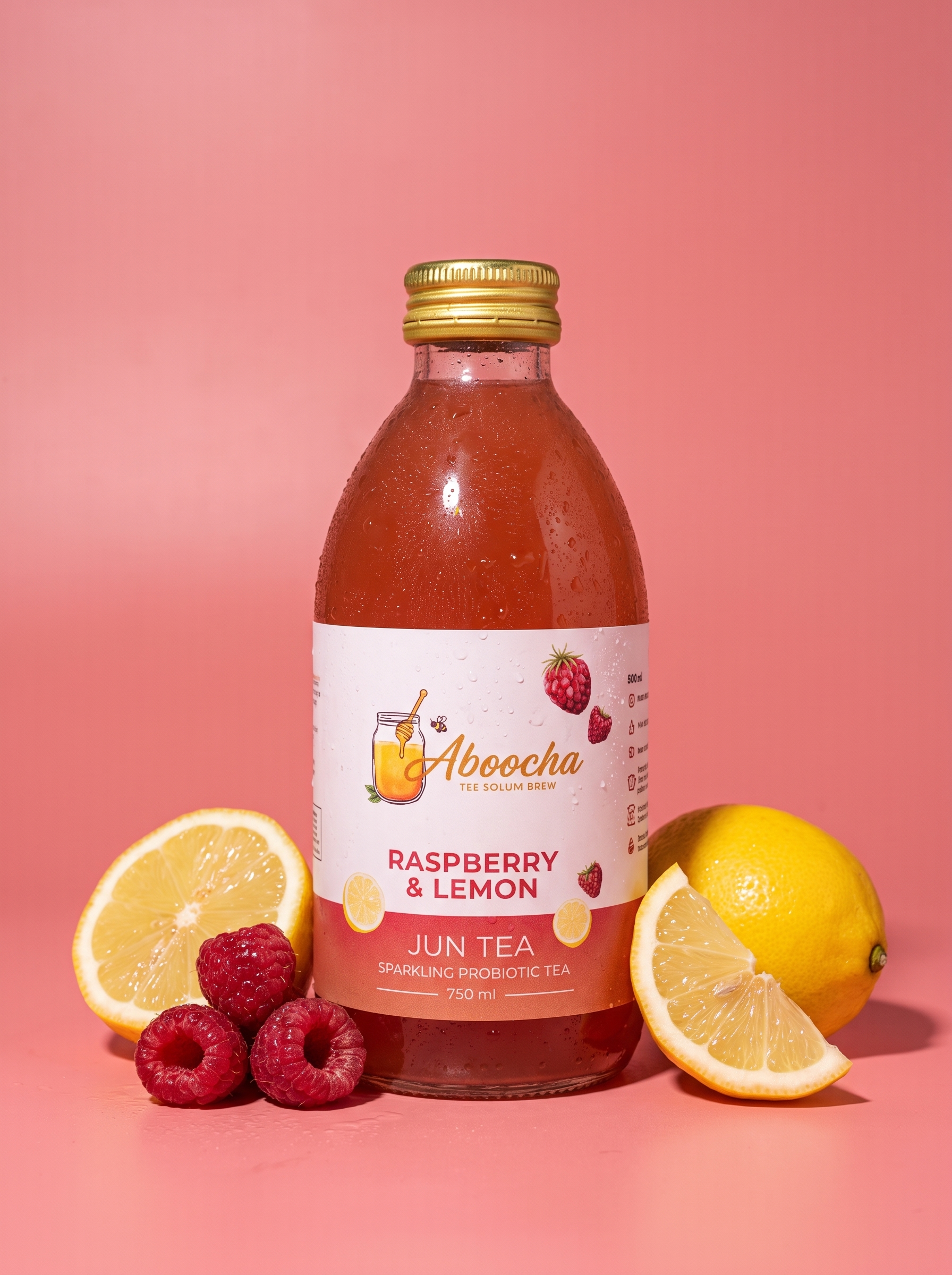
No. 10 · Jun tea
Raspberry & Lemon — $7.50
Sharp berry · soft lemon
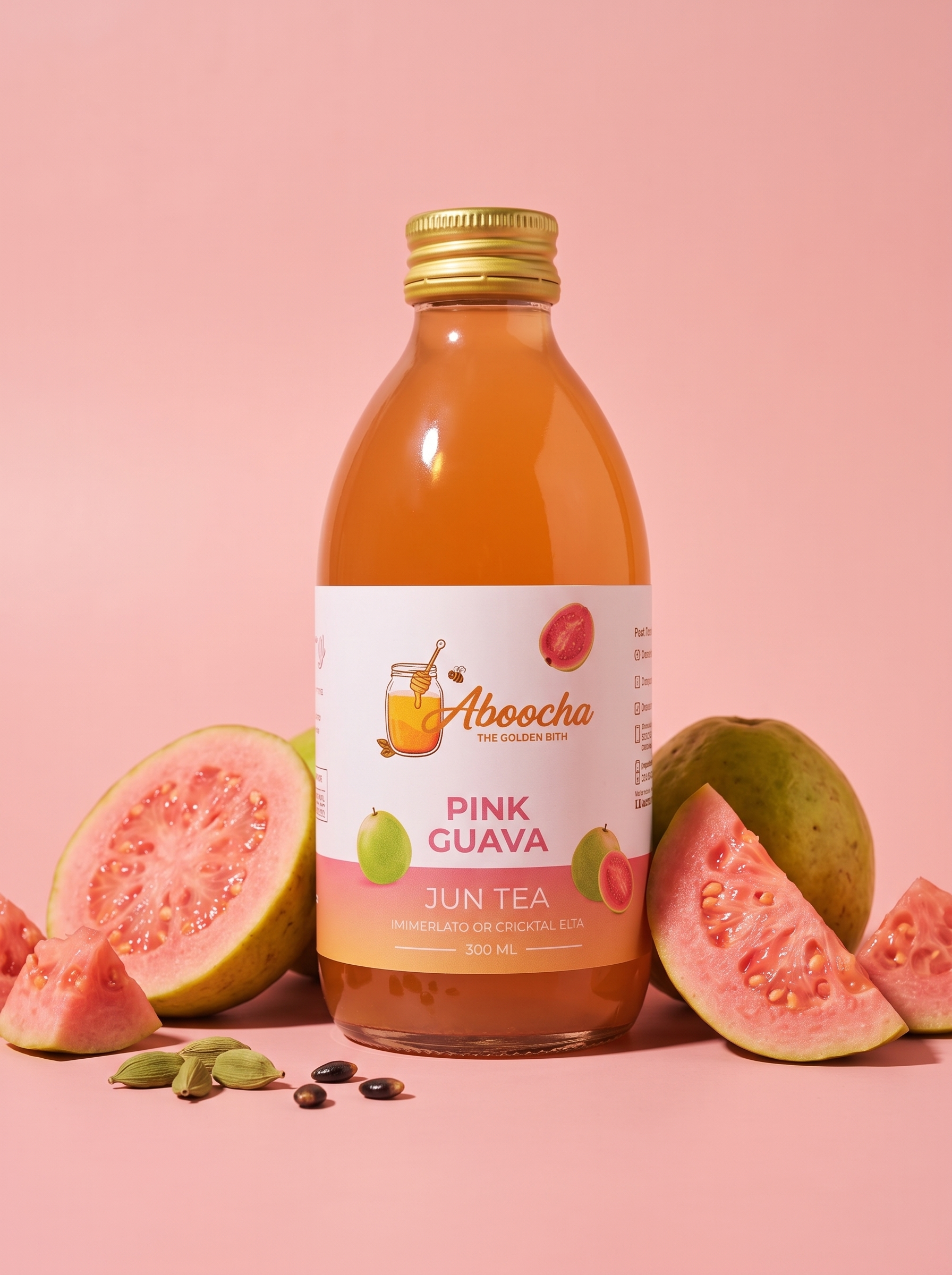
No. 11 · Jun tea
Pink Guava — $7.50
Tropical · faintly floral
Why people drink it
Why jun costs a little more, and why it is worth it.
Everything kombucha offers, with a gentler profile. We are brewers, not doctors — here is what is in the bottle and what it is known for.
- Live cultures — a jun mother carries its own blend of yeasts and bacteria, raised on honey.
- Raw honey — unpasteurised, so its enzymes and trace minerals survive into the bottle.
- Green tea — lighter tannins, gentler caffeine, the catechins of sencha.
- Drier finish — less residual sweetness than kombucha, closer to a light sparkling wine.
Jun is a food, not a medicine. It contains trace alcohol (under 0.5% ABV), a little caffeine from green tea, and honey — not suitable for infants under one. If you are pregnant, immunocompromised or unsure, ask your doctor first.
In every bottle
Four things. One of them is honey.
Filtered water, green tea, raw unpasteurised honey from a single apiary, and our jun mother — plus the real fruit or root that names each flavour. Nothing else.
Filtered water · Green tea · Raw honey · Jun mother · Real fruit & root
The benefits, in short
What drinking jun can offer.
The short version, backed by published research where it exists. The small numbers link to the sources below.
- Live cultures in every bottle. Like kombucha, raw jun carries the living bacteria and yeasts of its ferment, the activity that defines a fermented food.[2]
- Part of a fermented-food diet. In a Stanford trial, adults who ate more fermented foods ended up with a more diverse mix of gut microbes.[1]
- Green tea catechins. Jun is brewed on green tea, the richest everyday source of catechins such as EGCG, among the most researched plant compounds in the diet.[3]
- Raw honey instead of cane sugar. Honey carries small amounts of oligosaccharides and polyphenols that, in lab and animal studies, can feed beneficial gut bacteria.[4]
- Gentler on the palate. Lighter, drier and less acidic-tasting than kombucha, closer to a dry sparkling wine.
- A lower-sugar, alcohol-free sparkling drink. 1–3% sugar across our range and Nutri-Grade A–B, with only trace alcohol (under 0.5% ABV).
- Honest about the science. Jun itself has barely been studied in people, and much of the research on its ingredients is still lab-based.
Sources
- Wastyk et al. (2021). Gut-microbiota-targeted diets modulate human immune status. Cell. Stanford University. Read the study →
- Marco et al. (2021). The ISAPP consensus statement on fermented foods. Nature Reviews Gastroenterology & Hepatology. Read the study →
- Khan & Mukhtar (2018). Tea polyphenols in promotion of human health. Nutrients. Read the study →
- (2022). The potential of honey as a prebiotic food to re-engineer the gut microbiome toward a healthy state. Frontiers in Nutrition. Read the study →
This summary describes published research on fermented foods, green tea and honey, not the effects of Aboocha products, and is not medical advice. Jun contains caffeine and trace alcohol, and is made with honey, so it is not suitable for babies under 12 months. If you are pregnant, immunocompromised or have a medical condition, check with your doctor before adding fermented drinks to your diet.
Keep reading
Jun tea Singapore: fermented tea guides.
Our journal is written about kombucha, a close cousin of jun tea. The label, storage and safety points often carry over, but check the bottle in front of you.
- Jun tea benefits: what the research shows and what no jun trial has tested.
- Jun tea vs kombucha: the differences in ingredients, taste, price and evidence.
- What is jun tea: ingredients, how it is made and who should be careful.
- Does jun kombucha have alcohol: what studies measured and what we state.
- Does kombucha need refrigeration: label first, then storage.
- Kombucha side effects: the reported risks and who should be careful.
- Kombucha and medication interactions: what to ask your pharmacist first.
- Local fermented beverages in Singapore: a 2026 guide.
Let the mother look after you.
Jun tea Singapore, delivered every fortnight: a case of 12, any mix of flavours. Subscribers save 15% and never pay delivery.
Subscription bundles
Mix any flavours across Kombucha and Jun Tea in a monthly subscription box.