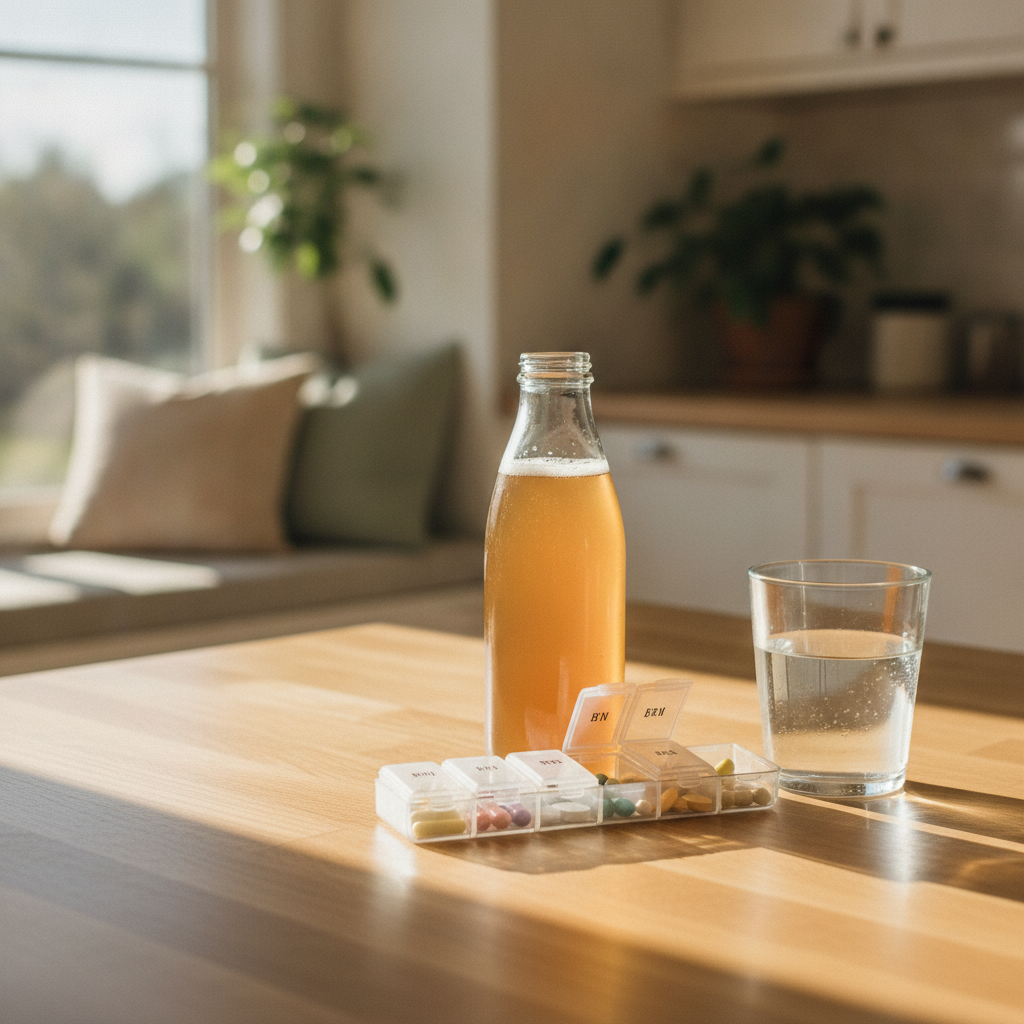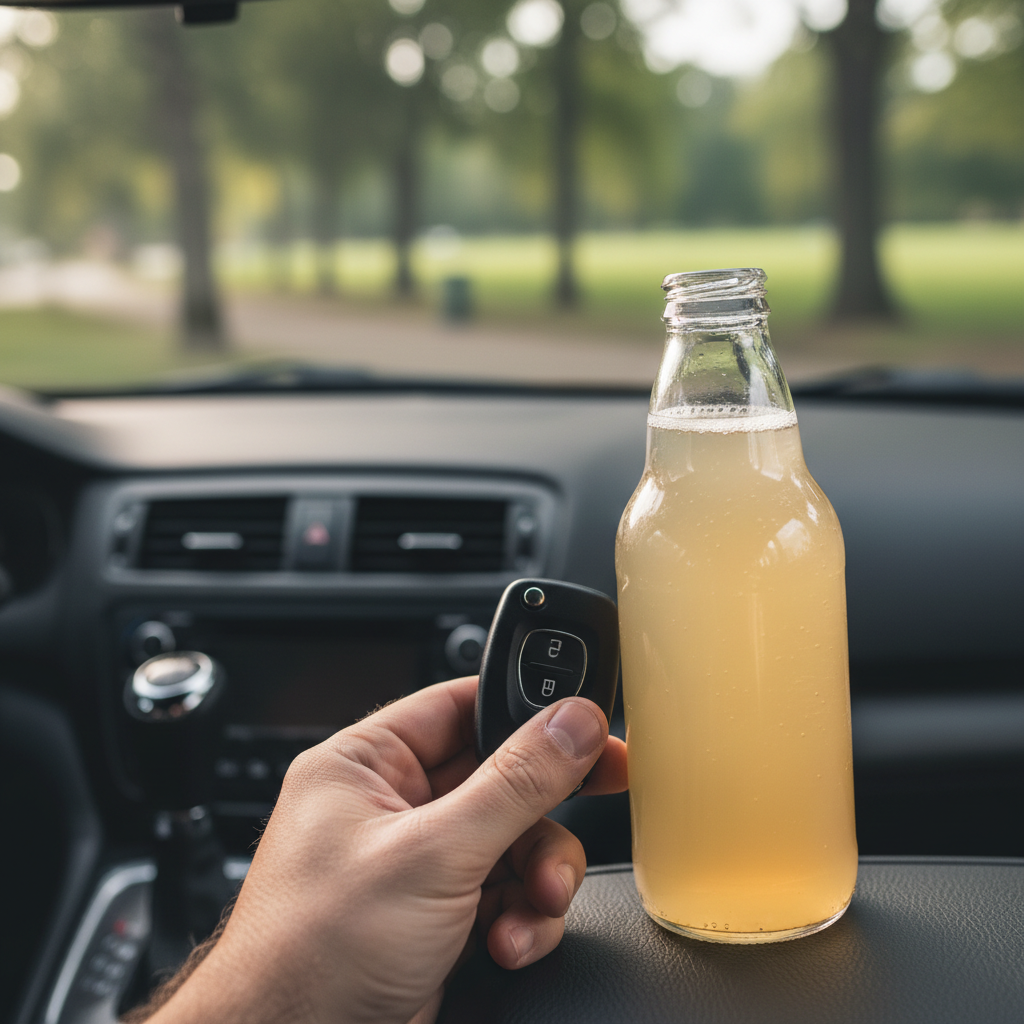
Kombucha is fermented, and fermentation produces alcohol -- so "can you drive after drinking kombucha?" is a fair question, not a paranoid one. The honest answer depends on how much alcohol is actually in the bottle, which varies more than most people expect. Here's what the real numbers say, and where the honest uncertainty is.
TL;DR: Commercially sold kombucha in Singapore is regulated to stay under 0.5% ABV, the same threshold used for "non-alcoholic" beer -- far too low to cause noticeable impairment from a normal serving. Home-brewed or unpasteurised kombucha left to ferment longer can reach 1-3% ABV or higher, which is a different situation. For store-bought kombucha within the regulated limit, driving after a normal serving is not a realistic concern; for homebrew of unknown strength, treat it with more caution.
Table of contents
- Why kombucha contains alcohol at all
- Commercial kombucha and the 0.5% ABV rule
- Home-brewed kombucha is a different story
- Putting the numbers against driving impairment
- What this doesn't mean
- What we'd actually recommend
- Frequently asked questions
Why kombucha contains alcohol at all
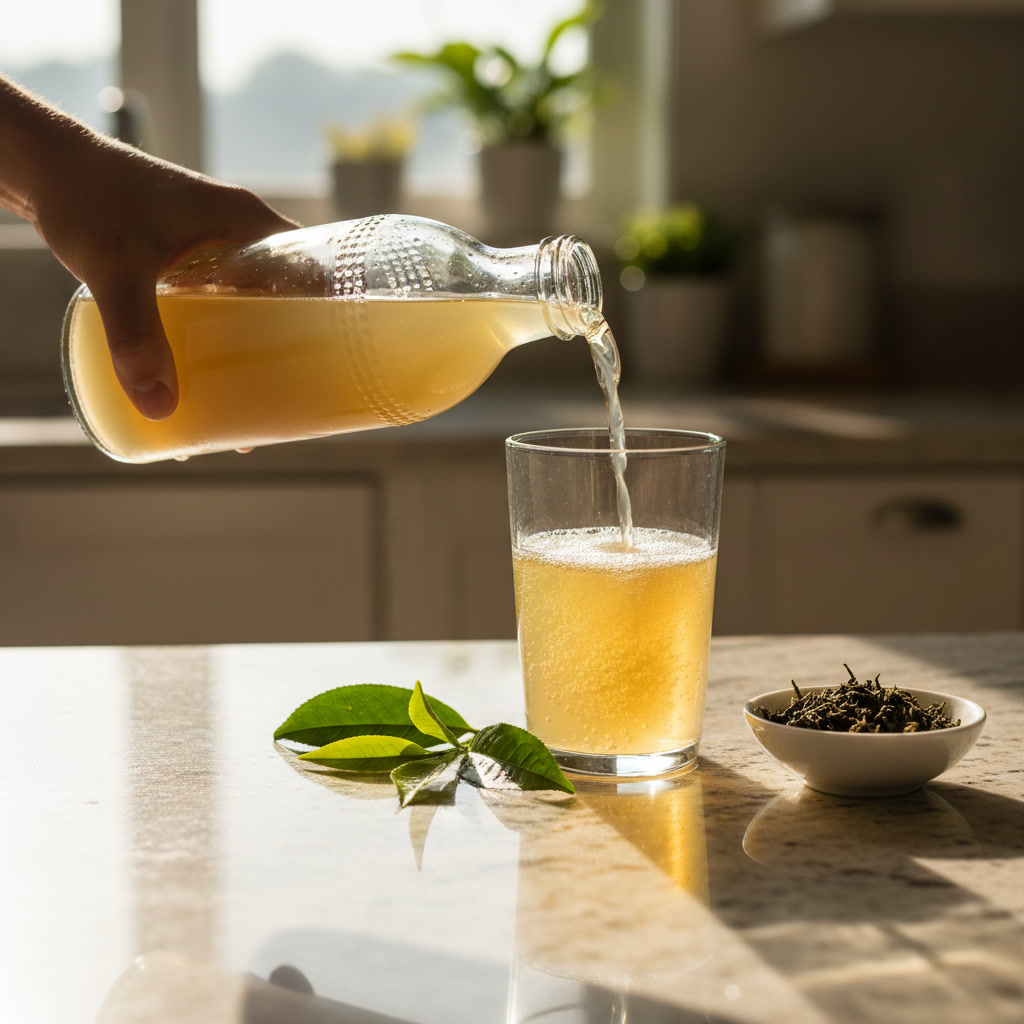
Kombucha is made by fermenting sweetened tea with a SCOBY (symbiotic culture of bacteria and yeast). The yeast in that culture consumes sugar and produces both carbon dioxide (the fizz) and ethanol (alcohol) as natural byproducts -- the same basic process that makes beer or wine, just usually stopped much earlier and with different organisms in the mix. Some of that alcohol is consumed by the bacteria in a second stage of fermentation, which is why kombucha doesn't taste like beer, but it's rarely reduced to exactly zero.
Commercial kombucha and the 0.5% ABV rule
In most markets, including Singapore, a beverage has to stay under 0.5% alcohol by volume (ABV) to be sold and labelled as a non-alcoholic drink rather than an alcoholic one -- the same line used for "non-alcoholic" or "alcohol-free" beer. Commercial kombucha producers formulate and test their process specifically to stay under this line, using controlled fermentation time, temperature, and sometimes a pasteurisation or filtration step afterward. A bottle at 0.5% ABV or below contains a genuinely small amount of alcohol -- for comparison, ripe fruit, some breads, and kefir can contain trace alcohol in a similar range from natural fermentation.
Home-brewed kombucha is a different story
This is the important distinction that gets lost when people ask about "kombucha" as if it's one uniform product. Home-brewed kombucha, especially if fermented for longer than typical (a "second ferment" with extra sugar, or simply left longer than usual), can reach meaningfully higher alcohol levels -- commonly cited ranges are 1-3% ABV, and uncontrolled home batches have tested higher still in some documented cases. Without lab testing, a home brewer genuinely doesn't know the exact ABV of their batch. That uncertainty is the real safety-relevant fact here, more than any specific number.
Putting the numbers against driving impairment
Legal driving limits are typically expressed as blood alcohol concentration (BAC), not the ABV of a drink -- the two aren't directly interchangeable, since BAC depends on how much you drink, your body weight, and time elapsed. But as a rough sense of scale: a 250ml serving of 0.5% ABV kombucha contains about 1.25ml of pure alcohol, which is a small fraction of what's in a standard alcoholic drink (a standard drink is typically defined around 10-14g of pure alcohol, roughly 8-10 times more). At that level, reaching any legally relevant BAC from a normal serving of regulated commercial kombucha is not realistic. A home-brewed batch at 2-3% ABV changes that math meaningfully, especially across multiple glasses.
What this doesn't mean
This isn't medical or legal advice, and it doesn't mean kombucha is alcohol-free in an absolute sense -- it means regulated commercial kombucha's alcohol content is low enough that a normal serving isn't a realistic driving-impairment concern, which is different from "contains zero alcohol." People who are alcohol-free for religious, medical, pregnancy-related, or personal reasons should check a product's specific label and ABV rather than assume all kombucha is equivalent.
What we'd actually recommend
For store-bought kombucha from a producer that formulates to stay under 0.5% ABV, a normal serving before driving isn't something we'd flag as a real concern. If you're drinking home-brewed kombucha of unknown strength, treat it with the same caution you would any homemade fermented beverage -- the uncertainty, not a specific known number, is the reason for care. Aboocha's own kombucha and jun tea are produced and labelled to stay within the regulated non-alcoholic threshold.
Frequently asked questions
Can you drive after drinking kombucha?
For a normal serving of commercially sold kombucha regulated to stay under 0.5% ABV, driving afterward isn't a realistic concern -- the alcohol content is comparable to non-alcoholic beer. Home-brewed kombucha of unknown strength is a different situation and warrants more caution.
How much alcohol is actually in kombucha?
Commercial kombucha is formulated to stay under 0.5% ABV, the same threshold used for non-alcoholic beer. Home-brewed kombucha can reach 1-3% ABV or higher depending on fermentation time and conditions, since home brewers don't typically lab-test their batches.
Is kombucha safe for kids or people avoiding alcohol entirely?
Regulated commercial kombucha under 0.5% ABV is treated the same as non-alcoholic beer for labelling purposes, but "under 0.5%" is not the same as "zero." If you need to avoid alcohol entirely for medical, religious, or personal reasons, check the specific product's label rather than assuming.
Does the alcohol content increase if kombucha is left unrefrigerated?
Yes -- fermentation continues (slowly) as long as live cultures are present and the drink isn't pasteurised, so warmer storage or longer time can raise alcohol content over time. This is one reason cold-chain storage and delivery matter for kombucha, beyond just taste and carbonation.