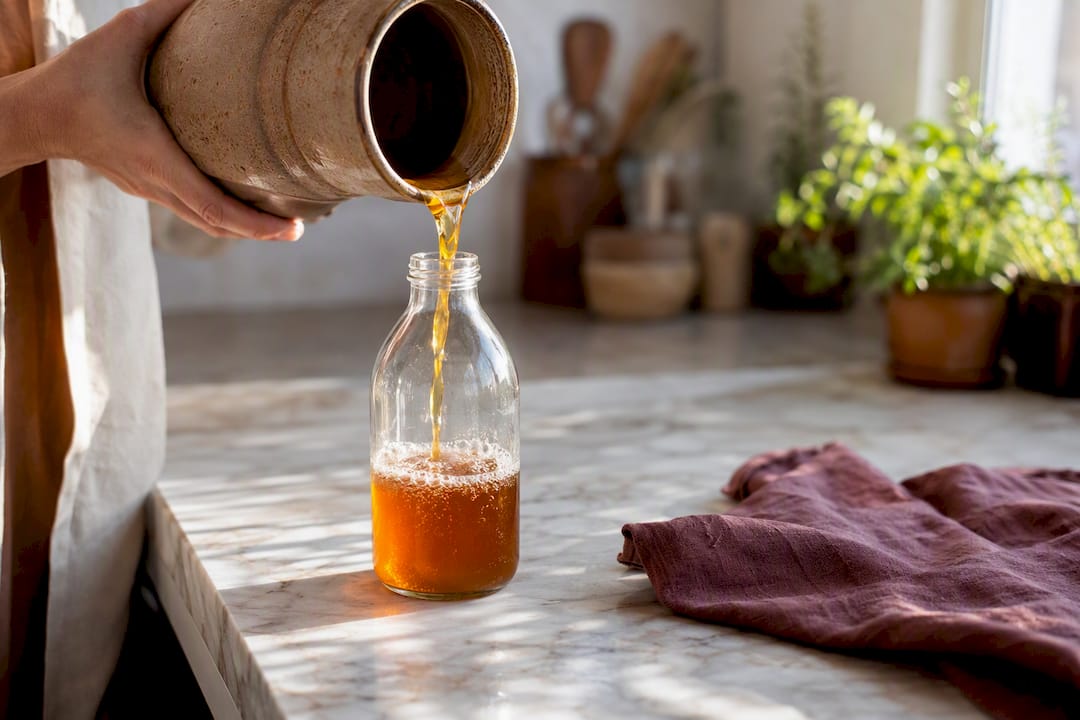
Kombucha caffeine is usually a small amount, because kombucha is made from tea and a little of the tea's caffeine stays in the finished drink. Does kombucha have caffeine, then? Yes, in most cases. How much depends on the product, and a lab study found a bigger spread than most articles admit.
This guide sets out what the measured numbers say, what they do not say, and how to read a label if kombucha caffeine matters to you.
TL;DR: Does kombucha have caffeine? Usually yes, but little. In a lab study of nine commercial products, measured kombucha caffeine worked out to roughly 4-10 mg per 240 ml in eight of them, and about 27 mg in one that listed added caffeine. The FDA cites 400 mg a day as an amount not generally associated with negative effects for most adults. Check the label, count the whole bottle, and ask your doctor if you are pregnant or on medication.
Table of contents
Does kombucha have caffeine? The short answer
Yes. Kombucha caffeine comes from the tea it is brewed with, so any kombucha made from real tea carries some. Fermentation does not add caffeine, and nothing in the process promises to remove it.
Does kombucha have caffeine in the same amount as coffee? No. The most useful number we found is a measured one, from a 2022 laboratory study of nine commercial kombucha products that measured caffeine directly. Converted to a 240 ml serving by our own arithmetic, eight of the nine products landed between about 4 and 10 mg.
The ninth product was different, and it is the most interesting finding in the paper. It listed green coffee bean extract as an ingredient, which is a caffeine source, and it measured about 27 mg per 240 ml.
Where kombucha caffeine comes from
Kombucha starts as sweetened tea, usually black, green or oolong, fed to a culture of bacteria and yeast called a SCOBY. The tea is the source of nearly all kombucha caffeine. Our guide to what kombucha is explains the brewing steps.
Two things shape how much ends up in the bottle: how much tea went in, and whether the producer added anything else. The laboratory paper found that the nine products differed a great deal in tea chemicals and in caffeine, so no single figure fits every bottle.
We could not verify a reliable figure for how much caffeine the fermentation itself removes. Some sources claim a large drop. We have not found a primary study we can point to, so we do not repeat that claim.
How much kombucha caffeine is in a bottle? What a lab measured
The table below shows the measured values from the paper for the eight products with clear results, converted to a 240 ml serving. The conversion is ours (micrograms per millilitre times 0.24 gives milligrams per 240 ml), and the products are identified only by the paper's lab codes, not by brand.
| Product (lab code) | Measured caffeine (µg/mL) | About this per 240 ml (our conversion) |
|---|---|---|
| B | 15.1 | 3.6 mg |
| D | 24.7 | 5.9 mg |
| C1 | 27.7 | 6.6 mg |
| C2 | 29.2 | 7.0 mg |
| E1 | 37.7 | 9.0 mg |
| A1 | 42.2 | 10.1 mg |
| A2 | 42.5 | 10.2 mg |
| F (listed added caffeine) | 112.6 | 27.0 mg |
These are results for nine products sold in one market, tested once. They show the spread, not a guarantee for any bottle you buy. If you see a different figure on a label, trust the label for that product and not this table.
Serving size is the second trap. A bottle larger than 240 ml holds more than one of these servings, and some labels print a per-serving number on a multi-serving bottle. If you finish the bottle, count all of it.
Kombucha caffeine compared with coffee
The FDA cites 400 milligrams a day for most adults as an amount not generally associated with negative effects, and describes that as about two to three 12-ounce cups of coffee. That puts a cup of coffee in the region of 130 to 200 mg, by the FDA's own conversion.
Set against that, even the highest of the eight ordinary products above, at about 10 mg per 240 ml, would take roughly 40 servings to reach 400 mg. The product with added caffeine, at about 27 mg, would take around 15. These are our calculations from the measured values, not claims from the paper.
Brewed tea varies widely with the leaf, the amount and the steeping time. We have not verified a single figure for a cup of tea, so we do not quote one.

Will kombucha keep you awake? Is it a stimulant?
For most people a typical serving is unlikely to act as a strong stimulant, given the numbers above. But the FDA notes that there is wide variation in how sensitive people are to caffeine and in how fast they clear it from the body.
If you are sensitive, the sensible approach is the same one you would use for tea. Notice how you feel, avoid drinking it late in the day if you sleep lightly, and remember that several small caffeine sources add up across a day.
Is kombucha a stimulant, then? In itself, mostly not. A product with added caffeine is the exception, and that is why the ingredient list matters more than the marketing.
Why do I feel buzzed after drinking kombucha?
This is a common question, and we cannot give a single answer. There are a few things we can say honestly.
- Caffeine: a product with added caffeine, or a large serving, can deliver more than you expect. Check for ingredients such as green coffee bean extract.
- Trace alcohol: the same laboratory paper detected ethanol in eight of the nine products, from 0% up to 1.29% in one of them. Read our guide on kombucha and alcohol for the verified details.
- Something else: we cannot pin down other causes from the evidence we have verified, and we will not guess.
If you feel unwell after drinking kombucha, stop drinking it and speak to a doctor. Do not drive if you feel impaired for any reason.
Kombucha caffeine if you are pregnant, on medication or caffeine-sensitive
The FDA recommends that anyone who is pregnant, trying to become pregnant or breastfeeding talks to their health care provider about whether they need to limit caffeine. It says the same for people with certain conditions or medications that can make caffeine affect them more.
We could not verify a specific milligram limit for pregnancy from a source we can read, so we do not quote one. Ask your doctor for a figure that fits you.
Aboocha's kombucha and jun tea are raw and unpasteurised, so we suggest them for adults and older teens, not young children or during pregnancy. See kombucha and pregnancy, kombucha for kids and kombucha and medication for what the evidence does and does not show.
How to check kombucha caffeine on a label
- Look for a stated caffeine amount, and note whether it is per serving or per bottle.
- Read the ingredients for added caffeine sources, such as green coffee bean extract, the ingredient the lab study found in its highest product.
- Check the bottle size and count how many servings it holds.
- Note the tea used. It is the main source of caffeine in any kombucha.
- If the label does not say, ask the brand whether it has lab data. Honest brands will tell you if they do not.
Our guide on how to choose kombucha covers the rest of the label, including sugar, raw or pasteurised, and fermentation time.
Ways to keep kombucha caffeine low
- Choose a smaller serving, or share a bottle.
- Drink it earlier in the day if you sleep lightly.
- Count it alongside coffee, tea and other caffeine sources.
- Avoid products that list added caffeine if you want to keep it low.
- If you want no caffeine at all, pick a drink made without tea, such as sparkling water with fruit.
For ideas that need no caffeine at all, our kombucha mocktail recipes for parties show how to dilute kombucha with soda water and fruit.
Kombucha caffeine serving math: glass, bottle and day
Most kombucha caffeine questions come down to how much you actually drink. The paper reports a concentration, so the amount you take in depends on the volume. The figures below are our own arithmetic from the measured range, scaled to common sizes.
| Serving | Ordinary products (3.6-10.2 mg per 240 ml) | Product with added caffeine (27.0 mg per 240 ml) |
|---|---|---|
| 240 ml glass | 3.6-10.2 mg | 27.0 mg |
| 330 ml bottle | 4.9-14.0 mg | 37.1 mg |
| 500 ml bottle | 7.5-21.3 mg | 56.3 mg |
Two bottles of 500 ml of an ordinary product would still sit well under 50 mg by this arithmetic. That is a long way below the 400 mg figure the FDA gives for a day. It is also only a snapshot of nine products, so a different brand could differ.
The point of the table is the pattern, not the exact figure. Kombucha caffeine scales with the size of the drink, and an added caffeine source changes the picture far more than the bottle size does.
When kombucha caffeine is worth a second look
For many people, kombucha caffeine is a non-issue. A few situations deserve a closer look, and in each one the sensible step is to read the label and, where it matters, ask a professional.
- Late-day drinking: if you sleep lightly, treat kombucha like tea and have it earlier.
- Several caffeine sources: coffee, tea, energy drinks and kombucha add up across a day.
- Pregnancy or breastfeeding: follow your health care provider's advice on caffeine, as the FDA suggests.
- Medication or a heart condition: ask your doctor, since caffeine can affect some people more.
- Children and teens: we do not suggest raw, unpasteurised kombucha for young children.
None of this is a reason to avoid kombucha. It is a reason to know what is in the bottle and to match it to how your own body responds.
Kombucha caffeine claims we cannot support
Searching for kombucha caffeine turns up confident claims. Several of them have no primary study behind them that we could verify, so we leave them out rather than repeat them.
- "Fermentation removes all the caffeine." The measured products still contained caffeine, so this is not a safe assumption.
- "Kombucha has as much caffeine as coffee." The measured values were far lower, though a product with added caffeine is the exception.
- "Kombucha is caffeine free." Not if it is brewed from tea or has added caffeine, so check the label.
- "Every brand has the same amount." The study found a wide spread, which is why we prefer the label to any average.
A fair summary is that kombucha caffeine is modest in the products measured, higher where caffeine is added, and unknown for any bottle that does not say. Reading the label takes seconds and answers the question better than any average.
If you see a precise caffeine number on a blog without a lab or a label behind it, treat it with caution. The honest answer to most kombucha caffeine questions is that it depends on the product.
What Aboocha says about kombucha caffeine
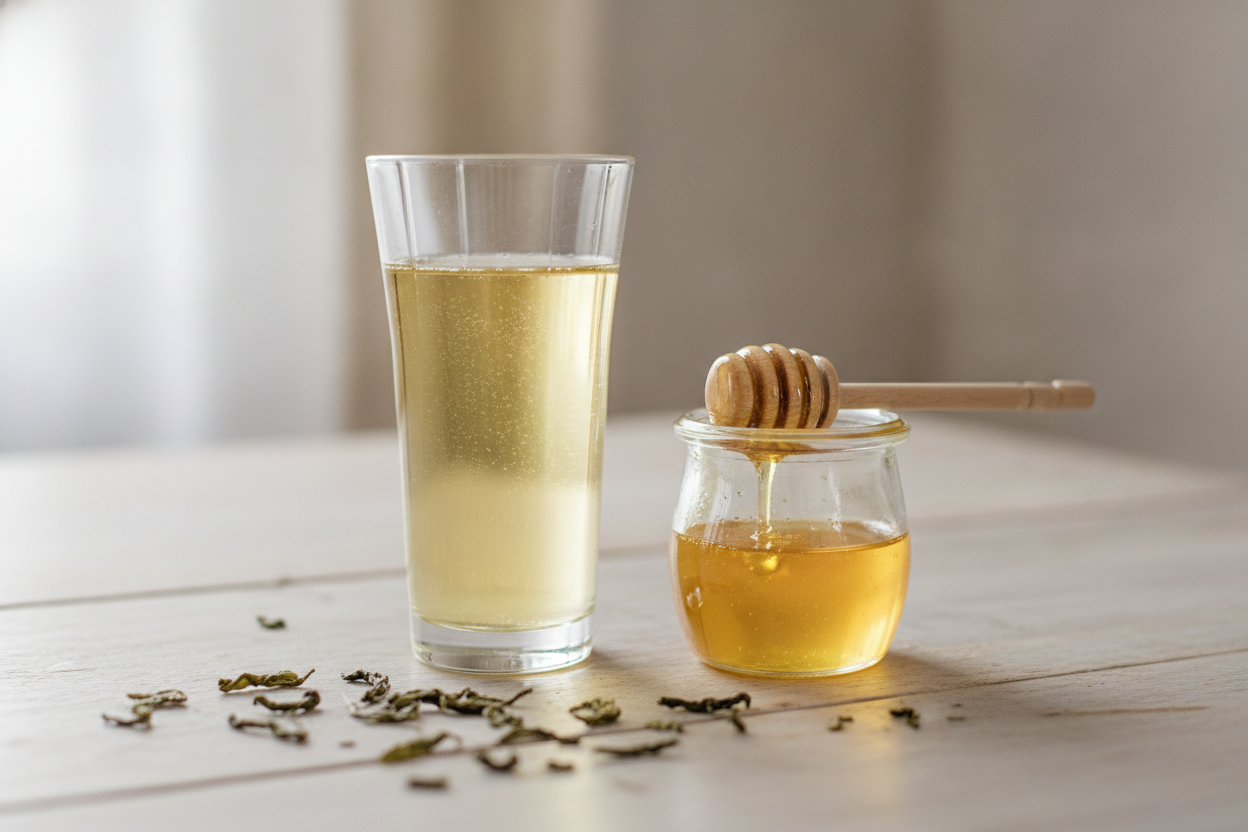
Aboocha brews small batches in Singapore. Our kombucha is brewed from tea, and our jun tea uses green tea and honey, so both carry some caffeine from the tea. We have not published a lab-tested caffeine figure per bottle, so we are not claiming one here.
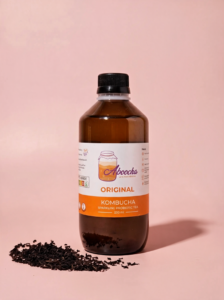
If kombucha caffeine matters for you, contact us before ordering and we will tell you what we do and do not know. You can browse the range on our kombucha in Singapore and jun tea in Singapore pages, or go to the shop. The Original shows the plain tea-and-tang profile.
Kombucha caffeine: what we checked and what we could not
- Checked: the laboratory measurements of caffeine and ethanol in nine commercial products, read from the published paper.
- Checked: the FDA's 400 mg figure and its advice for pregnancy, read from the FDA page.
- Not verified: how much caffeine fermentation removes, a figure for a cup of tea, and a pregnancy limit in milligrams.
- Our own arithmetic: the per-240 ml conversions and the number of servings needed to reach 400 mg.
This article is general information, not medical advice. Consult a qualified health professional about your own circumstances.
Frequently asked questions
Does kombucha have caffeine?
Usually yes. Kombucha caffeine comes from the tea it is brewed with. In a lab study of nine commercial products, eight measured roughly 4-10 mg per 240 ml by our conversion, and one that listed added caffeine measured about 27 mg.
Is kombucha high in caffeine?
Generally no. By the FDA's conversion a cup of coffee holds far more, and even the highest ordinary product in the study would take about 40 servings to reach 400 mg. A product with added caffeine is the exception.
Will kombucha keep you awake?
For most people a typical serving is unlikely to, but sensitivity varies a lot. If you sleep lightly, avoid it late in the day and count the whole bottle.
Is kombucha a stimulant?
Not in itself, mostly. Any stimulant effect comes from caffeine in the tea or from added caffeine, so check the ingredient list.
Why do I feel buzzed after drinking kombucha?
We cannot say for certain. Added caffeine and trace alcohol are two possibilities, since the same study detected up to 1.29% ethanol in one product. If you feel unwell, stop and speak to a doctor.
How much caffeine is in a bottle of kombucha?
It depends on the product and the bottle size. Measured values in one study ranged from about 3.6 to 27 mg per 240 ml, so check the label and count how many servings the bottle holds.
Is kombucha caffeine safe in pregnancy?
The FDA advises people who are pregnant or breastfeeding to talk to their health care provider about limiting caffeine. Aboocha's kombucha is raw and unpasteurised, and we do not suggest it during pregnancy.
How can I tell if my kombucha has added caffeine?
Read the ingredient list for sources such as green coffee bean extract, and look for a stated caffeine amount. If the label is silent, ask the brand, because kombucha caffeine from tea alone is usually small by the measured values.
Does decaf tea make caffeine free kombucha?
We could not verify a measured result for kombucha made with decaffeinated tea, so we cannot promise zero. If you need none at all, ask the brand for lab data or choose a drink made without tea.
Does kombucha have more caffeine than tea or coffee?
Far less than coffee by the FDA's conversion. We have not verified a figure for a cup of tea, because tea varies widely with the leaf and the steeping.