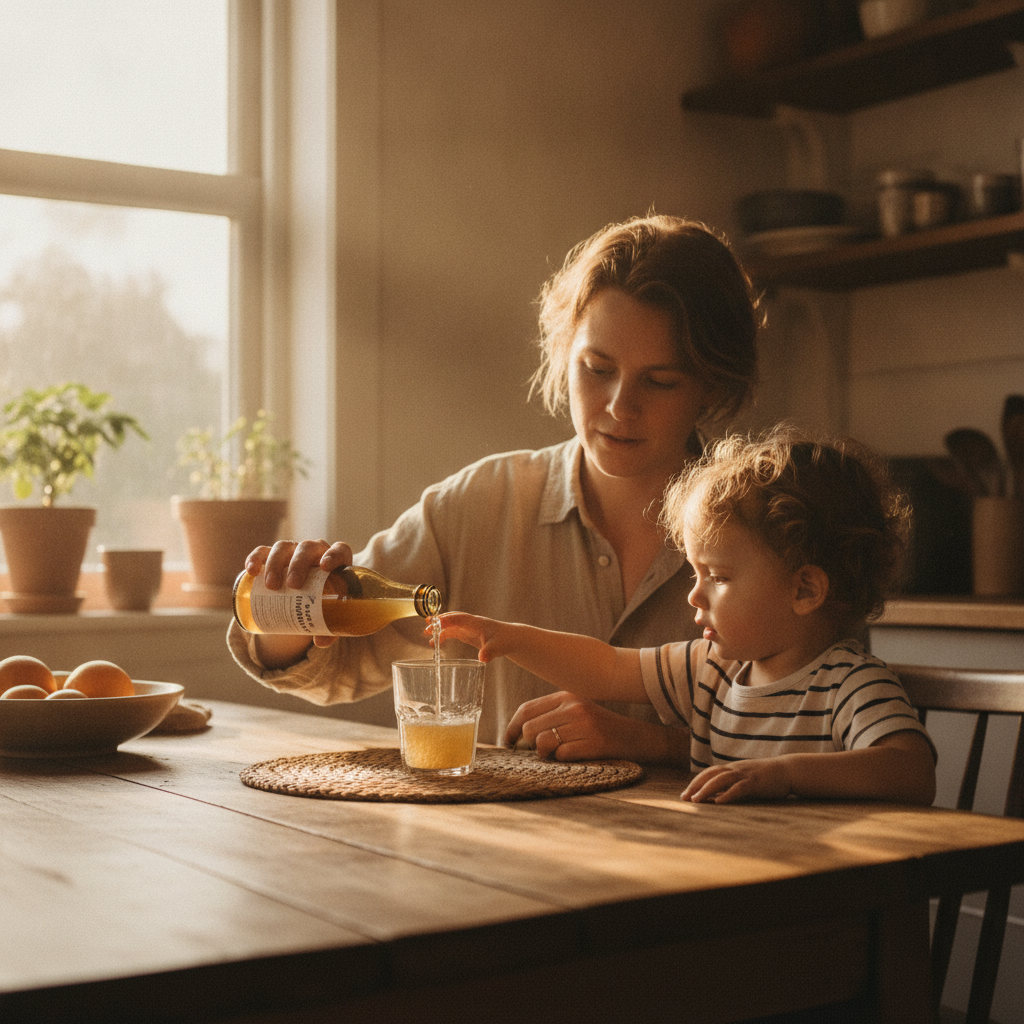
Is kombucha safe for kids? For most healthy children over about age 4, small amounts of commercial, pasteurized kombucha are generally considered low-risk -- but the answer isn't a flat yes. Kombucha's trace alcohol, caffeine, sugar, and (in raw/unpasteurized versions) live bacterial content all matter more for a child's smaller body than an adult's, and there's no dedicated pediatric research on kombucha specifically. Here's what's actually known, what isn't, and how to make a sensible call for your own family.
TL;DR: Is kombucha safe for kids? Small servings (a few ounces) of commercial, pasteurized kombucha are generally considered acceptable for healthy children roughly age 4 and up. The real concerns are trace alcohol (under 0.5% ABV in commercial bottles, but unpredictable in homemade or unpasteurized kombucha), caffeine, added sugar, and contamination risk in raw kombucha. No clinical research covers kombucha and children specifically, so ask your pediatrician first, especially for children under 4 or with a health condition.
Table of contents
Is kombucha safe for kids? Why it needs extra thought
Kombucha is fermented tea, and fermentation produces a handful of compounds -- trace alcohol, organic acids, live bacterial and yeast cultures, and (because it's made from tea) caffeine -- that are easy for a healthy adult body to handle in moderate amounts but scale differently for a child.
A child's smaller body weight means the same serving delivers a proportionally larger dose of alcohol, caffeine, and sugar than it would for an adult. None of this makes kombucha dangerous outright, but it's why "kids can have kombucha too" isn't automatically true just because it's a healthy-sounding drink for adults.
Trace alcohol and caffeine: the two biggest factors
Kombucha sold as non-alcoholic is typically labelled under 0.5% alcohol by volume (ABV) -- the threshold the US uses to treat a drink as non-alcoholic, and the figure Aboocha states for its own range -- roughly comparable to the trace alcohol naturally present in ripe fruit, some breads, or yogurt.
The US Alcohol and Tobacco Tax and Trade Bureau (TTB) treats kombucha at 0.5% ABV or more as an alcohol beverage, and a 2019 systematic review found only one study of kombucha in human subjects, so kombucha-specific human research is very limited. At that level, a small serving isn't considered meaningfully different from everyday fermented foods for a healthy child. The caveat is homemade or unregulated kombucha, where fermentation isn't controlled and ABV can run considerably higher and unpredictably -- this is the version worth avoiding for kids altogether.
On caffeine: kombucha typically carries a modest amount from its tea base, generally less than black tea and well below coffee. A 2017 review of ingested caffeine safety notes that children process caffeine differently than adults and recommends lower intake thresholds for younger age groups -- a reasonable factor to weigh alongside any other caffeine sources in a child's diet (chocolate, soft drinks, tea).
Raw vs. pasteurized kombucha: why it changes the risk
This is the single biggest safety distinction when asking is kombucha safe for kids. Pasteurized kombucha has been heat-treated to eliminate live bacteria and stabilize fermentation, similar to pasteurized milk or juice -- it still carries kombucha's flavor and acidity, but without the ongoing live-culture activity of raw kombucha.
Raw, unpasteurized kombucha keeps live bacteria and yeast active, which is part of its appeal for gut-health purposes in adults, but also means a small, real risk of contamination if brewing conditions aren't tightly controlled. Food-safety authorities including the CDC have documented isolated cases of serious illness linked to improperly brewed homemade kombucha (not from reputable commercial producers following food-safety standards).
For children -- along with pregnant people and anyone immunocompromised -- choosing a pasteurized, commercially produced kombucha from a reputable source meaningfully lowers this risk compared to raw or homemade versions.
Sugar content and serving size
Kombucha starts as sweetened tea, and fermentation consumes much -- but not all -- of that original sugar, so residual sugar content varies meaningfully by brand and brewing time. When asking is kombucha safe for kids, sugar matters the same way it would for any sweetened beverage: checking the label and treating kombucha as an occasional drink rather than a daily juice replacement is the sensible default, independent of any fermentation-specific concerns. A small serving (a few ounces, diluted with water if needed) is a reasonable starting point rather than a full adult-sized bottle.
A practical approach for parents
So, is kombucha safe for kids? If you want to let an older child (roughly 4 and up, as a general guide rather than a hard rule) try kombucha: choose a pasteurized, commercially produced bottle from a reputable source, start with a small serving, and treat it as occasional rather than daily -- the same approach already recommended on this site for kombucha during pregnancy and for teens.
For children under 4, or any child with an underlying health condition, a weakened immune system, or known caffeine sensitivity, check with a pediatrician first rather than relying on general guidance like this.
A note on our own range: Aboocha's kombucha and jun tea are raw and unpasteurised, so by the criteria above we suggest them for adults and older teens, not young children and not during pregnancy. If you are choosing for a child, pick a pasteurised product and check with your pediatrician. Adults can browse the range in our shop.
Frequently asked questions
Is kombucha safe for kids?
Small amounts of pasteurized, commercially produced kombucha are generally considered low-risk for healthy children roughly age 4 and up. There's no dedicated clinical research on kombucha and children specifically, so this guidance is extrapolated from general pediatric-nutrition and food-safety principles rather than kombucha-specific studies. For children under 4 or with any health condition, check with a pediatrician first.
What age can kids start drinking kombucha?
There's no official age threshold specific to kombucha. Around age 4 and up is a commonly cited general guideline (echoing broader pediatric caution around fermented and caffeinated foods for very young children), but it's a reasonable starting point rather than a clinically established cutoff -- a pediatrician's advice matters more than any general rule, especially for younger children.
Does kombucha have alcohol that could affect a child?
Commercial kombucha sold as non-alcoholic typically stays under 0.5% ABV, comparable to trace alcohol naturally found in foods like ripe fruit or yogurt -- not considered meaningfully different for a healthy child in a small serving. Homemade or unregulated kombucha is the real concern here, since its alcohol content isn't controlled and can run considerably higher.
Is raw kombucha riskier for kids than pasteurized kombucha?
Yes. Raw, unpasteurized kombucha keeps live bacteria and yeast active, which carries a small but real contamination risk if brewing conditions aren't tightly controlled -- documented in isolated case reports of illness linked to improperly brewed homemade kombucha. Pasteurized, commercially produced kombucha from a reputable source meaningfully lowers this risk and is the safer choice for children.
How much kombucha is okay for a child to drink?
A small serving -- a few ounces, diluted with water if needed -- as an occasional treat rather than a daily habit is a sensible starting point. This reflects normal caution around sugar and caffeine content in any sweetened beverage for children, not a kombucha-specific dosing study, since none exists.