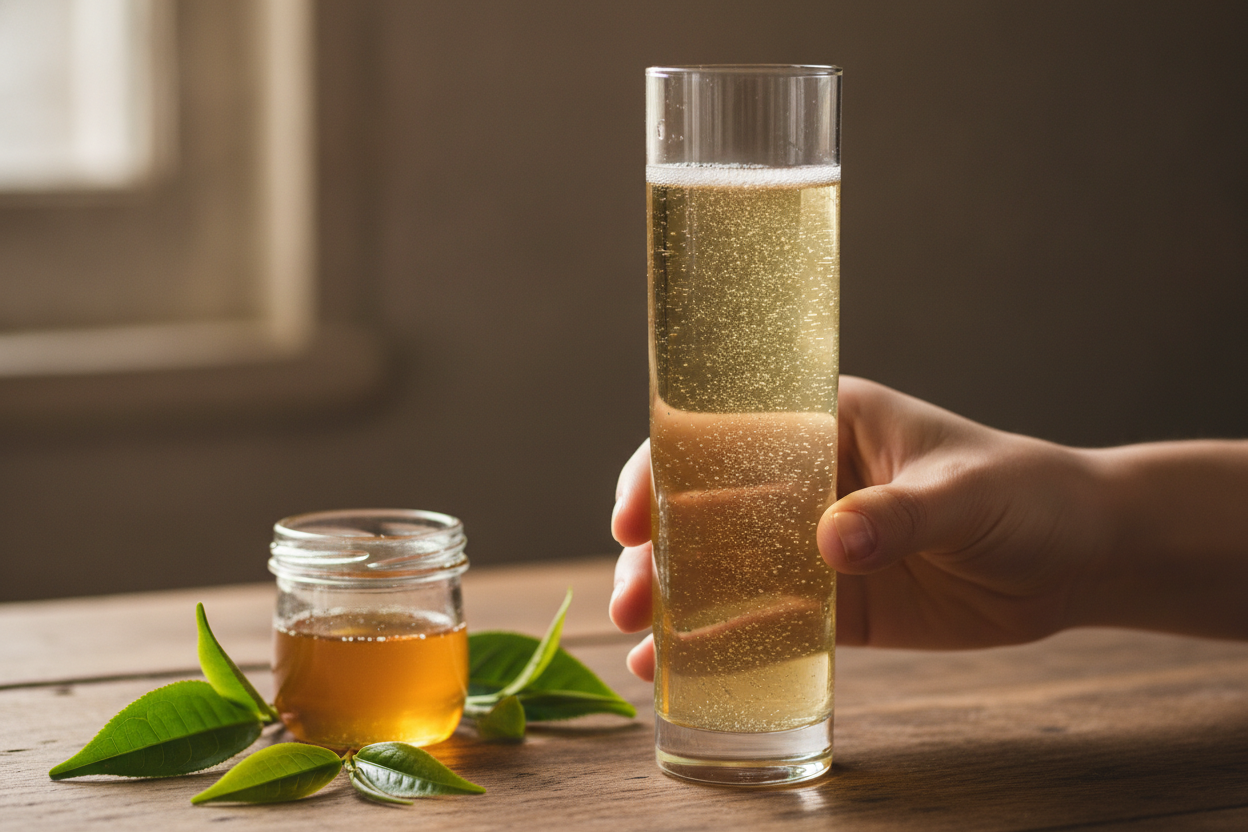
What is jun tea? It is a fermented drink made from green tea and honey, raised with the same kind of living culture of bacteria and yeast that makes kombucha. People usually meet it as a lighter, drier cousin of kombucha, sold in small numbers because it is slower and costlier to make. If you have seen the word on a menu or a shelf and wondered what you are looking at, this guide is for you.
We brew jun and kombucha in Singapore, so we are not neutral. We sell jun tea Singapore and kombucha Singapore, and we label which statements are our own and have not been independently audited. Where the research is thin, we say so plainly. So, what is jun tea, what is in it, and who should be careful? Read on.
TL;DR: What is jun tea? It is green tea sweetened with honey and fermented with a bacteria-and-yeast culture, which makes it a close relative of kombucha (usually black tea and cane sugar). It is tart, lightly fizzy, contains a little caffeine and a trace of alcohol, and is not suitable for infants under 12 months because of the honey. We found no human trial of jun itself, so we do not claim it is healthier than kombucha.
Table of contents
What is jun tea? The short answer
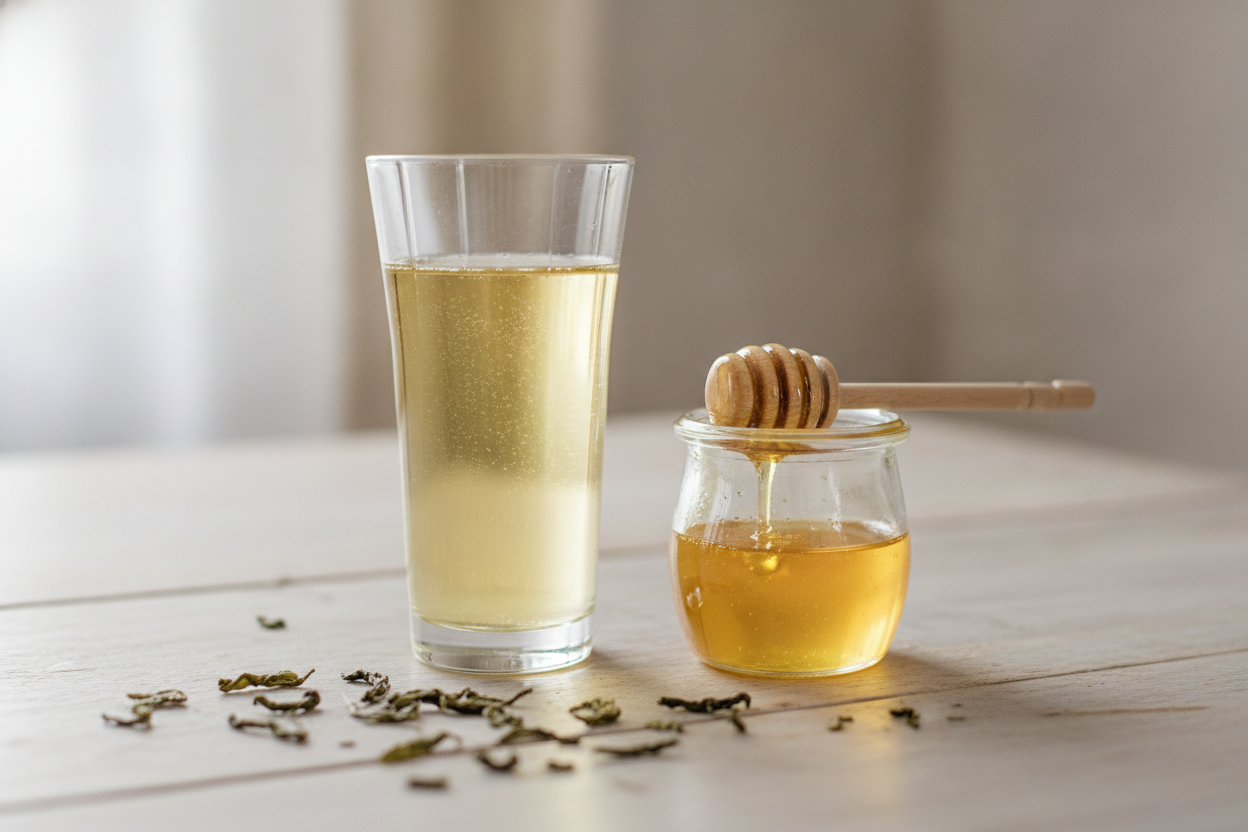
If you only read one section, make it this one. The Wikipedia entry on jun describes jun as a drink brewed by fermenting green tea, sweetened with honey, with a symbiotic culture of bacteria and yeast, usually shortened to SCOBY. Fruits, spices and other flavourings are commonly added afterwards.
So what is jun tea in practice? Here are the facts that matter to most people before they buy a bottle:
- Base: green tea and honey, where kombucha usually uses black tea and cane sugar.
- Culture: a SCOBY of bacteria and yeast does the fermenting, as in kombucha.
- Taste: tart and lightly fizzy; sources disagree on how sweet it is.
- Caffeine and alcohol: a little of each, because it starts as tea and ferments.
- Honey: not suitable for infants under 12 months.
- Evidence: research exists on kombucha and on ingredients, not on jun itself.
The rest of this guide expands each point, so that by the end you can answer what is jun tea for yourself and decide whether you want to try it.
What is jun tea made of?
Ingredients are the easiest way to answer what is jun tea. According to the Wikipedia entry on jun, jun is composed primarily of green tea and honey, whereas kombucha is made of black tea and cane sugar. Both need a symbiotic colony of bacteria and yeast to ferment.
For our own jun, the ingredient list is short: filtered water, green tea, raw unpasteurised honey from a single apiary and our jun mother, plus the real fruit or root that names each flavour. That is our own statement and has not been independently audited. Other brewers may use different teas, honeys or flavourings, so always read the label.
A bottle also gets its character from what is added after the main fermentation. Ginger, berries, guava and flowers are common choices. When someone asks what is jun tea like, the honest answer is that a plain bottle and a heavily flavoured one can taste quite different, even though the base is the same.
How is jun tea made?
The method is the same idea as kombucha. Tea is brewed, cooled and sweetened, then the culture is added and the mixture is left to ferment. Over days, the yeasts and bacteria change the sugars into acids, a little alcohol and carbon dioxide, which is why the drink turns tart and fizzy.
The best published look we could find at a honey-fed kombucha-style ferment is a 2023 study in Foods on kombucha made with a Greek mountain tea sweetened with thyme honey. The researchers brewed 5 grams per litre of mountain tea, added 75 grams per litre of honey and used a SCOBY. They stopped the ferment when the acidity reached the range they wanted, which took less than four days in their tests.
That study used a different tea and a different honey from a typical jun, so it does not describe any brand. It does show, in a lab, that honey can feed a kombucha culture. For what is jun tea at the process level, that is the closest solid evidence we found.
Our own page says our jun ferments cooler and takes longer than our kombucha, so we make less of it. That is our own statement. It matches the general point that jun is rarer and a little dearer, which we return to below.
What is jun tea doing differently with honey?
Honey is not simply a swap for sugar. The same Foods study explains that honey is composed mainly of fructose and glucose, while table sugar is sucrose. In kombucha made with sugar, yeasts first split sucrose into glucose and fructose. In honey those sugars are already available.
In that experiment, the acetic acid bacteria grew faster than the yeasts, the reverse of what the authors describe for sugar-based kombucha. They attribute this to the honey being ready to use. We would not generalise from one study of one tea, but it shows that a honey base can behave differently, which is part of why jun is considered its own drink.
The tea matters too. A 2018 study in Nutrients that fermented green, black and rooibos tea with the same starter culture found that the bacteria were similar across teas but the yeast community was significantly different depending on the tea. Neither study tested jun itself, but together they support a limited point: the base changes the ferment.
What does jun tea taste like?
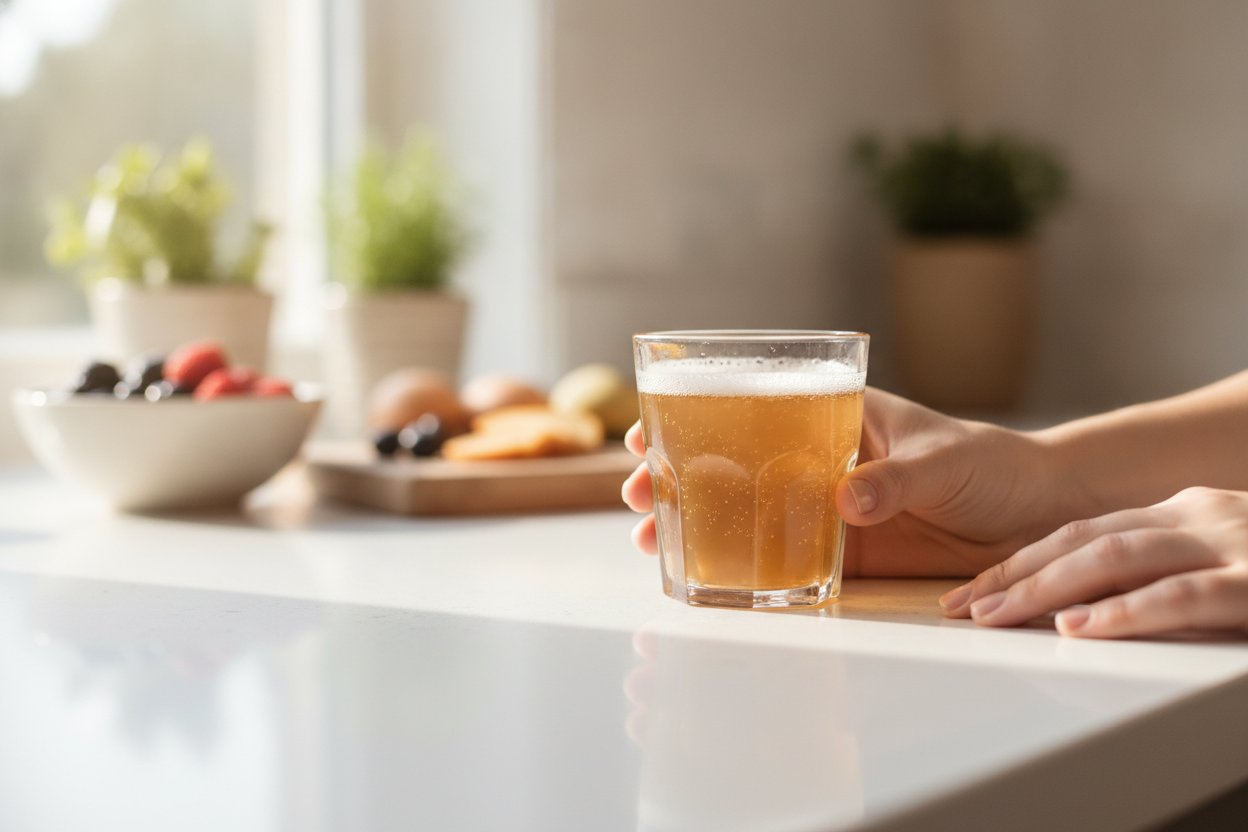
Taste is where most people want an answer after asking what is jun tea. The Wikipedia entry says jun has a sweeter taste than kombucha. Our own page describes our jun as lighter, drier and softer, closer to a dry sparkling wine than a tart soda.
Both can be true, because sweetness depends on how far the ferment has gone and what is added afterwards. A jun stopped early will taste sweeter, and one left longer will taste drier and more tart. That is why we hesitate to give one answer to what is jun tea going to taste like in your glass.
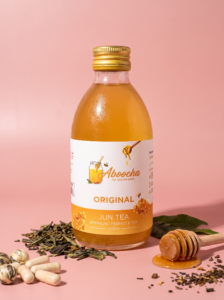
For our Jun Original, the product page lists the nose as fresh green tea and wildflower honey, the palate as light and dry with fine bubbles, and the finish as crisp with a soft honey note. Those are our own tasting notes, not measurements. If you are new to jun, an unflavoured bottle is the fairest first test.
Serve it well chilled in a flute or wine glass. Our page suggests light, fresh food such as oysters, steamed fish, sashimi or a simple salad. That is a suggestion, not a rule, and your own palate is the judge.
What is jun tea compared with kombucha?
The two are close relatives and many people use the words loosely. Strictly, the Wikipedia entry on jun says jun bears similarities to kombucha, water kefir and kvass but has enough differences to be considered a distinct drink. The main differences are the tea, the sweetener, the taste, the price and the availability.
We have written a longer side-by-side in our guide to jun tea vs kombucha. In short, if you already like kombucha, jun is a natural next bottle. If you are asking what is jun tea because you want a lower-effort alternative, remember that both are fermented, both contain a little caffeine and both contain trace alcohol.
Neither one is proven to be better for you. We found no human trial of jun, so any claim that it beats kombucha, or the reverse, goes beyond the evidence. Choose on taste, price and how you react to honey.
Where does jun tea come from?
This part is murky, so we report it with care. The Wikipedia entry says it is not clear where jun was first created. Western vendors claim it was developed thousands of years ago by monks of Bon in Tibet and northern China.
The same entry quotes the food writer Sandor Katz, who doubts that claim. He concludes that jun is a relatively recent divergence from the kombucha family tree, and says books on Tibetan food contain no mention of it. We are repeating what that page reports, not ruling on the history.
Our own jun page calls the Himalayan story folklore and says jun first appears in Western brewing circles in the 1990s as a champagne kombucha. We treat the origin story as a nice legend. When you ask what is jun tea, the safest answer on history is that nobody has established it.
Does jun tea have caffeine or alcohol?
Yes to both, in small amounts. It is brewed from green tea, so it contains some caffeine. Our own page says jun has a little caffeine from the green tea. We did not find a published measurement of caffeine in jun, so we cannot give you a number, and amounts will vary by recipe and brew.
Alcohol is a by-product of fermentation. Our own stated figure for our jun is trace alcohol under 0.5 per cent ABV, which has not been independently audited. In the honey study above, the finished drink measured 0.49 to 0.75 per cent by volume right after fermentation, and more after a month of storage in sealed bottles in the fridge.
That is one study of one recipe, not a verdict on every bottle. If alcohol matters to you, for religious, medical or driving reasons, read our plain-language guide on kombucha and alcohol and treat the safe assumption as not zero. For caffeine, our guide to kombucha caffeine explains why numbers vary.

Is jun tea healthy? What the evidence does and does not show
Anyone asking what is jun tea will soon ask whether it is good for you. We searched the research and found no human trial of jun. What exists is lab work on kombucha and on ingredients such as tea and honey, which cannot tell us what drinking jun does to a person.
Our own jun page lists general points about live cultures, green tea and honey, and is careful to say the research describes fermented foods, green tea and honey rather than the effects of our products. It also says jun itself has barely been studied in people. We agree with that framing.
So our position on what is jun tea in health terms is modest. It is a food, not a medicine. It is not proven to treat or prevent anything. If a seller calls jun a cure, ask for the study. Our guide to kombucha side effects covers who should be careful, and much of it applies here.
Who should be careful with jun tea?
Honey changes the safety picture. Our own page says honey is not suitable for infants under 12 months. It also advises people who are pregnant, immunocompromised or unsure to ask a doctor first. We repeat that here because it is the most practical answer to what is jun tea if you share your drinks at home.
Medicines are the second group. Fermented drinks can interact with some prescriptions, and we know of no studies specific to jun. If you take regular medication, read our guide to kombucha and medication interactions and ask your pharmacist.
Religious and legal questions deserve a proper answer from the right authority. We are not a religious body and we have not verified any ruling on jun, so we will not state one. Our guide on whether kombucha is halal and legal in Singapore explains the questions to ask.
If you are new to fermented drinks, start with a small glass and see how you feel. That is general caution, not medical advice.
What is jun tea worth? Price, sugar and availability
The Wikipedia entry says jun has a higher price, because of the cost of its ingredients, and limited availability. That fits our experience. Our jun is $7.50 a bottle and our kombucha is $6.80, so jun costs 70 cents more per bottle. That figure is our own arithmetic from our listed prices, and prices can change.
Our Jun Original page also lists a bundle of any four jun for $28, mixing any flavours. Delivery is free island-wide on orders of $80 and above, about 12 bottles, and on every subscription. Delivery is next working day, and the bottles travel chilled.
On sugar, we state about 1 to 3 per cent across our range, with a Nutri-Grade of A or B, per our nutrition panels. That is our own statement and it has not been independently audited. We did not find a published, like-for-like sugar comparison of jun against kombucha, so we cannot say how other brands compare. For the label-reading method, see our guide to kombucha calories.
What is jun tea like in each of our four flavours?
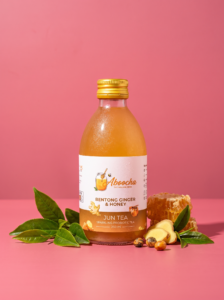
If you want to try it, here is how we describe our own four flavours. These are our product statements, not independent reviews. You can see them all on our jun tea Singapore page.
- Jun Original: green tea and raw honey, described as light and dry.
- Bentong Ginger and Honey Jun: warm Pahang ginger with a light body.
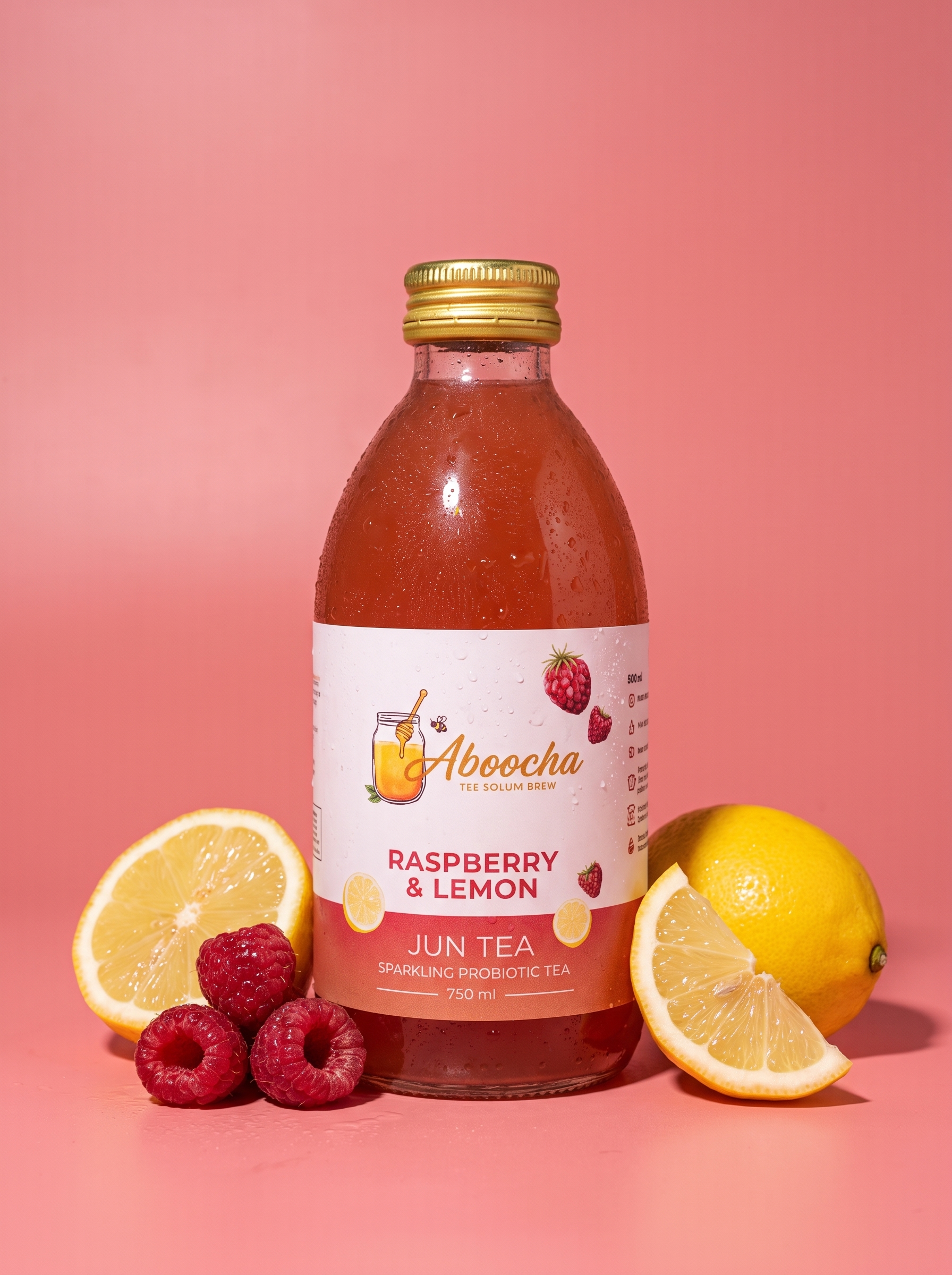
- Raspberry and Lemon Jun: sharp berry and soft lemon.
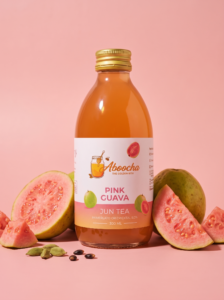
- Pink Guava Jun: tropical and faintly floral.
Every one is $7.50 a bottle. If you are unsure where to start, an unflavoured Original gives you the cleanest read on what is jun tea at its simplest, and a flavoured bottle afterwards shows how far the base can travel.
How to store and serve jun tea
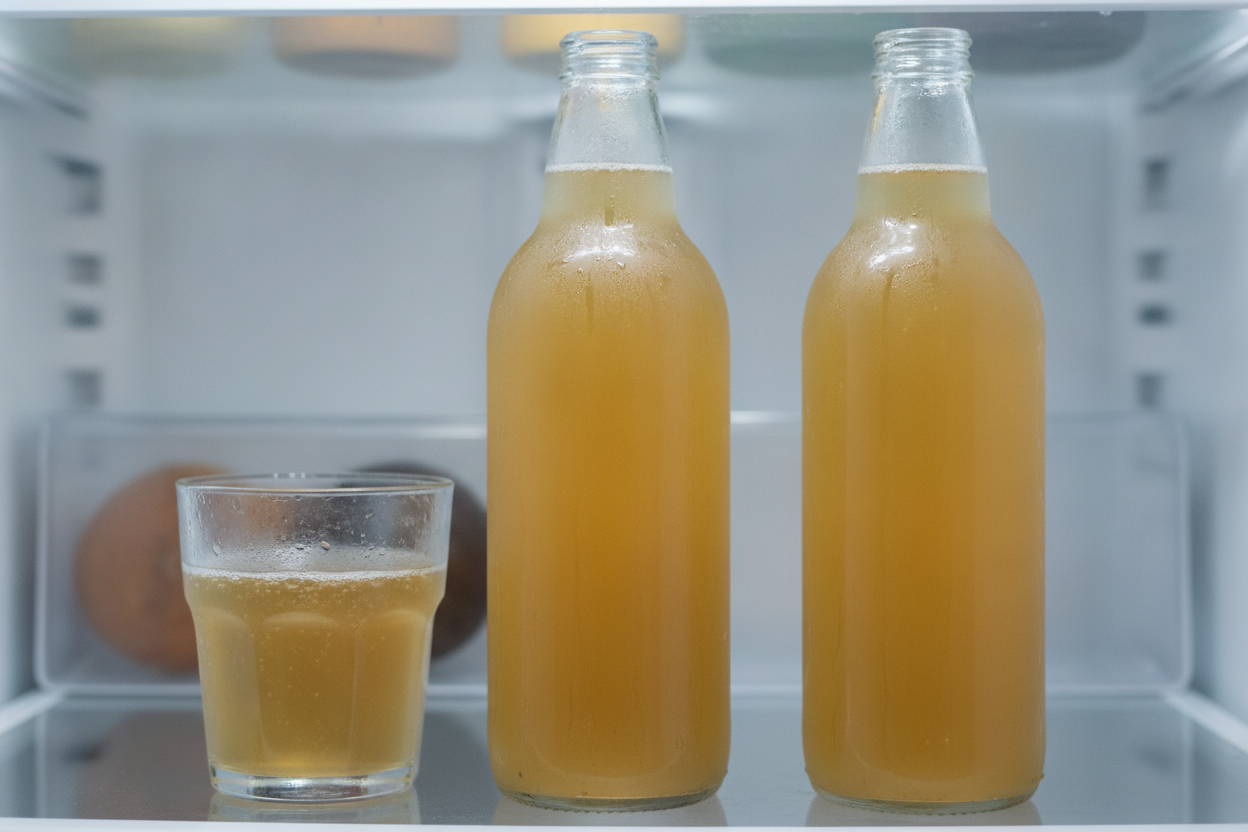
Raw bottles keep fermenting while warm. That means more fizz, more tartness and possibly more alcohol if they sit out. The honey study above found that fermentation continued slowly during refrigeration, which is another reason to keep raw bottles cold and drink them within the date.
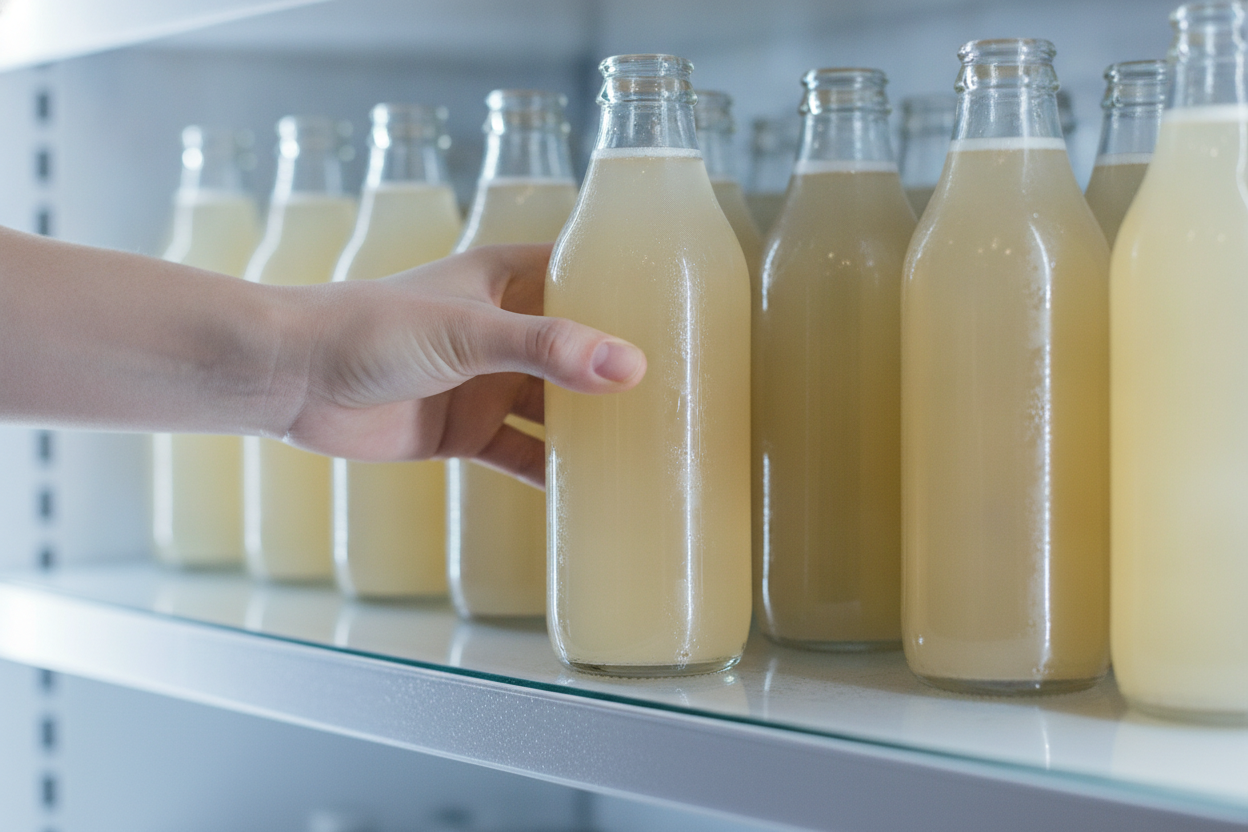
Our own bottles are raw and unpasteurised, which is our statement, so we deliver them cold and ask you to keep them in the fridge. Our guide on whether kombucha needs refrigeration explains the reasoning, and it applies to raw jun as well. Pasteurised bottles are handled differently, so read the label.
Open bottles carefully, because fizz can build up, and pour into a clean glass. That is general advice, not a safety guarantee.
What is jun tea worth trying? How to buy it in Singapore
Having worked through what is jun tea, the best next step is a small test. A mixed order lets you compare jun with kombucha, chilled and side by side. Write down which one you finish first. That tells you more about your own taste than any article.
If you would rather not decide, our subscription lets you mix flavours across kombucha and jun tea. Our page says subscribers save 15 per cent and never pay delivery, and that is our own statement. See the shop for current options, or read our guide to kombucha delivery in Singapore for how delivery works.
What is jun tea at Aboocha? Our own statements
Aboocha brews kombucha and jun tea in small batches in Singapore. These are our own statements and have not been audited by an independent party.
| Item | What we state for our jun |
|---|---|
| Live culture | Raw and unpasteurised |
| Ingredients | Filtered water, green tea, raw unpasteurised honey from a single apiary, our jun mother, real fruit or root |
| Flavours | Four: Original, Bentong Ginger and Honey, Raspberry and Lemon, Pink Guava |
| Price per bottle | $7.50 |
| Sugar | About 1-3%, Nutri-Grade A-B, per our panels |
| Alcohol | Trace, under 0.5% ABV, our own stated figure |
| Honey | Not suitable for infants under 12 months |
| Delivery | Chilled, next working day; free on orders of $80 and above and on every subscription |
Browse the Jun Original or everything in the shop, and see jun tea Singapore for the full range.
Common mistakes when asking what is jun tea
- Treating it as a health product: we found no human trial of jun.
- Assuming it is alcohol-free: fermentation makes some alcohol, so the safe assumption is not zero.
- Forgetting the honey: it matters for infants and some medical conditions.
- Believing the Tibet story as fact: the origin is disputed.
- Judging jun by a heavily flavoured bottle: try a plain one first.
Avoiding these keeps the answer to what is jun tea simple and honest.
What we checked and what we could not
- Checked: the Wikipedia entry on jun, the 2018 Nutrients study on green, black and rooibos tea kombucha, and the 2023 Foods study on honey-sweetened kombucha.
- Could not find: a human trial of jun, a published measurement of caffeine or alcohol in jun, and an independent audit of our own products.
- Our own statements: everything labelled as ours, including prices, sugar, alcohol and ingredients.
This article is general information, not medical advice. If you have a health condition or take medication, talk to a doctor or pharmacist before changing what you drink.
What is jun tea in simple terms?
It is a fermented drink made from green tea and honey, using a bacteria-and-yeast culture like the one in kombucha. It is tart, lightly fizzy and contains a little caffeine and a trace of alcohol. Brewers often add fruit, ginger or flowers afterwards.
What is the main difference between kombucha and jun?
The base. Jun uses green tea and honey, and kombucha usually uses black tea and cane sugar. Brewers also differ in fermentation time, flavouring and price, so differences between brands can be larger than differences between the two categories.
What is sparkling jun?
It usually means jun that has been bottled with its fizz, so it is lightly carbonated by the fermentation. Our own jun is naturally fizzy. The fizz level varies by brewer and bottle, so treat it as a description rather than a standard.
Is kombucha just fermented tea?
Largely, yes. It is sweetened tea fermented by a culture of bacteria and yeast. That is also the idea behind jun, which swaps in green tea and honey. Neither is proven to treat any condition, and both contain a little caffeine and alcohol.
Is it safe to drink jun tea or kombucha every day?
We found no study that sets a safe daily amount for jun. Fermented drinks contain caffeine, trace alcohol and acid, and can interact with some medicines. If you are pregnant, immunocompromised or on medication, ask a doctor before drinking either regularly.
Does jun tea have caffeine?
Yes, a little, because it is brewed from green tea. We did not find a published measurement for jun, so we do not give a number. Amounts vary by recipe and brew, so check the brewer if you are sensitive.
Is jun tea alcoholic?
It contains a trace of alcohol from fermentation. Our own stated figure is under 0.5 per cent ABV, which has not been independently audited. A study of a honey ferment measured 0.49 to 0.75 per cent right after fermentation, so the safe assumption is not zero.
Where can I buy jun tea in Singapore?
We sell four jun flavours at $7.50 a bottle, with free delivery on orders of $80 and above and on every subscription. Visit our jun tea Singapore page or the shop, and read each brand's label for ingredients and storage.