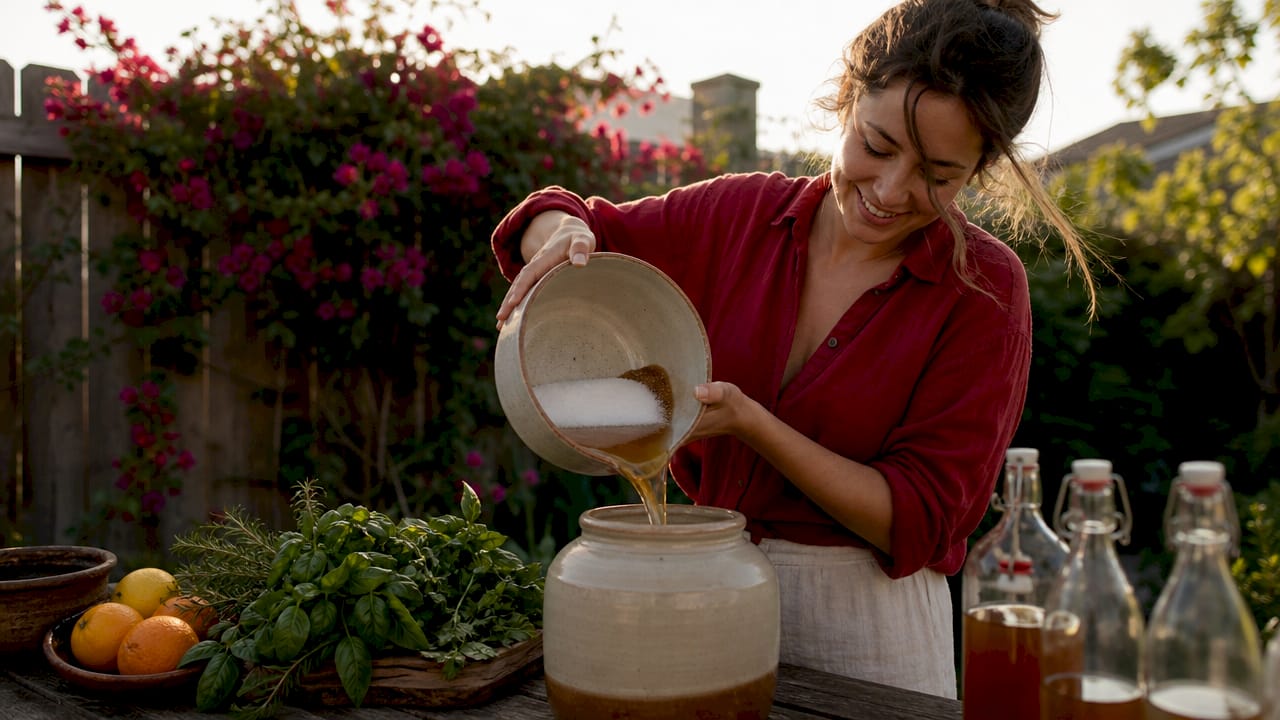
How is jun tea made? In short: green tea is brewed and sweetened with honey, then a living culture of bacteria and yeast ferments it until it turns light, tart and gently fizzy. Flavour is added, the drink is bottled, and it is kept cold. That is the whole idea, but each step changes the drink you end up with.
This guide walks through how is jun tea made, step by step, and marks what is backed by research, what comes from home-brewing tradition and what is our own practice. We brew jun tea Singapore and kombucha Singapore, so we are not neutral. If you are new to the drink, start with what is jun tea.
TL;DR: How is jun tea made? Brew green tea, sweeten it with honey, add a jun culture (a SCOBY raised on honey) and let it ferment; then flavour, bottle and chill it. We found no peer-reviewed study of jun itself, so the science here comes from honey-sweetened and green tea kombucha. Our own jun is fermented cooler and slower than our kombucha, by our own account.
Table of contents
How is jun tea made? The short answer
If you only read one section, read this one. Here is how is jun tea made, in five steps:
- 1. Brew the tea: green tea is steeped in hot water.
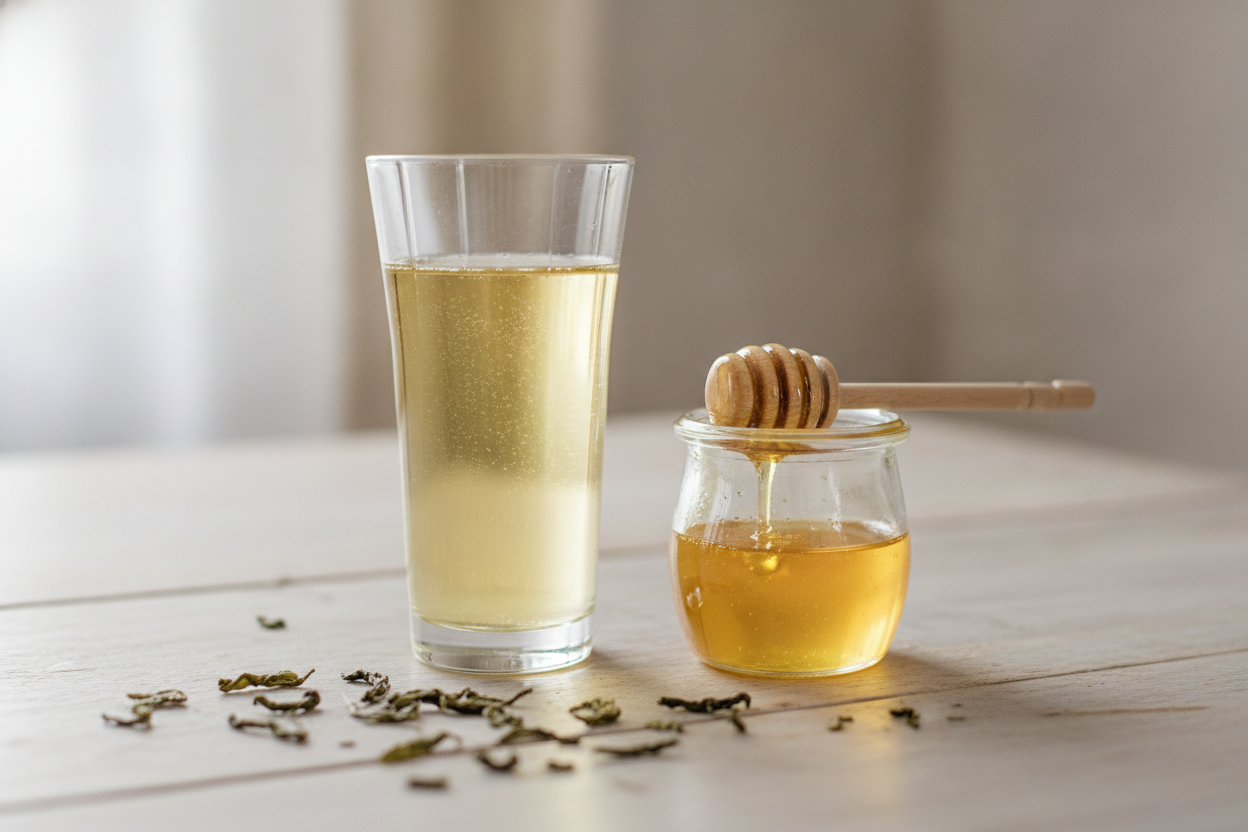
- 2. Sweeten with honey: honey is stirred in once the tea has cooled.
- 3. Add the culture: a jun SCOBY and some finished jun start the ferment.
- 4. Ferment: yeasts and bacteria turn sugars into acids, a trace of alcohol and gas.
- 5. Flavour, bottle and chill: fruit or root may be added, then the drink is kept cold.
The sections below take each step in turn and explain what is happening in the jar. Where a fact comes from kombucha research rather than jun research, we say so, because no study of jun itself turned up in our search.
How is jun tea made? The ingredients
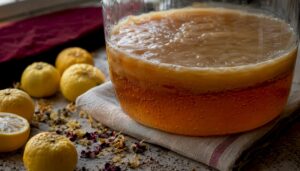
The Wikipedia entry on jun describes jun as a fermented drink like kombucha whose base ingredients are green tea and honey. Kombucha, by contrast, is usually made with black tea and cane sugar. That swap of tea and sweetener is the main difference in how is jun tea made.
So the core list is short: water, green tea, honey and a culture. Our own jun uses filtered water, green tea, raw unpasteurised honey from a single apiary and our jun mother, plus the real fruit or root that names each flavour. Those are our own statements, not independently audited.
| Ingredient | Role in the ferment |
|---|---|
| Water | The base; most of the bottle |
| Green tea | Flavour, colour and the compounds the culture grows in |
| Honey | The sugar the culture feeds on |
| Jun culture (SCOBY) | The bacteria and yeasts that do the fermenting |
| Finished jun | Acidic starter liquid from an earlier batch |
| Fruit or root (optional) | Flavour added after the main ferment |
The starter-liquid row reflects common home-brewing practice for kombucha-type drinks; we did not find a study that tested it for jun.
How is jun tea made? Steps 1 and 2: tea and honey
The first step in how is jun tea made is a pot of green tea. The Wikipedia entry gives a home method in which the tea is steeped in hot water, cooled to room temperature, and only then sweetened with honey and mixed until dissolved. The article itself flags that section as unsourced, so treat it as tradition, not tested science.
The cooling step matters for a practical reason: the culture is alive, and very hot liquid would harm it. Many home brewers also cool the tea before adding honey so the honey is not cooked. We could not find a study measuring what heat does to honey in jun, so we leave that as a brewer's preference.
Green tea is not just a background flavour. A 2018 study in Nutrients comparing green, black and rooibos kombucha made kombucha from the same starter on green, black and rooibos teas. The yeast community differed significantly between the teas, which shows that the choice of tea shapes what grows in the jar.
How is jun tea made? Step 3: adding the culture
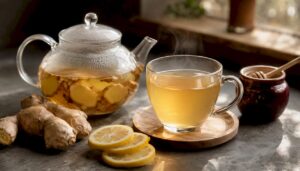
Next comes the culture, often called a SCOBY, short for symbiotic culture of bacteria and yeast. The 2025 review of kombucha in Current Nutrition Reports describes kombucha as fermented from sweetened tea and a SCOBY. Jun uses the same idea, but its culture is kept on green tea and honey.
Our own jun page describes our jun mother as carrying its own blend of yeasts and bacteria, raised on honey. That is our description of our culture, and we have not had its microbes independently analysed. We could not find any published analysis of the microbes in a jun culture.
Brewers usually add some finished jun from a previous batch along with the culture. The liquid is already acidic, which gives the new batch a head start. That is how is jun tea made in practice: each batch passes its culture and some of its liquid on to the next.
Step 4: how is jun tea made during fermentation?
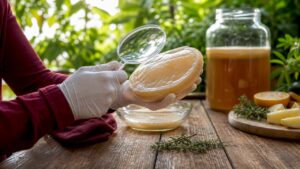
Fermentation is where sweet tea becomes jun. According to the 2025 kombucha review, fermentation transforms the sugar into ethanol and acetic acid, which gives the drink its tangy flavour. The same microbial teamwork happens in jun, with honey as the sugar.
The 2023 study in Foods of kombucha sweetened with thyme honey is the closest study we found to jun. It fermented a mountain herb tea sweetened with honey using a kombucha culture. Bacteria and yeast counts rose, which the authors say shows the honey-sweetened tea supported the culture. The pH fell and the acidity rose as fermentation went on.
That study also measured more phenolics, more antioxidant activity and higher levels of several B vitamins and vitamin C after fermentation. Those were laboratory measurements of a herb tea, not green tea jun, and not a health result in people.
Time and temperature control the pace. A 2026 study in Foods on fermentation time and temperature fermented black tea kombucha at 23, 25 and 28 °C for 7, 11 and 15 days. The pH fell further with higher temperature and longer time, from 3.47 to 2.96, and lactic and acetic acids built up. Jun was not tested, but the same rule of thumb applies: warmer and longer means more sour.
How is jun tea made: how long and how warm?
For jun specifically, the Wikipedia entry, citing a home-remedies book, says fermentation typically takes 5-7 days. We could not read that book, so we pass the figure on as a reported range, not a verified one. An unsourced section of the same article suggests 70-80 °F, which is about 21-27 °C.
In practice, brewers taste as they go. The Wikipedia method suggests tasting after about five days and continuing until the sweetness drops to the level you like. That is the real answer to how is jun tea made at home: by taste, not by a fixed clock.
Our own practice is different from a home kitchen. Our jun page says jun ferments cooler and takes longer than our kombucha, which ferments for 21 days. We do not publish an exact temperature or day count for our jun, so we do not state one here.
| Factor | What we found | Source type |
|---|---|---|
| Typical home jun time | 5-7 days | Wikipedia citing a book we could not read |
| Home jun temperature | 70-80 °F (about 21-27 °C) | Unsourced Wikipedia section |
| Effect of heat and time | Higher temperature and longer time lowered pH in kombucha | 2026 laboratory study |
| Our jun | Cooler and slower than our 21-day kombucha | Our own statement |
How is jun tea made? Step 5: flavour, bottle and chill
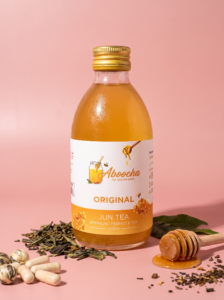
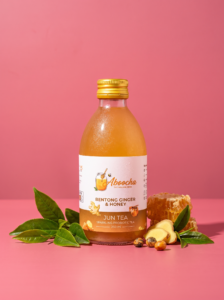
After the main ferment, the culture is lifted out and the jun is flavoured. Our own range adds real fruit or root: Pahang ginger in Bentong Ginger and Honey Jun, pink guava, and raspberry with lemon. Our Jun Original is just green tea and honey.
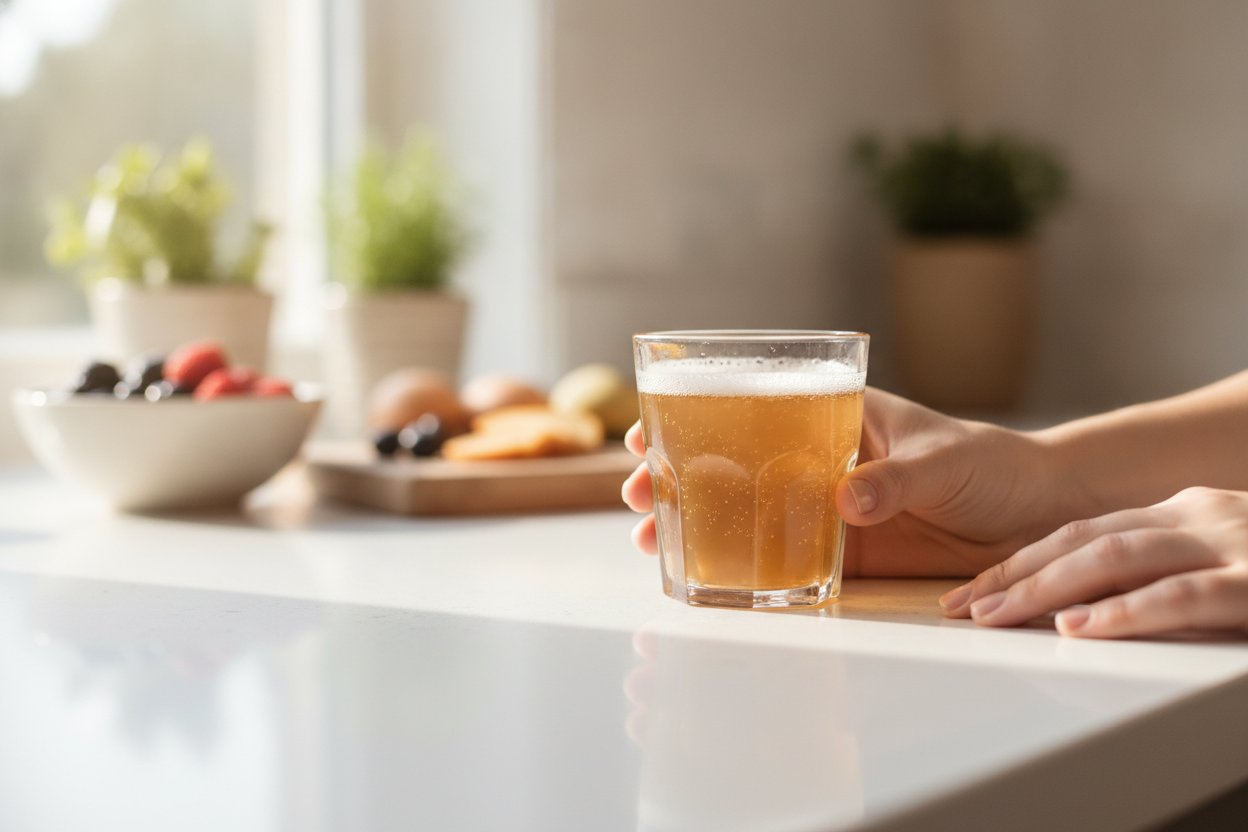
Many home brewers then seal the jun in bottles for a second, shorter ferment to build fizz. The Wikipedia entry describes 1-3 days at room temperature before chilling, again in a section it marks as unsourced. Sealed bottles trap the carbon dioxide that yeast produce, which is where the bubbles come from.
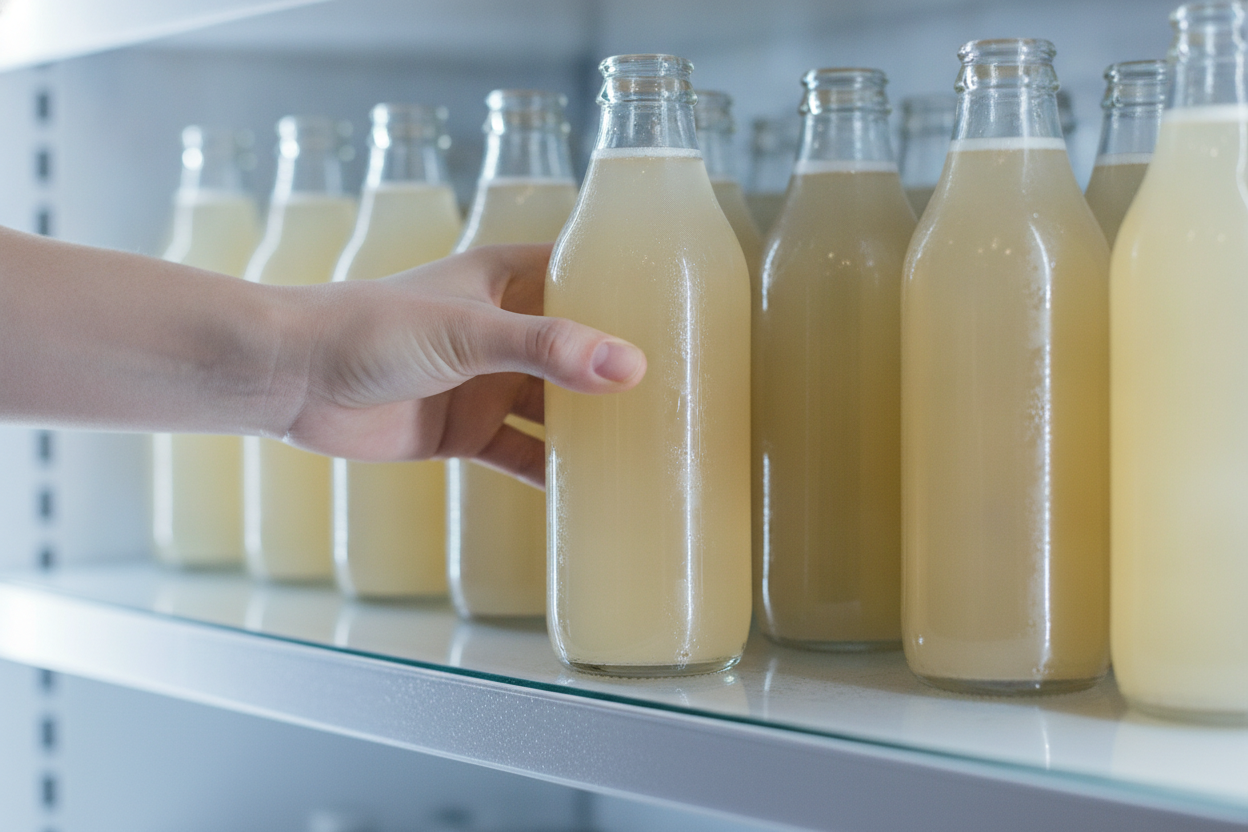
Cold slows the culture down. Our jun is raw and unpasteurised, so the live cultures are still in the bottle, and we deliver it chilled and ask you to keep it in the fridge. Our guide to does kombucha need refrigeration explains why that matters.
How is jun tea made differently from kombucha?
The two drinks follow the same process, so the differences in how is jun tea made come down to inputs and pace. Our guide to jun tea vs kombucha covers taste and price; this table covers the brewing side.
| Step | Jun | Kombucha |
|---|---|---|
| Tea | Green tea | Usually black tea; ours uses oolong and black |
| Sweetener | Honey | Cane sugar |
| Culture | A SCOBY kept on green tea and honey | A SCOBY kept on sweet black tea |
| Pace (ours) | Cooler and slower than our kombucha | 21 days, our own figure |
| Taste (ours) | Light and dry, a soft honey note | Crisp and lightly tart |
The tea-type study above shows that changing the tea changes the yeasts, and the honey study shows a culture can grow on honey. Neither study tested jun, but together they explain why jun tastes different even though the method is the same.
How is jun tea made at home, and is it safe?
Home brewing is common, but it carries risks that a licensed brewery controls. A 1995 CDC report from Iowa described two women who became seriously ill with acidosis after drinking home-brewed kombucha; one died. Investigators did not establish that the tea caused the illness, and found no known human pathogens in the samples.
The same report gives practical cautions. Home-brewed tea is made under varying conditions, so contamination such as mould is possible. It also advised against making or storing the acidic tea in ceramic or lead crystal containers, which can leach toxic elements. The home samples measured 0.7-1.3% alcohol.
- Use glass: avoid ceramic and lead crystal for the acidic liquid, as the CDC report advises.
- Keep it clean: clean equipment and hands; discard any batch with mould.
- Mind the honey: honey is not suitable for babies under 12 months.
- Expect alcohol: home batches are not tested, and alcohol can be higher than in a commercial bottle.
If you are pregnant, immunocompromised or have a medical condition, ask your doctor before drinking home-brewed ferments. Our guide to does jun kombucha have alcohol explains what trace alcohol means.
How we make our jun
Aboocha brews kombucha and jun tea in small batches in Singapore. These are our own statements and have not been audited by an independent party. Here is how is jun tea made at Aboocha, as far as we publish it:
| Item | What we state for our jun |
|---|---|
| Tea | Green tea |
| Sweetener | Raw, unpasteurised honey from a single apiary |
| Culture | Our jun mother, raised on honey |
| Fermentation | Cooler and slower than our kombucha; small batches in Singapore |
| Live culture | Raw and unpasteurised |
| Sugar | About 1-3%, Nutri-Grade A-B |
| Alcohol | Trace, under 0.5% ABV |
| Caffeine | A little, from the green tea |
| Price | $7.50 a bottle |
You can try Pink Guava Jun, Raspberry and Lemon Jun or the rest of the shop. If you want to know what the evidence says about drinking it, read our guide to jun tea benefits.
Is jun a probiotic after it is made?
Because jun is raw, it contains live microbes. The 2021 ISAPP consensus statement on fermented foods lists most kombuchas among fermented foods that contain live microorganisms. But the same panel says fermented foods should not be called probiotic without strain-level evidence.
So the answer to how is jun tea made explains what is in the bottle: the process gives you a living, fermented drink, not a proven probiotic. We found no analysis of the microbes in jun and no trial of jun in people, which is why we make no health claims for it.
What we checked and what we could not
- Checked: the Wikipedia entry on jun (noting which parts are unsourced), a 2025 kombucha review, the 2026 time-and-temperature study, the 2023 honey kombucha study, the 2018 tea-type study, the 2021 ISAPP consensus and the 1995 CDC report; our own jun pages for our process.
- Could not find: any peer-reviewed study of jun itself, any analysis of the microbes in a jun culture, or a verified fermentation time and temperature for jun.
- Could not read: the book that Wikipedia cites for the 5-7 day figure.
- Our own statements: everything labelled as ours, including our process, sugar and alcohol figures.
Our answer to how is jun tea made will change if better evidence appears. This article is general information, not brewing or medical advice. If research on jun appears, we will update this page.
How is jun tea made?
Green tea is brewed and sweetened with honey, then cooled. A jun culture (a SCOBY raised on honey) and some finished jun are added, and the mix ferments until it is light and tart. It is then flavoured, bottled and chilled.
What is the difference between jun and kombucha brewing?
The method is the same; the inputs differ. Jun uses green tea and honey, while kombucha usually uses black tea and cane sugar. Our own jun also ferments cooler and slower than our 21-day kombucha.
How long does jun take to ferment?
Wikipedia, citing a home-remedies book we could not read, says 5-7 days. Home brewers taste from about day five and stop when the sweetness suits them. Warmer temperatures speed fermentation and make the drink more sour.
Can you make jun with a kombucha SCOBY?
A kombucha culture can ferment honey-sweetened tea: a 2023 study grew one on a honey-sweetened herb tea. Whether the result matches a traditional jun culture has not been studied, so we cannot say it makes the same drink.
Does jun need raw honey?
We use raw, unpasteurised honey, and that is our choice, not a tested requirement. We found no study comparing raw and processed honey in jun. Honey of any kind is not suitable for babies under 12 months.
Is homemade jun safe?
It can carry risks. A 1995 CDC report linked home-brewed kombucha to serious illness, though no cause was proven, and advised against ceramic or lead crystal containers. Keep equipment clean, discard mouldy batches and ask your doctor if you are pregnant or unwell.
How is jun tea made fizzy?
Yeasts produce carbon dioxide as they ferment. Home brewers often seal finished jun in bottles for a short second ferment so the gas stays in the liquid, then chill it. That bottle step is the part of how is jun tea made that creates most of the bubbles.
Does jun contain alcohol?
Yes, a trace, because yeasts produce alcohol during fermentation. Our own stated figure is under 0.5% ABV. Home batches are untested and can be higher; the CDC report measured 0.7-1.3% in home-brewed kombucha.
Where can I buy jun tea in Singapore?
We sell four jun flavours at $7.50 a bottle, brewed in small batches in Singapore. Visit our jun tea Singapore page or the shop, and read each brand's label for ingredients and storage.