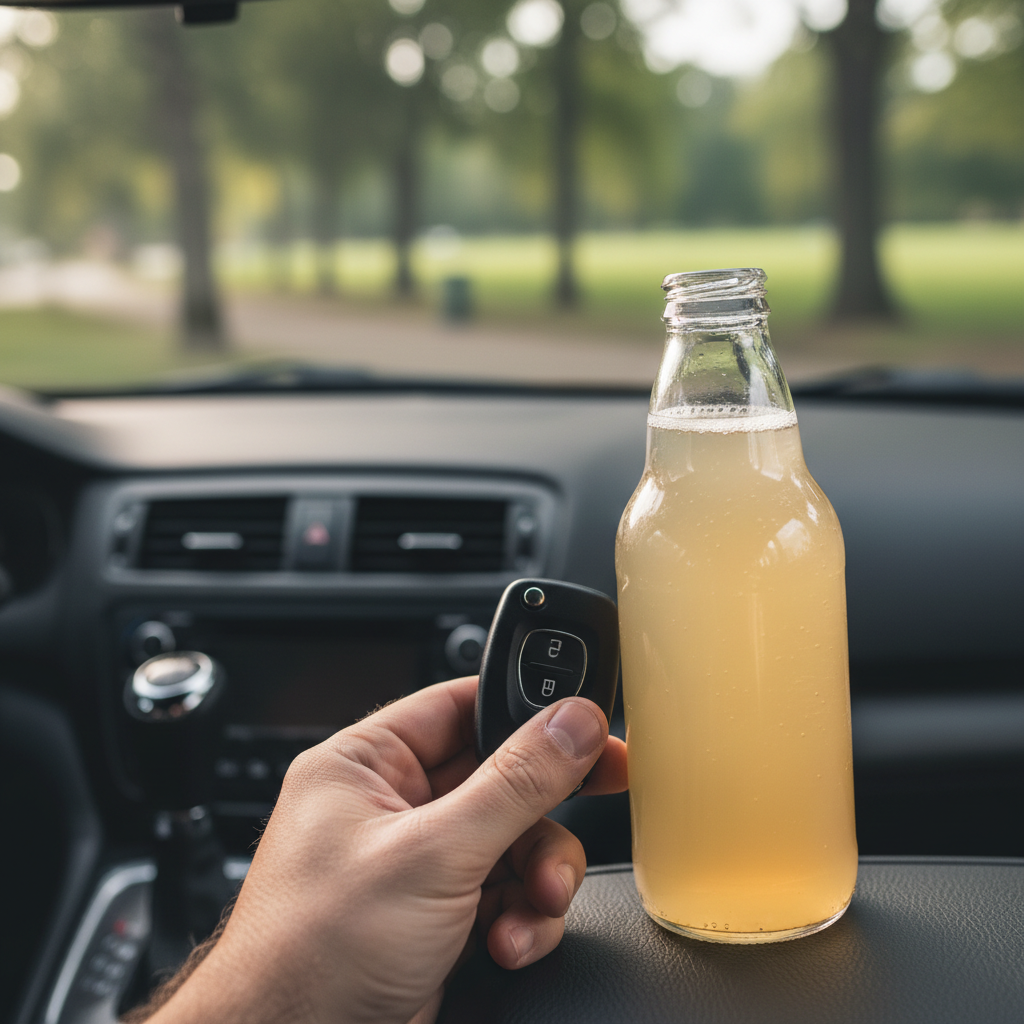
The idea that gut health and mood are connected has moved from fringe theory to a real, active area of research -- and because kombucha contains live probiotic cultures, it's a natural thing to search for. Here's what the actual science on the gut-brain axis says, and what it doesn't say about kombucha and anxiety specifically.
TL;DR: No clinical trial has tested kombucha itself against anxiety, stress, or mood. The gut-brain axis -- the link between gut bacteria and mental health -- is a real and active research field, and kombucha's live cultures are relevant to it in principle. But "may support gut microbiome diversity" is a fair claim; "will reduce your anxiety" is not one the research currently supports.
Table of contents
- The gut-brain axis: a real and active research field
- What the fermented-foods and mental-health research says
- What hasn't been shown
- Kombucha vs. true "psychobiotics"
- What this doesn't mean
- What we'd actually recommend
- Frequently asked questions
The gut-brain axis: a real and active research field
The gut-brain axis refers to the two-way communication network between the gut microbiome and the central nervous system, involving the vagus nerve, immune signalling, and microbial metabolites. A widely cited review in Physiological Reviews lays out the mechanisms researchers believe connect gut bacteria to mood, stress response, and behaviour.[1] This is a genuinely well-established field -- it's not fringe science -- but "the gut influences the brain" is a much broader and better-supported claim than "eating or drinking any specific fermented food changes your anxiety levels."
What the fermented-foods and mental-health research says
A separate review specifically looking at fermented foods and mental health discusses how fermented foods, through their live cultures and metabolic byproducts, may plausibly support the microbiome in ways relevant to mood regulation.[2] The authors are careful to frame this as a promising hypothesis worth researching further, not a settled treatment pathway. Kombucha falls into the same broad "fermented food with live cultures" category this review discusses, but the review is about the category as a whole, not a dedicated kombucha trial.
What hasn't been shown
No clinical trial has tested kombucha specifically against anxiety, stress, or mood outcomes in humans. The research above is about fermented foods and gut bacteria broadly, or about the gut-brain axis as a general mechanism -- kombucha has not been isolated as a variable in a dedicated mood study. That gap matters: population-level associations between "eats more fermented food" and "reports better mood" in observational research can't rule out other explanations, like people who already eat a varied, health-conscious diet also reporting better mood for unrelated reasons.
Kombucha vs. true "psychobiotics"
It's also worth noting that "probiotic" and "psychobiotic" (a probiotic strain specifically studied for mental health effects) are not interchangeable. Most psychobiotic research uses specific, tested bacterial strains -- often a single named strain like Lactobacillus rhamnosus or Bifidobacterium longum -- in standardised supplement form, at a known dose. Kombucha's culture is a variable, unstandardised mix of bacteria and yeast that differs from batch to batch and hasn't been studied the same way. That doesn't make it worthless -- it just means the two shouldn't be treated as equivalent when people ask "is kombucha a psychobiotic?"
What this doesn't mean
Kombucha isn't a treatment for anxiety, depression, or any diagnosed mental health condition, and it shouldn't be used as a substitute for therapy, medication, or professional care. If you're managing a mental health condition, the gut-brain axis is a genuinely interesting area of ongoing research -- but it isn't at the point where a specific drink can be recommended as part of treatment.
What we'd actually recommend
If you enjoy kombucha, there's no reason to stop -- a varied diet that includes fermented foods is a reasonable general approach to gut health, independent of any mood claims. Just hold the two ideas separately: "may support gut microbiome diversity" is a fair, evidence-backed statement; "will reduce your anxiety" is not one the research currently supports. For the better-established evidence on kombucha and digestion, our kombucha page and jun tea page go through what's actually backed by research.
Frequently asked questions
Can kombucha help with anxiety?
There's no clinical trial evidence that kombucha reduces anxiety. The gut-brain axis is a real research area, and kombucha contains live probiotic cultures, but no study has tested kombucha specifically against anxiety outcomes.
Is kombucha a psychobiotic?
Not in the strict research sense. Psychobiotic research uses specific, tested probiotic strains, usually in supplement form. Kombucha's culture is a variable mix of bacteria and yeast that hasn't been studied the same way.
Does gut health really affect mood?
Research on the gut-brain axis suggests gut bacteria can influence mood and stress response through several biological pathways. It's a genuine and active research field, though it doesn't mean any single fermented food or drink has been proven to change mood on its own.
Should I drink kombucha instead of taking medication for anxiety?
No. Kombucha has no clinical evidence behind it as an anxiety treatment and should never replace prescribed medication, therapy, or professional care. If you're managing anxiety, speak to a doctor or mental health professional.