Most healthy adults do fine with 4 to 8 ounces (120 to 240 ml) of kombucha a day once they’ve confirmed they tolerate it, starting with a smaller 2 to 4 ounce test dose first. That maintenance range lines up with what the Centers for Disease Control and Prevention has historically flagged as unlikely to cause problems in healthy people. Pregnant women, immunocompromised individuals, and anyone with severe acid sensitivity should check with a clinician before making it a daily habit.
TL;DR:
- Most people can safely drink 4 to 8 ounces of kombucha daily once they confirm they tolerate it, while pregnant or immunocompromised individuals should seek medical advice.
- Benefits like improved bowel regularity are inconsistent and highly dependent on product quality, with commercial options being safer than homebrewed variants.
- Drinking more than 12 ounces daily increases risks of bloating, stomach upset, headaches, or acid reflux, especially for sensitive individuals.
- Start with small doses of 2 to 4 ounces for several days, then gradually increase while monitoring symptoms, favoring consumption after meals.
- Contamination risks are primarily linked to unsafe home brewing; regulated, pasteurized bottles are safer for daily use.
Table of Contents
- What Does the Evidence Say About Kombucha and Gut Health?
- What Are the Side Effects of Drinking Too Much Kombucha?
- How Much Kombucha Should You Drink Each Day?
- How Do You Safely Introduce Kombucha Into Your Routine?
- What Real-World Data Says About Daily Kombucha Habits
- Why Moderation Beats Any Fixed Number
- Try a Lower-Sugar Kombucha Built for Daily Drinking
- Sources
- FAQ
What Does the Evidence Say About Kombucha and Gut Health?
The honest answer: promising but thin. Most of what we know comes from small human trials, animal studies, and laboratory research on the tea’s microbial makeup, not large clinical trials that would settle the question. A peer-reviewed review covering the current research found real probiotic-like properties in kombucha’s live cultures, along with genuine safety concerns, but the concerns trace almost entirely back to unsafe homebrewing rather than the beverage itself.
Here’s what that research actually supports, without overselling it:
- Some people report looser stools or more regular bowel movements within days of starting kombucha.
- The live bacteria and yeast may offer probiotic-like support, though effects vary widely between people and between batches.
- Benefits appear tied to consistency and quality, not to drinking more of it.
- Homebrewed kombucha carries a much higher contamination risk than commercially produced, pasteurized-or-controlled bottles.
Quick fact: The CDC’s often-cited reference point of about 4 ounces a day dates back to a case investigation into kombucha-related illness, not a formal dosing study. It’s a caution line, not a target to hit every day.
The practical takeaway: don’t expect kombucha to fix constipation or bloating overnight. Expect a modest, inconsistent nudge in the right direction, and only if the product you’re drinking is made under controlled conditions. A bottle brewed in a regulated facility with monitored acidity beats a mason jar on someone’s kitchen counter, every time, for safety alone.
What Are the Side Effects of Drinking Too Much Kombucha?
Kombucha is fermented tea with live cultures, residual sugar, trace alcohol, and natural acids, and drinking too much of it in one sitting tends to announce itself fast.
- Bloating and gas from the natural carbonation and fermentation byproducts.
- Nausea or stomach upset, especially on an empty stomach.
- Headaches, sometimes linked to caffeine content or histamine sensitivity.
- Acid reflux flare-ups in people already prone to heartburn, since kombucha is quite acidic.
Medical News Today notes these effects show up most often in people with IBS or existing reflux, largely because of the carbonation, acidity, and caffeine working together rather than any single ingredient. Contamination is a separate and more serious risk, and it’s almost always tied to unsafe home fermentation, not commercial bottles that go through pasteurization or tight quality control.
Certain groups should skip kombucha entirely or talk to a doctor first: pregnant or breastfeeding women, immunocompromised individuals, young children, and anyone managing a serious GI disorder or metabolic condition. The Mayo Clinic specifically calls out pregnant and immunocompromised people as groups who should avoid it altogether.
Pro Tip: If a new symptom shows up within an hour of drinking kombucha, stop for at least three days before trying again at half the amount. That gap tells you whether it was the kombucha or just coincidence.
How Much Kombucha Should You Drink Each Day?
Frequency and amount both matter here, and they matter in that order. Drinking a small amount daily beats drinking a large amount occasionally, because your gut needs time to adjust to the acidity and live cultures.
- Start small. Try 2 to 4 ounces (60 to 120 ml) for three to five days and watch how your stomach responds.
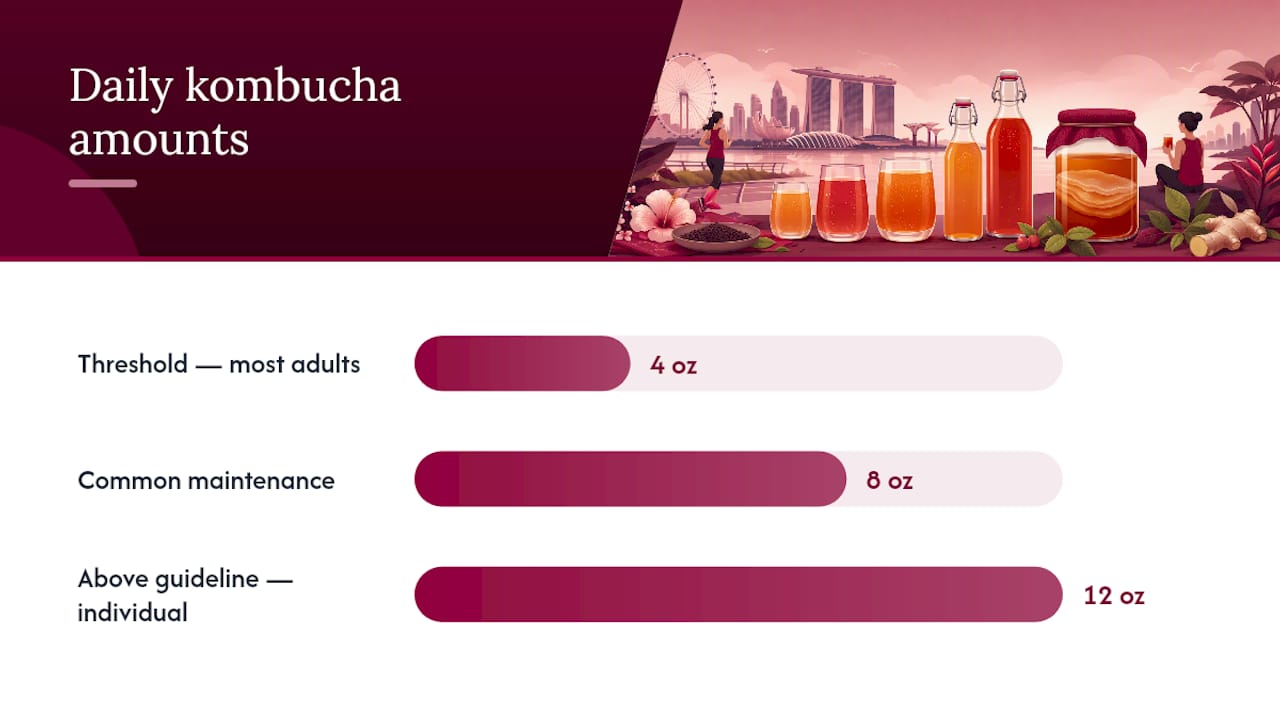
- Move to maintenance. If nothing unusual happens, settle into 4 to 8 ounces (120 to 240 ml) a day. This matches guidance echoed by Cleveland Clinic, which recommends starting slow and keeping portions moderate.
- Treat anything above 12 ounces (about 350 ml) as an exception, not a routine. Some university health guidance mentions ranges as high as 8 to 16 ounces for people who’ve built up tolerance, but pushing that high daily means more sugar, more acid, and more trace alcohol exposure than most people need.
Before you buy a bottle, check the label for four things: serving size (many bottles hold 12 to 16 ounces but list a smaller serving), grams of added sugar, alcohol by volume (trace amounts under 0.5% ABV are typical, but some brews run higher), and caffeine content if the base is black or green tea.
A rule of thumb worth remembering: roughly 4 ounces is the threshold where most healthy adults see zero issues, and 8 ounces is where most people still tolerate it fine, according to the pattern in CDC guidance. Past that, you’re relying on individual tolerance rather than any general safety margin.
Timing helps too. Drinking kombucha after a meal, rather than on an empty stomach, tends to ease digestive discomfort and gives your gut something else to work on alongside the acidity. If you’re sensitive to caffeine, save your kombucha for earlier in the day.
How Do You Safely Introduce Kombucha Into Your Routine?
Titration sounds clinical, but it just means going slow enough that your gut can tell you what’s working.
- Days 1 to 3: Drink 2 ounces after a meal. Note anything unusual, bloating, looser stools, headaches, in a simple log.
- Days 4 to 7: If nothing flagged, move up to 4 ounces and keep logging.
- Week 2 and beyond: Gradually increase toward 4 to 8 ounces total per day, pausing any increase the moment a symptom shows up.
Your log doesn’t need to be complicated. Track digestive changes, bowel habits, headaches, and sleep quality for two weeks. That’s enough data to tell whether kombucha is helping, doing nothing, or causing a problem worth mentioning to a doctor. For people managing IBS specifically, a structured tolerance test is worth following before committing to daily servings. If nausea shows up during the adjustment period, a small ginger shot in the 15 to 20 ml range is a common remedy worth trying alongside slower titration.
Pro Tip: Log symptoms at the same time each day. Random check-ins make it much harder to connect cause and effect.

What Real-World Data Says About Daily Kombucha Habits
A selection of kombucha flavors, including some sour and citrus varieties, are offered with attention to sugar content suitable for regular consumption. That’s the label-literacy point clinical guidance keeps circling back to: quality and consistency matter more than any single serving size.
A few resources worth checking directly:
- An internal 10-day observation on stool frequency among Singapore-based drinkers found consistent daily servings correlated with more regular bowel movements, a small but real-world data point.
- A companion guide on 4 to 8 ounces a day breaks down timing for digestion versus energy use cases.
- Commercially bottled, regulated kombucha sidesteps the contamination risk that comes with unsupervised home fermentation.
Why Moderation Beats Any Fixed Number
The number that matters isn’t 4 ounces or 8 ounces. It’s whatever amount your own gut tolerates without complaint, found slowly and adjusted honestly. People chase precision in a space that rewards patience instead. Pick a quality bottle, go slow, and let your body set the ceiling.
— Irwin Lee
Try a Lower-Sugar Kombucha Built for Daily Drinking
Some bottled kombucha products offer lower sugar formulas designed to support daily consumption without excessive added sugar. These products often include clear labeling of serving size and sugar content to assist consumers.
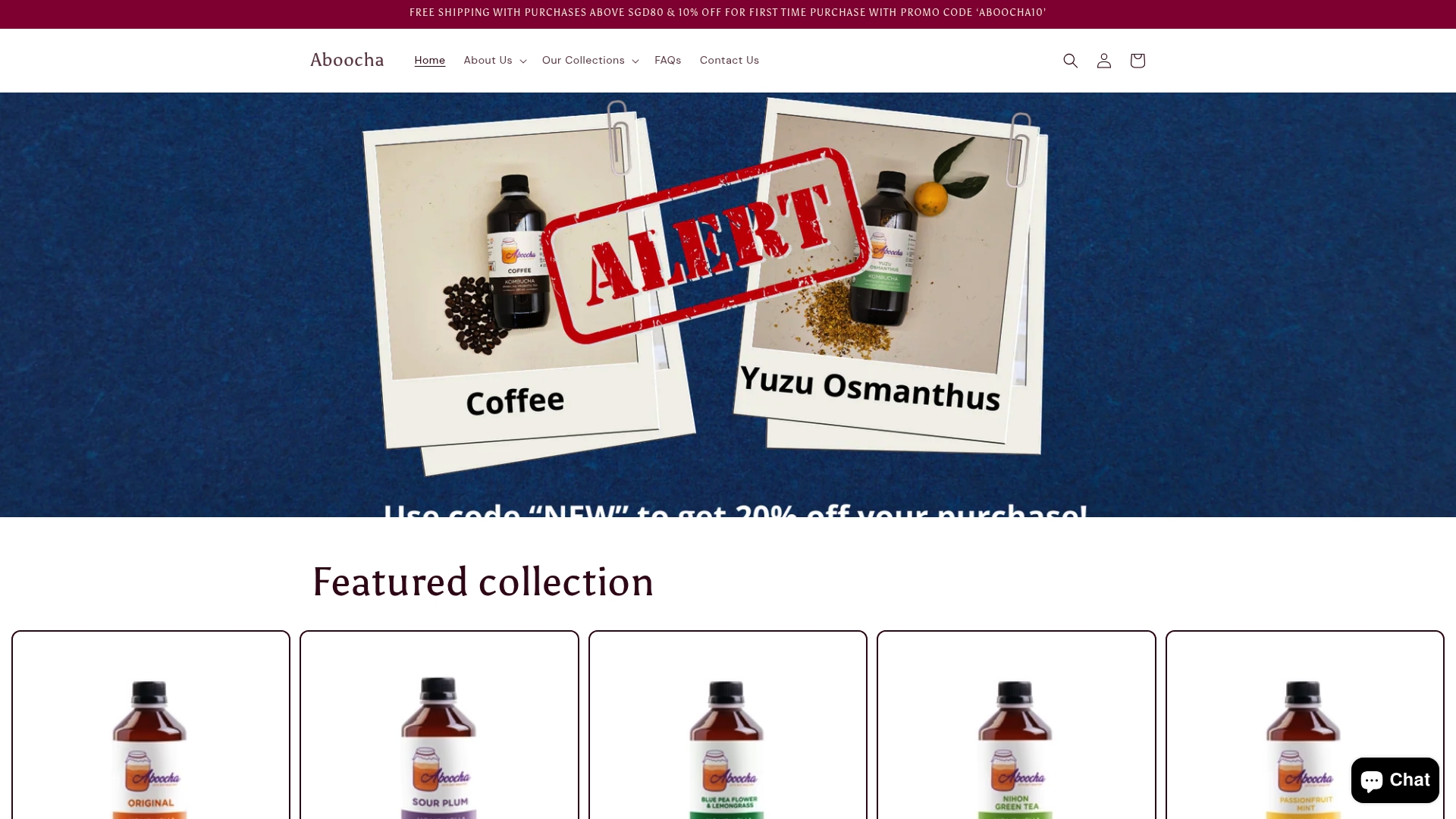
If you’re just starting out, the bundles collection gives you a way to test a few flavors, including Sour Plum and Yuzu Osmanthus, without committing to a single bottle before you know what agrees with your gut. For a curated starter set, the Aboocha x Deefruit collaboration pack is a solid pick if you want variety in one order. Once you’ve found your range and want to keep it consistent, shop the bundles now and build a rotation that fits the 4 to 8 ounce daily habit your gut actually responds to.
This article is general information, not a substitute for advice from a qualified doctor. Consult a qualified healthcare professional about your own circumstances before acting on anything here.
Sources
- CDC historical guidance on kombucha safety
- Kombucha review — PMC (peer-reviewed review)
- Kombucha: What Is It and 7 Benefits — Cleveland Clinic
FAQ
Is It Okay to Drink Kombucha Every Day?
Yes, for most healthy adults, 4 to 8 ounces a day is generally fine once you’ve confirmed tolerance with a smaller starter dose. People who are pregnant, immunocompromised, or dealing with severe acid reflux should check with a clinician first.
How Do I Know if Kombucha Is Working in My Body?
The clearest early signals are digestive: more regular bowel movements, less bloating, or steadier energy within one to two weeks of consistent daily servings. Keeping a short symptom log makes these changes easier to spot than relying on memory alone.
Should You Drink Kombucha at Night or in the Morning?
Kombucha is best taken after a meal rather than on an empty stomach, since food buffers its acidity and eases digestion. If you’re sensitive to caffeine, drink it earlier in the day rather than close to bedtime.
Does Kombucha Flush Out Toxins?
No credible evidence supports the idea that kombucha “detoxes” the body; your liver and kidneys already handle that job. What kombucha may offer instead is modest, probiotic-like support for digestion, which is a more realistic and better-supported benefit.