Kombucha vs probiotic supplements is a question we hear often, usually from someone who wants a simple winner. There is not one. The two are different kinds of product, and the research on each answers different questions. This guide sets out what we could read about kombucha vs probiotic supplements, what the evidence does and does not show, and how to choose.
We brew kombucha in Singapore, so we are not neutral. We sell kombucha Singapore and we label which statements are our own and have not been independently audited. We do not sell probiotic supplements. This is general information, not medical advice. If you have a health condition or take medication, ask a doctor or pharmacist first.
TL;DR: Kombucha vs probiotic supplements is not a like-for-like comparison. A probiotic is defined as a live microorganism that gives a health benefit when taken in adequate amounts, and the benefit belongs to a specific strain. We found no kombucha trial that identifies strains or doses. Supplements have strain-level trials for some conditions, such as antibiotic-associated diarrhea, though quality varies. Kombucha is a fermented drink, and fermented foods are not automatically probiotics.
Table of contents
Kombucha vs probiotic supplements: the short answer
If you only read one section, read this one. These are the points that matter most when you weigh kombucha vs probiotic supplements:
- Different things: kombucha is a fermented tea drink. A probiotic supplement is a product built around named strains.
- Strain matters: NCCIH says a benefit shown for one strain does not necessarily apply to another.
- Supplements have the condition-specific trials: the best evidence is for antibiotic-associated diarrhea, though quality is moderate.
- Kombucha trials are few and small: a 2025 review found eight, from 10 days to 10 weeks.
- Neither is risk free: NCCIH says the risk of harm from probiotics is greater in people with severe illness or weak immunity.
The sections below go through kombucha vs probiotic supplements point by point, so you can judge it yourself rather than rely on our summary.

What counts as a probiotic in kombucha vs probiotic supplements?
The definition matters, because it decides what can fairly be compared. The 2014 ISAPP consensus statement on probiotics reinforced the long-standing FAO and WHO definition of a probiotic: live microorganisms which, when administered in adequate amounts, confer a health benefit on the host.
That definition has three parts: the microbes must be alive, the amount must be adequate, and there must be a demonstrated benefit. A product that is merely full of microbes does not qualify. In kombucha vs probiotic supplements, this is the gap: a supplement can be designed and tested to meet that bar, while a fermented drink usually is not.
The 2021 ISAPP consensus statement on fermented foods makes the same distinction. It defines fermented foods and beverages as foods made through desired microbial growth and enzymatic conversions of food components, and it clarifies the difference between fermented foods and probiotics. Kombucha is a fermented drink. Whether a given bottle is also a probiotic depends on evidence about that product, which we have not found.
So when you read kombucha vs probiotic supplements comparisons that call kombucha a probiotic drink, treat the label with caution. It may contain live microbes, and we say so for our raw bottles, but live is not the same as proven to benefit you.
What probiotic supplements have going for them
The main advantage of supplements in kombucha vs probiotic supplements is that a supplement can be a defined product. A specific strain can be named, produced to a stated dose and tested in trials. That is what lets researchers say something about a strain, which they cannot do for a variable fermented drink.
The NCCIH page on probiotics summarises the research. It says probiotics have shown promise for a variety of health purposes, including prevention of antibiotic-associated diarrhea, and that in most instances we still do not know which probiotics are helpful and which are not. It also says we do not know how much people would have to take or who would be most likely to benefit.
On antibiotic-associated diarrhea, NCCIH cites a 2017 review of 17 studies in people who were not hospitalised, which indicated that giving probiotics with antibiotics was associated with a decrease of about half in the likelihood of the diarrhea. It calls that conclusion tentative because the study quality was only moderate.
For diarrhea caused by C. difficile, the 2017 Cochrane review of probiotics and C. difficile-associated diarrhea and NCCIH say it is moderately certain that probiotics can reduce the risk in adults and children receiving antibiotics. Most of those studies involved hospital patients, and the types of probiotics, length of use and doses remain uncertain.

Limits of probiotic supplements in kombucha vs probiotic supplements
Supplements are not a guaranteed fix. NCCIH says few studies have looked at the safety of probiotics in detail, so there is a lack of solid information on the frequency and severity of side effects. It says the risk of harmful effects is greater in people with severe illnesses or compromised immune systems, and that severe or fatal infections have been reported in premature infants.
It also says some probiotic products have been reported to contain microorganisms other than those listed on the label, and that in some instances these contaminants may pose serious health risks. On regulation in the United States, NCCIH explains that many probiotics are sold as dietary supplements, which do not require FDA approval before they are marketed.
We have not verified how supplements are regulated in Singapore, so we say nothing about local rules. If you buy a supplement, choose one with the strain names on the label, and ask a pharmacist whether the strain has been studied for your purpose.
The results also do not carry across conditions. For irritable bowel syndrome, NCCIH cites a 2018 review of 53 studies that found probiotics may have beneficial effects on global symptoms and abdominal pain, but said it was not possible to draw definite conclusions or identify which strains are most likely to help. See kombucha for IBS for our own look at that question.
What the research says about kombucha in kombucha vs probiotic supplements
Kombucha has far less condition-specific evidence. The 2025 systematic review of kombucha clinical trials searched three databases and included eight trials, from 10 days to 10 weeks long. Two reported benefits for digestive symptoms, such as less intense constipation-related complaints, and two observed changes in gut microbe composition. The authors called the results promising but said the small number and variety of trials mean more robust research is needed.
The 2024 randomised trial of green tea kombucha is one of those trials. In adults with excess body weight on a diet, 200 mL a day for ten weeks gave no difference in gut microbiota or intestinal permeability between groups, but the kombucha group reported fewer motility-related gastrointestinal symptoms. The authors concluded it improved symptoms without significantly improving microbiota.
A 2022 safety and tolerability trial tested a pasteurised, inulin-enriched kombucha-based drink in 40 adults with constipation-predominant IBS for 10 days. It reported the drink was well tolerated, and that adverse events were low at 5 per cent and no different from water. That is a special product in a small group, not a statement about every bottle.
Put plainly, kombucha vs probiotic supplements is not a close contest on evidence for any one condition. Supplements have strain-level trials for some conditions. Kombucha has a handful of small trials on general digestive symptoms, and none we found that identify the microbes responsible.
Does kombucha contain live cultures, and does that matter?
Raw kombucha contains live yeast and bacteria, which is part of what makes it a fermented drink. Pasteurised or filtered products may not. Our own bottles are raw and unpasteurised, which is our own statement and has not been independently audited. See does kombucha need refrigeration for how we keep them chilled.
But we have not published counts of microbes per bottle, and we do not state any figure. We also did not find an independent measurement of live microbes in commercial kombucha that we could cite. So we cannot tell you how kombucha compares with a supplement in cell numbers, and we would be sceptical of any page that gives a precise comparison.
Live cultures also do not make a drink a probiotic, as the ISAPP statements above explain. What they do mean is that a raw bottle should be kept cold and treated as a perishable food. People with weak immunity should ask a doctor first, a caution that applies to raw fermented foods and probiotic products alike.
How to choose between kombucha and probiotic supplements
Start with what you want, because the right answer for kombucha vs probiotic supplements changes with the goal. This is our own common-sense guide, not a medical recommendation:
- You want a drink you enjoy: kombucha is a flavoured fermented tea. Choose it because you like it, not because it is a treatment.
- You are on antibiotics or have a condition: talk to a doctor or pharmacist. A strain-specific supplement may be an option, and kombucha is not a substitute for medical care.
- You have a weak immune system or severe illness: ask a doctor before taking probiotics or raw fermented drinks.
- You are pregnant or giving something to a child: ask a doctor first.
- You take regular medication: see kombucha and medication interactions and ask your pharmacist.
If you are considering kombucha, read how to choose kombucha for what to check on a label. For the wider evidence on gut health, see our guide to probiotics and gut health and why fermented foods reduce bloating.
Can you use kombucha and probiotic supplements together?
We found no study that tests taking kombucha alongside a probiotic supplement, so we cannot say that kombucha vs probiotic supplements is an either-or choice or that the two work better together. Many people use both without a problem, but that is not evidence of benefit.
If you try both, change one thing at a time. Starting a supplement and kombucha on the same day makes it hard to tell which caused any change in how you feel, including loose stools. If that happens, see our guide to kombucha diarrhea for what to do and when to call a doctor.
Diet matters too, and kombucha vs probiotic supplements is a small piece of it. NCCIH describes prebiotics as nondigestible food components that selectively stimulate the growth or activity of desirable microorganisms. We make no claim that a bottle of kombucha supplies them in a useful amount.
Claims about kombucha vs probiotic supplements we cannot support
Pages about kombucha vs probiotic supplements often state precise numbers. We looked for sources and could not support the following, so we do not repeat them:
- Exact microbe counts per bottle or capsule. We found no independent measurement of commercial kombucha that we could cite, so any precise comparison in kombucha vs probiotic supplements is unverified.
- That kombucha survives stomach acid better. We found no kombucha study that tested this, so it stays a hypothesis.
- That one beats the other for general gut health. We found no head-to-head trial of kombucha vs probiotic supplements.
- Market growth or shopper figures. They are not evidence about health, so we leave them out.
When a page makes these claims without naming a trial, treat it as marketing. That includes ours: we make no health claim about our own bottles in any kombucha vs probiotic supplements comparison.
How to read a label in kombucha vs probiotic supplements
Labels are where the difference between the two products shows most clearly. A good habit is to read the label first and the marketing second. For a supplement, NCCIH says different types of probiotics may have different effects, so look for the named strain, not just the genus.
- Supplement: look for the full strain name, the stated amount, the expiry date and the storage instructions. Ask a pharmacist whether that strain has been studied for your purpose.
- Kombucha: look for whether it is raw or pasteurised, the sugar per serving, any added juice or sweetener, the caffeine and the storage instructions.
- Either: be wary of health claims that are not tied to a named study.
For a kombucha label, our guide on how to choose kombucha explains what to check. For a supplement label, a pharmacist is the best person to ask. Reading labels is the most practical step in kombucha vs probiotic supplements, because it works whichever you pick.
Cost is a fair factor too. A bottle of our kombucha is $6.80, which is our own price. We have not compared it with supplement prices, because prices vary by brand and we have not verified them. Work out the cost per serving yourself before deciding between kombucha vs probiotic supplements.
Our own statements about our kombucha
Aboocha brews kombucha and jun tea in small batches in Singapore. These are our own statements and have not been audited by an independent party.
| Item | What we state |
|---|---|
| Live culture | Raw and unpasteurised |
| Delivery | Chilled; free island-wide cold-chain delivery on orders of $80 and above (about 12 bottles) |
| Sugar | Nutri-Grade A-B, about 1-3% sugar, per our nutrition panels |
| Alcohol | Under 0.5% ABV, our own stated figure |
| Ingredients | Vegan, no artificial sweeteners |
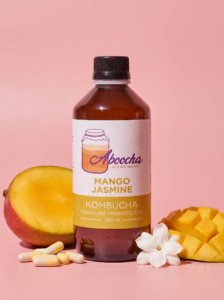
We do not claim our kombucha works like a probiotic supplement, treats any condition or replaces medical advice. You can browse Original, Mango Jasmine or the shop. Kombucha is $6.80 a bottle, and delivery is next working day.
What we checked and what we could not
- Checked: the NCCIH page on probiotics, the abstracts of the 2014 and 2021 ISAPP consensus statements, the abstract of a 2017 Cochrane review, and the abstracts of a 2025 kombucha review, a 2024 trial and a 2022 tolerability trial.
- Could not find: any trial comparing kombucha with a probiotic supplement, any trial of both together, or an independent count of live microbes in commercial kombucha.
- Not verified: Singapore rules on probiotic supplements or kombucha, and the microbe counts of any product, including ours.
This article is general information, not medical advice. If you have a health condition or take medication, talk to a doctor or pharmacist before changing what you drink or take.
Is kombucha better than probiotic supplements?
We cannot say. They are different products. Supplements have strain-level trials for some conditions, such as antibiotic-associated diarrhea, while kombucha has a few small trials on general digestive symptoms. We found no head-to-head trial.
Is kombucha a probiotic?
Not automatically. A probiotic is a live microorganism shown to give a health benefit in adequate amounts. Kombucha is a fermented drink that may contain live microbes, but we found no evidence that a given bottle meets the probiotic definition.
Can kombucha replace a probiotic supplement?
We would not assume so. A supplement can be built around a studied strain, while kombucha varies and its microbes are not usually identified. If your doctor advised a probiotic, ask before swapping it for a drink.
Do probiotic supplements work?
It depends on the strain and the condition. NCCIH says probiotics have shown promise for some purposes, such as antibiotic-associated diarrhea, but in most cases we do not know which probiotics help, how much to take, or who benefits.
Are probiotic supplements safe?
They have a long history of apparently safe use in healthy people, says NCCIH, but few studies have examined safety in detail. The risk is greater in people with severe illness or weak immunity, and some products have contained microbes not on the label.
Should I take kombucha and probiotics together?
We found no study on this, so we cannot say it helps. If you try both, start one at a time so you can tell what caused any change, and ask a pharmacist if you take regular medication.
Does raw kombucha have live cultures?
Our raw, unpasteurised kombucha does, by our own statement, which is not independently audited. We have not published microbe counts. Live cultures do not make a drink a proven probiotic, so we make no health claim.
Where can I buy kombucha in Singapore?
We sell kombucha at $6.80 a bottle, with free island-wide delivery on orders of $80 and above (about 12 bottles) and on every subscription. Delivery is next working day. Visit our kombucha Singapore page or the shop.