Kombucha is vegan in almost every case you’ll find on a store shelf. The base recipe, tea, sugar, water, and a SCOBY culture contain nothing from an animal. The two things that can flip that answer are added honey (common in flavored batches) and, for stricter vegans, sugar refined through bone char. Everything else is a labeling question, not an ingredient problem.
TL;DR:
- Most kombucha is vegan because its ingredients include only tea, sugar, water, and a SCOBY, with honey and bone char-filtered sugar being the main cultural exceptions.
- Flavored kombuchas pose a higher risk of non-vegan status due to added honey or dairy-based flavorings, requiring careful label review.
- Checking for a vegan certification, contacting brands directly, or choosing homebrewing with organic sugar ensures vegan compliance.
- The environmental impact of kombucha is relatively low but can be reduced further by choosing brands with responsible sourcing and recyclable packaging.
- Vegans generally accept fermented foods like kombucha as vegan, with the main concerns limited to honey and bone char-filtered sugar.
Table of Contents
- Why Kombucha Is Usually Vegan
- When Kombucha May Not Be Vegan
- How to Check if Your Bottled Kombucha Is Vegan
- Publisher Note: What Aboocha Brings to This Conversation
- Does Making Kombucha Cost the Planet Anything?
- How Vegans Actually Think About Fermented Foods
- Sources
- FAQ
Why Kombucha Is Usually Vegan
Kombucha starts with four things: brewed tea, sugar, water, and a SCOBY, short for symbiotic culture of bacteria and yeast. That culture is a colony of microorganisms, not an animal product, and it works the same way starter cultures do in tempeh, sauerkraut, or sourdough. The bacteria and yeast consume the sugar in the tea, releasing carbon dioxide for the fizz and organic acids for the tang.
That’s the entire biological engine behind the drink. Nothing about it requires eggs, dairy, gelatin, or any other animal-derived input.
- Tea: the caffeine and nutrient base for fermentation, usually black or green.
- Sugar: food for the SCOBY, mostly consumed during fermentation.
- Water: the base liquid, often filtered to remove chlorine that can stress the culture.
- SCOBY: the living bacterial and yeast colony that drives fermentation.
A quick fact worth knowing: commercial kombucha typically finishes fermentation under 0.5% alcohol by volume, though some batches can creep higher depending on how long they ferment and how they’re stored. A 2024 Frontiers study on kombucha fermentation found that microbial composition and metabolite output vary a lot between batches, which is exactly why production control, not the SCOBY itself, determines what ends up in your bottle.
When Kombucha May Not Be Vegan
Two ingredients cause almost every vegan flag on kombucha labels, and neither is the fermentation process itself.
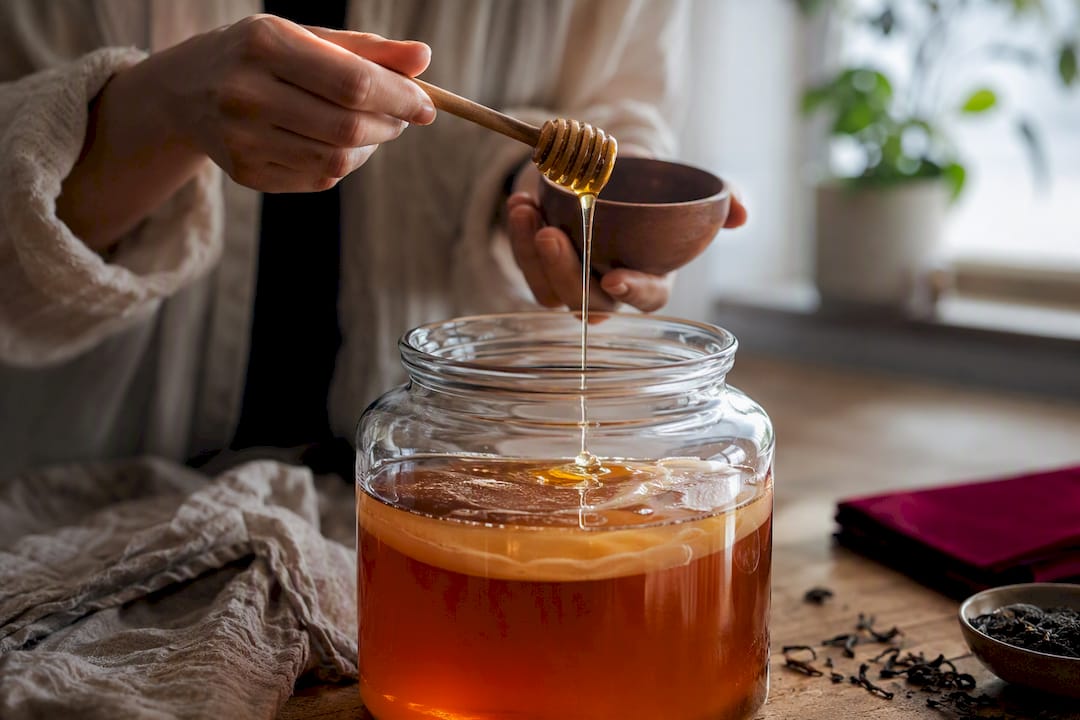
Honey. Some brands sweeten kombucha with honey instead of cane sugar, or add it during a second fermentation to boost carbonation and flavor. Honey comes from bees, so any product listing it is off the table for vegans. PETA’s guidance on kombucha confirms this is the single most common reason a bottle isn’t vegan, and it’s easy to miss if you skim past the ingredient list.
Bone char sugar refining. Some cane sugar in the United States is processed using bone char as a filtering agent, even though the char itself doesn’t end up in the final product. Strict vegans avoid it anyway on principle. Beet sugar and organic cane sugar are almost never processed this way, which is why many vegan shoppers default to those.
Beyond those two, a handful of rarer issues show up:
- Fining agents or coatings like gelatin, occasionally used in fruit-flavored blends for texture or shelf stability.
- Shellac or beeswax on fruit pieces added to some flavored bottles for a glossy finish.
- Dairy-derived flavorings, uncommon but possible in cream-soda or vanilla-style variants.
- Cross-contact in shared bottling facilities, which matters more to allergen-sensitive vegans than to most.
Flavored kombuchas carry the highest risk simply because they have more ingredients than the plain, unflavored version.
Pro Tip: If a label lists “natural flavors” with no further detail, that phrase can legally hide dozens of things, including trace animal-derived compounds. When in doubt, email the brand instead of guessing.
How to Check if Your Bottled Kombucha Is Vegan
Checking a bottle takes less than a minute once you know what to scan for.
- Read the ingredient list first. Look specifically for honey, whey, gelatin, shellac, beeswax, or any dairy term. If none of those appear, you’re almost certainly clear.
- Look for a vegan label or certification mark. A certified vegan logo (such as the Vegan Society trademark or Certified Vegan seal) means an independent body verified the product, which carries more weight than a brand’s own claim on the front of the bottle.
- Check the brand’s website or FAQ page if the label is vague. Ask directly whether the product contains honey, whether the sugar is bone char filtered, and whether any flavorings are dairy derived. A brand that can’t answer clearly is worth skipping.
- If you’re brewing at home, choose organic cane sugar or beet sugar, and flavor with citrus peel, ginger, or other plant-based additions rather than honey or dairy-based syrups.
That last step matters more than people expect. Homebrewers often reach for honey because it’s traditional in some kombucha recipes, without realizing it changes the vegan status of the whole batch.
Publisher Note: What Aboocha Brings to This Conversation
The kombucha lineup includes options with lower sugar content and diverse flavor profiles beyond the usual ginger or plain black tea, crafted for gut health without leaning on excess sweetness. This approach aligns with vegan shopping habits, since lower added sugar generally means fewer opportunities for honey or animal-derived sweeteners to appear in the recipe.
For readers who want to go deeper on the mechanics behind the drink, a few resources are worth bookmarking:
- What Is SCOBY Kombucha? Benefits and Brewing Tips breaks down the culture itself in plain terms.
- How Kombucha Is Fermented: A Homebrewer’s Guide walks through the process step by step.
- Why Kombucha Lower Sugar Matters for Your Health explains the sugar side of the equation in more depth.
If you’re comparing ingredient transparency across food categories generally, this rundown of lactose-free meal options is a useful example of how label-reading habits translate across different diets, not just kombucha.
Does Making Kombucha Cost the Planet Anything?
Kombucha’s environmental footprint is smaller than most dairy or meat-based drinks, but it isn’t zero, and that matters to vegans who think about animal welfare and environmental ethics as two sides of the same decision. The main inputs, tea leaves, sugar, and water, all carry their own agricultural footprints, with sugarcane farming in particular tied to significant water use and, in some regions, deforestation pressure.
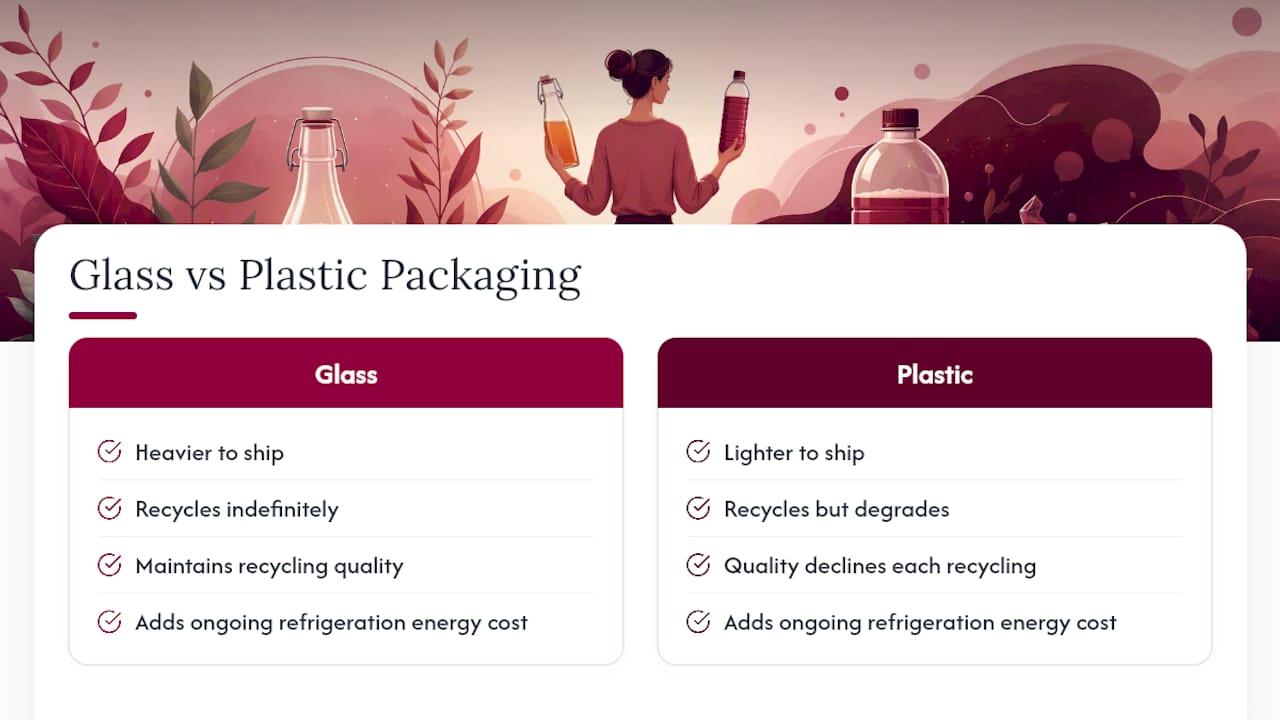
Bottling adds another layer. Glass bottles are heavier to ship than plastic but recycle indefinitely, while plastic bottles are lighter but degrade in quality each time they’re recycled. Refrigeration during distribution and retail storage also adds an ongoing energy cost that a shelf-stable product wouldn’t carry.
None of this rivals the resource intensity of animal agriculture, kombucha production doesn’t involve livestock, feed crops for animals, or the water and land use those systems demand. But vegans who extend their ethics to environmental impact broadly should still weigh sourcing. Buying from brands that use recyclable packaging, source tea responsibly, or operate on a smaller, regional scale (rather than shipping bottles across oceans) tends to align better with that wider set of values than ingredient purity alone.
How Vegans Actually Think About Fermented Foods
Most vegans don’t lose sleep over fermentation. Microbes aren’t animals, and that same logic already covers tempeh, miso, sauerkraut, and sourdough starters without controversy. Kombucha’s SCOBY fits the same category.
Where vegans genuinely split is on edge cases: bone char sugar and honey. Some treat bone char as a non-issue since the char doesn’t remain in the final sugar. Others avoid it entirely on principle, the same way some avoid palm oil regardless of certification. Honey is more clear cut. It comes from bees, so most vegans skip it without debate.
The practical fix for either concern is the same: buy from brands that state their sugar source, seek certified vegan labels when available, or use organic beet sugar if you’re brewing at home.
— Irwin Lee
Sources
The UC ANR extension review backs the ingredient and ABV facts here. PETA’s kombucha guide supports the vegan-status and label-check advice. The Frontiers 2024 study and NCBI’s fermented foods resource cover the microbial science behind fermentation.
Ready to try a lower-sugar kombucha built with vegan-friendly ingredients in mind? Explore Aboocha Kombucha’s flavor lineup and subscription plans to find a bottle that fits your routine.
- PF-Kombucha-ADA-2026Apr
- Is Kombucha Vegan? (PETA)
- Microbial and metabolite dynamics in kombucha fermentation (Frontiers, 2024)
- NCBI kombucha / fermented foods resource
FAQ
Can Vegans Drink Kombucha?
Yes, most kombucha is vegan since it’s made from tea, sugar, water, and a bacterial and yeast culture with no animal ingredients. Check the label for added honey or vague “natural flavors,” which are the most common exceptions.
Can Muslims Drink Kombucha?
Anyone following strict dietary guidance should check a specific product’s tested ABV or choose a brand that states it clearly on the label.
Should You Drink Kombucha if You Have Diarrhea?
Kombucha’s probiotics and acidity can irritate an already upset digestive system, so it’s generally better to wait until symptoms settle before drinking it. If diarrhea persists, that’s a question for a doctor rather than a dietary fix.
Can Vegans Eat Fermented Foods?
Yes, fermented foods like kombucha, sauerkraut, miso, and tempeh are all vegan by default since fermentation relies on bacteria and yeast, not animal products. The only exceptions come from what’s added afterward, like honey, dairy, or animal-based fining agents.