Drinking kombucha on an empty stomach is safe for most healthy adults, but it will not boost probiotic survival any more than drinking it with food, and it can trigger acidity, bloating, or nausea in sensitive drinkers. Clinical-trial evidence and dietitian guidance both point the same direction: start small, around 2 to 6 ounces, and pair it with a meal if your gut tends to react to acidic or fizzy drinks. Aboocha’s own dosing notes back the same approach.
TL;DR:
- Drinking kombucha on an empty stomach does not improve probiotic survival and can cause acidity, bloating, or nausea in sensitive individuals.
- The primary benefits, such as antioxidant support and gut health, depend on consistent intake over time, not specific timing relative to meals.
- Most people should start with 2 to 6 ounces, pairing it with food or consuming it in the early to mid-afternoon to minimize digestive discomfort.
- Those with health conditions like pregnancy, immunity issues, or severe gastrointestinal problems should consult a doctor before drinking kombucha, especially on an empty stomach.
- Testing individual tolerance through small servings over several days helps identify the best timing and amount without risking adverse reactions.
Table of Contents
- Kombucha on an Empty Stomach: The Trade-Offs You Should Know
- What Happens in Your Gut: Acidity, Carbonation, and What the Trials Actually Show
- Who Should Be Cautious or Skip It on an Empty Stomach
- How Much to Drink, When, and a Simple Tolerance Test
- What Aboocha Has Observed From Its Own Customers
- A Practical Routine Worth Trying
- Try a Lower-Sugar Sample Before You Commit to a Case
- Sources
- FAQ
Kombucha on an Empty Stomach: The Trade-Offs You Should Know
Kombucha earns its reputation honestly, but the benefits on an empty stomach get oversold. The realistic list looks like this:
- A mild lift from trace caffeine, comparable to a few sips of weak tea, not a coffee-level jolt.
- Antioxidants from the tea base, which support general health but do not require empty-stomach timing to work.
- Live cultures and organic acids that may support gut comfort over time, though the evidence for probiotic benefit is tied to consistent daily intake, not the hour you drink it.
The downside shows up faster than the upside. Kombucha’s acidity and carbonation are the main irritants: on an empty stomach, that combination commonly produces burping, bloating, mild nausea, or reflux in people prone to it. Frequent exposure to acidic drinks also carries a dental erosion risk, so rinsing your mouth with water afterward is a smart habit regardless of when you drink it.
Pro Tip: If you notice a sour aftertaste lingering on your teeth, that’s a signal to rinse with plain water, not brush immediately. Brushing right after an acidic drink can spread the acid across enamel before your saliva has a chance to buffer it.
Sugar content matters here too. Kombucha still contains residual sugar from fermentation, and drinking a sugary beverage on an empty stomach can cause a sharper blood-sugar swing than drinking it alongside protein or fiber, according to general nutrition guidance on kombucha. If you manage diabetes or watch your blood sugar closely, treat kombucha the way you’d treat any semi-sweet drink: with food, not instead of it.
What Happens in Your Gut: Acidity, Carbonation, and What the Trials Actually Show
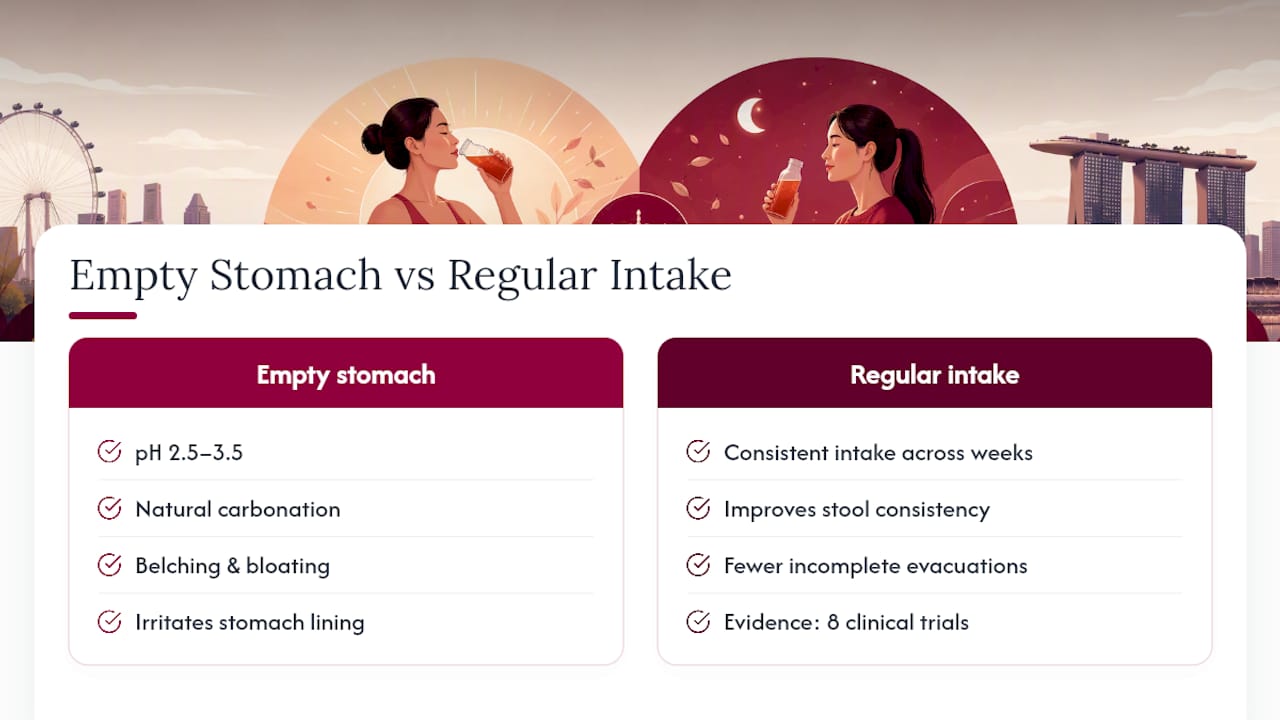
The physiological story is less about timing and more about exposure. Kombucha typically sits around pH 2.5 to 3.5, which is acidic enough to irritate an empty stomach lining before food has a chance to buffer it, a mechanism Aboocha’s own explainer on organic acids lays out clearly. Add natural carbonation, and you get gas production that has nowhere to go, which is why belching and bloating are the two complaints that show up most often in empty-stomach drinkers.
The clinical picture is more encouraging than the discomfort suggests. A 2025 systematic review of eight clinical trials found modest but real improvements in stool consistency and incomplete evacuation among regular kombucha drinkers, with trial durations ranging from 10 days to 10 weeks.
The review’s authors point to organic acids like acetic, citric, and malic acid as possible drivers of these effects, hypothesizing they influence intestinal motility through prostaglandin E2 pathways rather than through any specific time of consumption.
That distinction is the one most drinkers miss. The benefit tracked with consistent, regular intake across weeks, not with hitting an empty stomach at the right hour. Dietitians who study this space are direct about it: there’s no evidence that empty-stomach timing improves probiotic survival, and the best time to drink kombucha is whichever time causes you the least digestive trouble, often with or shortly after a meal.
Who Should Be Cautious or Skip It on an Empty Stomach
Some readers should treat empty-stomach kombucha as a genuine question for their doctor, not just a comfort preference. That group includes:
- Pregnant people, because of trace alcohol from fermentation and unpasteurized live cultures.
- Immune-compromised individuals, who face higher risk from any unpasteurized fermented product.
- Anyone with a history of lactic acidosis or severe kidney issues.
- People with severe GERD, gastritis, or active ulcers, where acidity can aggravate existing irritation.
- Young children, whose smaller systems are more sensitive to caffeine and acid.
Beyond that high-risk group, plenty of otherwise healthy adults have milder sensitivities worth watching. IBS, general reflux, and caffeine sensitivity are the three most common profiles. Watch for burning in the chest, cramping, or a wired feeling after a serving. If you experience severe abdominal pain, jaundice, prolonged vomiting, or any sign of an allergic reaction, stop drinking and talk to a clinician rather than pushing through.
How Much to Drink, When, and a Simple Tolerance Test
Most guidance converges on a starter serving of 2 to 6 ounces (roughly 50 to 150 mL), not a full bottle, especially the first few times you try kombucha on an empty stomach. Timing options break down into three practical lanes:
- With or within an hour after a meal. Food buffers acidity and reduces the odds of reflux or bloating, making this the safest default for anyone with a sensitive gut.
- Morning or early afternoon. The trace caffeine gives a gentle lift without the crash of coffee, but this slot works best once you already know your tolerance.
- Never late at night if you’re caffeine-sensitive. Even small amounts can disrupt sleep for some people.
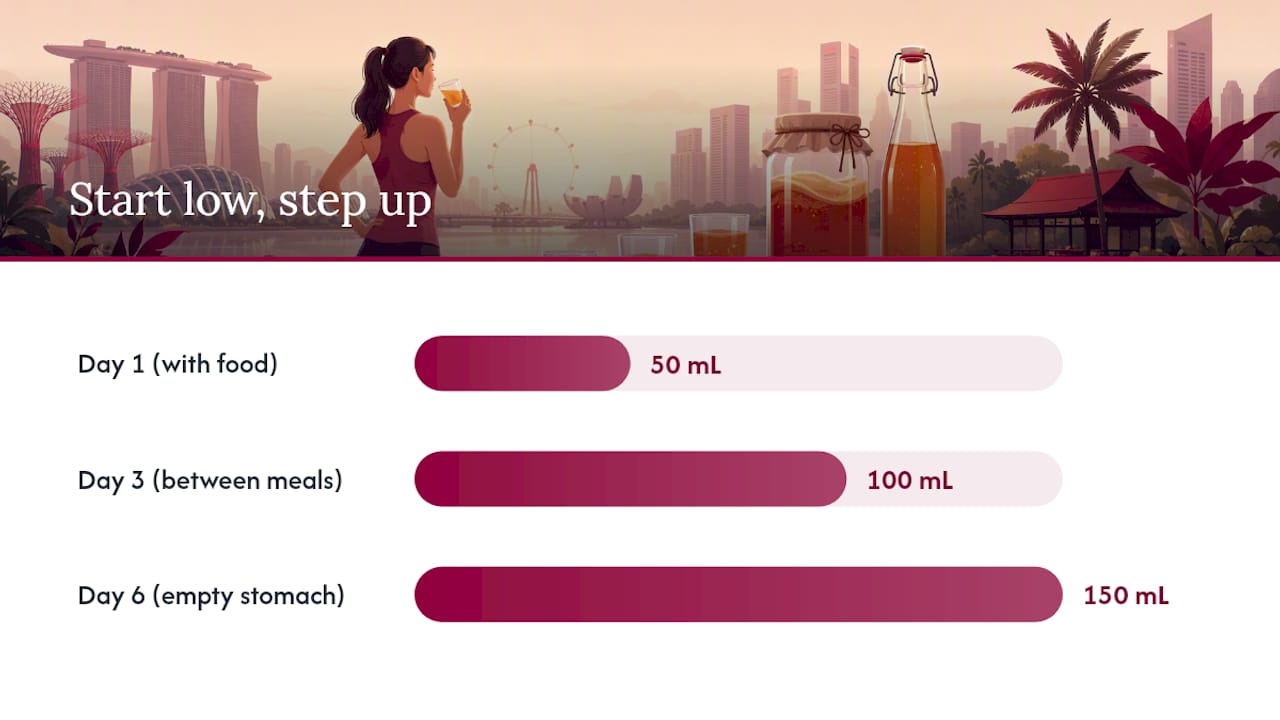
A simple three-day tolerance test works well: try 50 mL with food on day one, 100 mL between meals on day three, and 150 mL on an empty stomach on day six, pausing at any step if you notice discomfort.
Pro Tip: Keep a one-line note after each test day (time, amount, how you felt). Patterns show up fast, and you’ll know within a week whether your gut prefers kombucha before or after meals.
What Aboocha Has Observed From Its Own Customers
Aboocha’s own dosing guidance lines up with the broader research: the brand recommends 4 to 8 ounces a day for general digestion or energy support, scaling down to 50 to 100 mL for customers managing gastritis or a sensitive stomach. In a documented 10-day observational note, some Singapore-based customers reported increased stool frequency, a pattern consistent with the modest gut-symptom improvements seen in the broader clinical literature, though it’s worth treating as an observation rather than a controlled result.
- Lower-sugar flavor formulations may reduce the blood-sugar swing that comes with sweeter kombucha on an empty stomach.
- Smaller bottle formats make it easier to test a smaller serving without wasting a full bottle if your gut says no.
- Flavor variety gives sensitive drinkers room to find a profile that sits easier, since acidity and sweetness levels differ noticeably between flavors.
A Practical Routine Worth Trying
If you’re sensitive, prioritize comfort over any timing rule: pair kombucha with food, or cap your empty-stomach pour at 50 to 100 mL. A workable routine looks like 50 mL with breakfast, then 100 mL mid-afternoon on an empty stomach if the morning dose sat fine…
.
— Irwin Lee
Try a Lower-Sugar Sample Before You Commit to a Case
Testing tolerance is easier when you’re not stuck with twelve bottles of one flavor you’re not sure agrees with you. Aboocha’s sample bundles let you try smaller formats across different flavors, including lower-sugar options built for exactly the kind of 50 to 100 mL tolerance test outlined above. Individual reactions still vary, so the same trial logic applies here: start with a small pour, note how you feel, and adjust from there.
For readers who want variety while they test, the limited Deefruit collaboration set pairs distinct flavor profiles that can help you find one your stomach tolerates better than another. Order a sample bundle, try 50 to 100 mL servings over a few days at different times, and let your own gut tell you whether morning, afternoon, or with-meal timing works best for you.
This article is general information, not a substitute for advice from a qualified doctor. Consult a qualified healthcare professional about your own circumstances before acting on anything here.
Sources
- Health
- Benefits of Kombucha Consumption: A Systematic Review of Clinical Trials Focused on Microbiota and Metabolic Health
- 8 benefits of kombucha tea – Healthline
FAQ
Should I drink kombucha on an empty stomach?
You can, but it offers no extra probiotic benefit over drinking it with food, and sensitive drinkers often do better pairing it with a meal to reduce acidity-related discomfort.
When should I avoid drinking kombucha?
Avoid it if you’re pregnant, immune-compromised, dealing with severe GERD or gastritis, or if you notice cramping, burning, or nausea after a serving; those symptoms warrant a smaller dose or a conversation with a clinician.
Can kombucha lower cortisol?
There’s no strong clinical evidence that kombucha directly lowers cortisol; its documented benefits center on modest gut-symptom improvements like better stool consistency, not stress hormone regulation.
Does kombucha flush out toxins?
No. The “detox” framing is a marketing oversimplification; kombucha’s real, evidence-backed effects are antioxidant support and modest digestive benefits, not toxin removal.
What’s the best time to drink kombucha for digestion?
Most dietitians point to with or shortly after meals as the most comfortable timing, since food buffers kombucha’s acidity, though some people tolerate a small empty-stomach serving without issue.