Asian flavors are reshaping global menus because cultural export, social virality, and demand for wellness authenticity have converged with faster product innovation coming out of the Asia Pacific region. That convergence is not a fad cycle; it is a structural shift in how flavor gets discovered, tested, and scaled.
A few reasons this matters right now for anyone building menus or products:
- Consumers now expect ingredient-level specificity (yuzu, gochujang, mala) instead of a vague “Asian fusion” label.
- Social platforms compress the gap between a Seoul street stall and a supermarket shelf in New Jersey to a matter of months.
- Wellness and gut-health demand line up neatly with fermentation traditions that Asian cuisines have practiced for centuries.
- APAC flavor houses and R&D teams are converting curiosity into shelf-stable, scalable products faster than ever.
The rest of this piece breaks down the data behind each driver and what it means for anyone developing food or beverage products in 2026.
Key Takeaways
Asian flavors are trending globally because cultural export, social virality, and wellness demand converged with APAC-driven product innovation that turns viral curiosity into scalable, shelf-ready products.
| Point | Details |
|---|---|
| Specificity wins over labels | Name the region (Sichuan, Yuzu, Filipino) instead of using generic “Asian fusion” branding. |
| Menu data confirms scale | 34% of 2024 menu launches were Asian-inspired or cross-regional, per Datassential. |
| Wellness pairing drives repeat purchase | Fermentation, botanicals, and low sugar convert novelty into habitual buying. |
| Format determines scalability | RTD beverages, sauces, and snacks absorb bold regional flavors faster than fresh-prep menu items. |
| Sourcing needs a longer runway | Fresh ingredients and traditional fermentation processes require extra time to source and test authentically. |
Table of Contents
- What’s Driving Asian Flavors’ Global Popularity Right Now?
- How Much Are Asian Flavors Actually Showing Up on Menus?
- Why Hyper-Regional Ingredients Beat Generic “Asian Fusion” Labels
- How Should Product Teams Act on This Trend?
- What Can a Beverage Brand Learn From This Trend?
- How Did Asian Flavors Become Global in the First Place?
- How Has Trade Made Asian Ingredients Easier to Source?
- How Have Celebrity Chefs and Cooking Shows Shaped This Trend?
- Do Consumers Everywhere Accept Asian Flavors the Same Way?
- Why Is Sourcing Authentic Asian Ingredients Still Hard?
- What’s Next for Asian Flavor Innovation?
- An Editorial Take on Where This Trend Actually Goes Next
- Sources
- FAQ
What’s Driving Asian Flavors’ Global Popularity Right Now?
Four forces are doing most of the work, and they reinforce each other rather than operating alone.
- Cultural exports. K-pop, Korean and Japanese film, and diaspora travel have built decades of baseline curiosity. A viewer who watches a Korean drama and notices a side of kimchi is primed to try gochujang the next time they see it on a menu.
- Wellness and identity. Food is doing double duty as nutrition and self-expression. Industry commentary from Food Technology Magazine and ADM frames this as “everyday escapism” and sensory maximalism, where eating something bold and unfamiliar is part of the appeal, not a barrier to it.
- APAC R&D muscle. Curiosity alone doesn’t build a product line. Flavor houses across the region are the ones turning a trending ingredient into something a supply chain can actually produce at volume.
Consumer appetite backs this up: roughly two in three consumers say they’re open to trying global cuisines, and Asian cuisines consistently rank among the most-explored categories in that openness. Filipino food is a clean example of how fast this moves. Interest in Filipino cuisine jumped 50% in the year leading into 2025, pushed almost entirely by digital media and cultural exports rather than a single restaurant chain or marketing campaign.
How Much Are Asian Flavors Actually Showing Up on Menus?
Curiosity is one thing. Adoption at scale is another, and the menu data shows this trend has already moved well past novelty status.
About 34% of new menu launches in 2024 featured Asian-inspired or cross-regional flavor blends, according to Datassential’s research on culinary authenticity. That’s not a niche category anymore. It’s a meaningful share of what’s actually landing on new menus across categories.
Ingredient-specific growth tells a sharper story:
- Yuzu kosho, the citrus-chili condiment from Japan, saw 63% growth in menu adoption over four years as of mid-2025.
- Filipino cuisine interest rose 50% in a single year, as cited above, signaling that regional specificity, not just “Asian food” broadly, is what’s pulling consumer attention.
- The broader health and wellness food sector in APAC is projected to reach roughly $549.6 billion by 2033, growing at an 8.8% compound annual rate from 2026 through 2033.
For menu planners and product developers, the practical takeaway is that betting on a single, specific ingredient with a clear origin story tends to outperform a generic “Asian fusion” line item. Specificity is what’s actually growing.
Why Hyper-Regional Ingredients Beat Generic “Asian Fusion” Labels
Treating “Asian” as one flavor category is where a lot of product development goes wrong. Sichuan mala, yuzu kosho, pandan, and ube are not interchangeable, and consumers increasingly know the difference.
Sichuan mala delivers a numbing, tingling heat from Sichuan peppercorns that reads as an entirely different sensory experience from Korean gochugaru heat. Pandan brings a grassy, vanilla-adjacent sweetness used across Southeast Asian desserts and drinks. Ube, the purple yam central to Filipino desserts, has become a color and flavor signature in its own right, distinct from taro despite frequent confusion between the two. Euromonitor’s analysis of Asian cuisine’s growth opportunity found that brands moving from generic labeling to hyper-regional storytelling, naming the province or city a flavor comes from, see better trial rates and stronger repeat purchases.
The trick is “crossover authenticity”: keeping the ingredient’s real sensory anchor intact while adjusting format for a broader palate. A yuzu kosho glaze can lose some of its raw funk without losing its citrus-chili identity.
Pro Tip: Run blind sensory panels against the traditional preparation before finalizing a mass-market version. If testers can’t identify the flavor’s origin at all, you’ve diluted it past the point of authenticity.
How Should Product Teams Act on This Trend?
Knowing the trend exists is different from building a product roadmap around it. Here’s a practical sequence for teams working through flavor pipelines in 2026:
- Pick formats that scale. Ready-to-drink beverages, snacks, sauces, and meal kits absorb bold regional flavors more easily than fresh-prep menu items, which depend on skilled labor and consistent sourcing.
- Vet sourcing and shelf stability early. Fresh yuzu, fresh pandan leaf, and fermented pastes each carry different import, shelf-life, and regulatory hurdles. Solve for these before locking a formulation.
- Build marketing around discovery, not translation. Short-form video content and chef collaborations perform better than campaigns that try to over-explain an ingredient to a Western audience.
- Let packaging do sensory work. Color, texture cues, and honest regional naming (Sichuan, not just “spicy Asian”) help set accurate flavor expectations before the first bite or sip.
Pro Tip: If you’re testing a new regional flavor for a beverage or sauce line, launch it as a limited run before committing to full production. It’s the fastest way to see whether social interest translates into repeat purchases.
Chefs and gastronomy professionals looking at broader 2026 menu shifts can find useful context in Wild Foodz’s rundown of gastronomy trends for how these flavor movements fit into wider menu architecture decisions.
What Can a Beverage Brand Learn From This Trend?
Fermented, botanical-forward beverages sit at a useful intersection of everything driving this trend: wellness demand, ingredient specificity, and format scalability.
Aboocha built its flavor lineup around exactly that intersection. Sour Plum and Yuzu Osmanthus aren’t generic “Asian-inspired” labels. They’re specific botanical pairings, plum and osmanthus flower, chosen because they carry a recognizable sensory identity while working within a fermented, low-sugar base that supports digestion.
The strongest RTD flavor bets pair a botanical with fermentation and a functional claim like gut health, because that combination is what turns a one-time trial purchase into a habit.
That pairing of botanicals with fermentation and reduced sugar content isn’t cosmetic. It’s what converts a curious first purchase into a recurring subscription order, because the product delivers on both the flavor discovery and the wellness expectation consumers now bring to Asian-inspired beverages.
- Botanical specificity signals authenticity without requiring the drinker to understand the ingredient’s full cultural context.
- Fermentation supports the “gut health” functional claim that’s driving repeat purchases across the wellness food category.
- Lower sugar content aligns with how health-conscious buyers are already screening beverage choices.
How Did Asian Flavors Become Global in the First Place?
This trend didn’t start in 2026. Soy sauce, ginger, and five-spice blends entered Western pantries decades ago through immigrant-run restaurants and postwar trade routes, long before “fusion” became a marketing term.
The 1970s and 1980s saw a wave of Chinese-American and Japanese restaurants normalize soy sauce, sesame oil, and stir-fry technique for mainstream American diners. Thai and Vietnamese cuisines followed in the 1990s, riding refugee resettlement patterns that brought pho and pad thai into cities that had never seen them before. Sushi’s journey from a niche, often distrusted food to a supermarket staple took roughly two decades, moving from specialty restaurants in the 1980s to grocery store conveyor belts by the early 2000s.
What’s different now is speed and precision. Earlier waves of adoption took a generation to move from immigrant neighborhoods to national chains. Today’s adoption cycle, helped along by the social virality discussed earlier, compresses that timeline to months. The other shift is granularity: where the 1990s consumer learned “Thai food,” the 2026 consumer is learning the difference between Isaan and central Thai cooking. Hyper-regional specificity is the current phase of a decades-long trajectory, not a break from it.
How Has Trade Made Asian Ingredients Easier to Source?
Global trade infrastructure quietly did as much to enable this trend as any marketing campaign. Fresh galangal, frozen pandan leaf, and shelf-stable gochujang used to be confined to specialty Asian grocers in a handful of major cities.
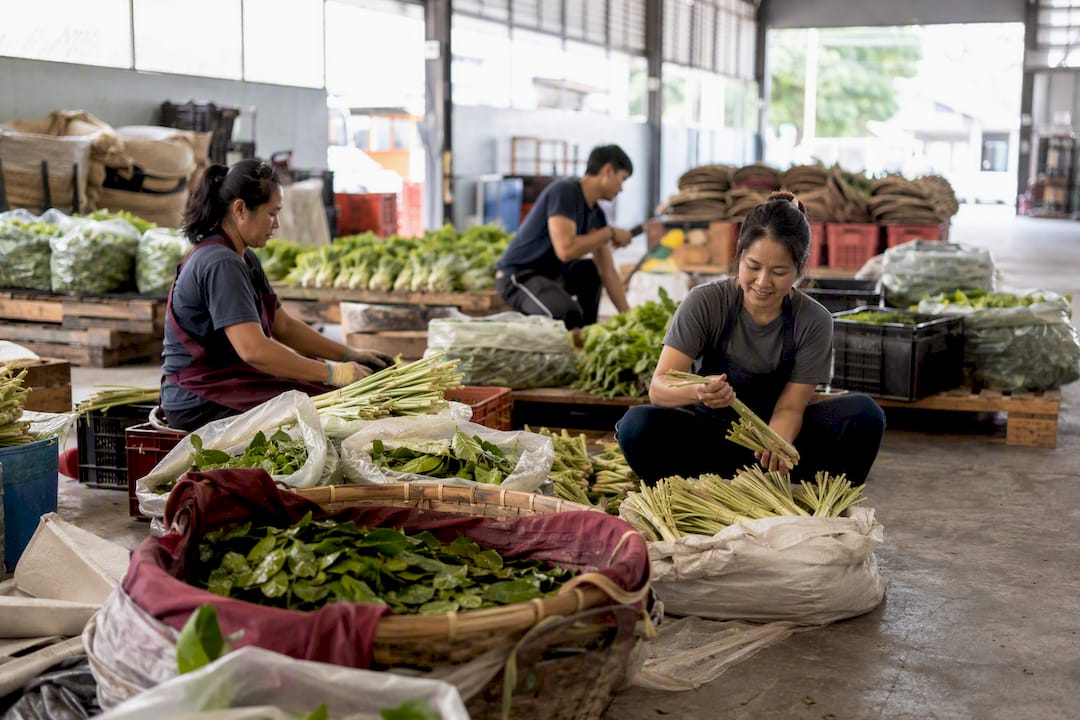
Container shipping efficiencies, cold-chain logistics improvements, and the growth of specialty importers changed that math. A regional grocery chain in the American Midwest can now stock fresh yuzu or fresh Thai basil on a rotation that would have been logistically impossible fifteen years ago. E-commerce grocery platforms extended that reach further, letting a home cook or a small restaurant order fermented pastes and specialty sauces directly rather than depending on a local specialty store’s inventory.
This infrastructure shift is also what makes the “cross-regional blend” category possible on the menu-adoption side. A chef can now reliably source Sichuan peppercorns, Filipino calamansi, and Japanese yuzu kosho in the same city, sometimes from the same importer. That reliability is what turns a chef’s curiosity into a repeatable menu item rather than a one-off special.
The tradeoff is authenticity risk. Wider availability sometimes means a diluted or mislabeled version of an ingredient reaches a market faster than accurate information about how to use it does, which is part of why sourcing challenges (covered further below) remain a real friction point even as raw availability improves.
How Have Celebrity Chefs and Cooking Shows Shaped This Trend?
Television and streaming did for Asian flavors what word-of-mouth alone never could: they gave millions of home cooks a face and a narrative to attach to an unfamiliar ingredient.
Chefs with strong media platforms have repeatedly used their reach to push specific regional dishes rather than generalized “Asian” cooking into the mainstream conversation. Cooking competition formats added another layer, forcing contestants to work with ingredients like gochujang or pandan on camera, which doubles as an informal tutorial for viewers who’ve never touched either.
Streaming documentary formats extended this further by giving entire episodes to a single regional cuisine or a single ingredient’s origin story, which reinforces the hyper-regional specificity that’s now driving menu adoption. A viewer who watches a documentary segment on Sichuan peppercorn cultivation walks away with a mental model for why mala numbing heat is different from chili heat, and that mental model is what makes them more willing to order it, or buy it, the next time they see it.
The net effect is a media pipeline that moves faster than traditional restaurant-led adoption ever could. A dish featured prominently on a widely watched show can see measurable search and sales interest within days, compressing an adoption curve that used to take years into a much shorter window.
Do Consumers Everywhere Accept Asian Flavors the Same Way?
Acceptance is not uniform, and treating it as though it were is a common planning mistake. Openness to global cuisines runs high overall, with roughly two in three consumers saying they’re willing to try them, but that openness varies sharply by region, generation, and prior exposure.
Urban markets with established immigrant communities, major coastal cities in North America and Western Europe, tend to show the highest baseline familiarity and the fastest adoption of newer, more specific ingredients like yuzu kosho or gochujang. Markets with less historical exposure to Asian cuisines often need an intermediary step: a familiar format (a sauce, a snack) carrying an unfamiliar flavor, rather than an unfamiliar dish carrying an unfamiliar flavor.
Generational differences matter just as much as geography. Younger consumers, the same “digital natives” driving social discovery, show far higher willingness to try an unfamiliar regional ingredient without a translated or Westernized on-ramp. Older consumers more often need a familiar comparison point (“it’s a bit like a spicy barbecue sauce”) before they’ll commit to a purchase.
For product teams, this means a single global launch strategy rarely works. A flavor that needs zero explanation in Los Angeles or Toronto may need a simplified entry point in a market with less prior exposure, and getting that calibration wrong is one of the more common reasons a promising regional launch underperforms outside its core early-adopter cities.
Why Is Sourcing Authentic Asian Ingredients Still Hard?
Availability has improved dramatically, but “available” and “authentic” aren’t the same thing, and this gap is one of the biggest quiet headaches for product developers working outside Asia.
Fresh ingredients pose the most obvious problem. Fresh pandan leaf, fresh galangal, and fresh yuzu all have narrow shelf windows and specific growing conditions that don’t translate easily to large-scale Western agriculture. Substitutions creep in as a result: pandan extract instead of leaf, lime zest standing in for yuzu, and the sensory profile shifts every time a substitution happens, even when the label doesn’t change.
Fermented and aged products carry a different challenge: process fidelity. A gochujang or miso made through a shortened industrial fermentation process can taste noticeably different from one made through a traditional multi-month process, even when the ingredient list looks identical on paper. Consumers with direct cultural familiarity with the traditional version notice these gaps fastest, and that’s often where a brand’s authenticity claims get challenged hardest.
Regulatory friction adds a third layer. Import restrictions on certain fresh produce, labeling requirements for fermented products, and inconsistent ingredient-naming standards across markets all slow down a product team trying to bring a genuinely regional ingredient to shelf without watering it down. None of this is a reason to avoid the category. It’s a reason to budget more sourcing and testing time than a domestic-ingredient launch would need.
What’s Next for Asian Flavor Innovation?
The next phase of this trend is likely to look less like discovery and more like refinement, as brands move past “Asian-inspired” as a catch-all and toward naming specific provinces, cities, and even individual producers.
Kerry’s Taste Charts for 2026 use a Now, New, Next framework that positions APAC ingredients like yuzu, pandan, and osmanthus as sitting between “new” and “next,” suggesting several more years of runway before these flavors plateau into mainstream staples the way soy sauce or sriracha already have. Takasago’s read on the region points to faster iteration cycles ahead, partly enabled by AI-supported flavor development tools that let R&D teams model and test variations faster than traditional formulation cycles allowed.
Functional pairing is the other clear direction. Innova Market Insights’ research on 2026 Asia food and beverage trends points to botanicals combined with fermentation and low-sugar positioning as the formula most likely to convert novelty purchases into habitual ones, especially in beverages carrying a probiotic or digestive-health claim.
Expect more single-origin storytelling, more functional-wellness pairing, and continued acceleration out of APAC’s flavor R&D pipeline rather than a slowdown.
An Editorial Take on Where This Trend Actually Goes Next
Most coverage of this trend stops at “Asian food is popular,” which misses the more useful story: the winners are the brands treating flavor like a supply chain problem, not a marketing problem. Yuzu kosho didn’t grow 63% on menus because of a clever ad campaign. It grew because someone solved sourcing and shelf stability well enough to make it repeatable.
The conventional advice, chase whatever’s viral on social media, is backwards. Virality identifies demand; it doesn’t tell you how to fulfill it profitably. The teams doing this well are working from taste-chart frameworks and menu data first, then layering storytelling on top, not the other way around.
If there’s one thing worth prioritizing over everything else in this piece, it’s ingredient-level honesty. Consumers can tell the difference between a real regional flavor and a watered-down approximation faster than most brands expect, and that gap is where trust gets built or lost.
Sources
- Asian food trends 2025: The evolution toward culinary authenticity — Datassential
- Healthy foods market — Grand View Research
FAQ
Why do many Asian cuisines rely on soy sauce instead of salt?
Soy sauce delivers salt alongside fermented umami compounds that plain salt can’t replicate, so it seasons and deepens flavor in a single ingredient. This dual function is part of why fermentation-based seasonings remain central to Asian cooking traditions.
Which Asian country has the most popular food globally?
There’s no single answer, since popularity varies by region and platform, but Japanese, Thai, and Korean cuisines consistently rank among the most searched and most menu-adopted globally. Interest in Filipino cuisine has also grown sharply, rising 50% in the year leading into 2025.
What are some typical Asian flavor combinations?
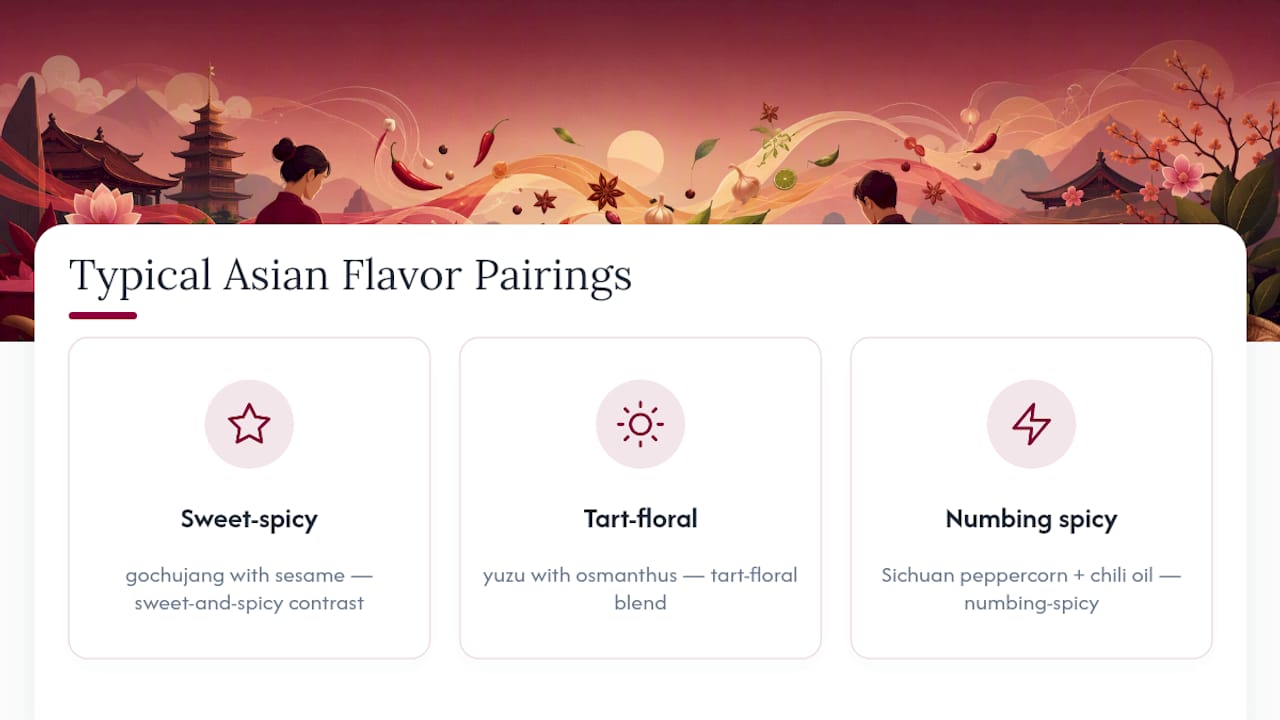
Common combinations include sweet-and-spicy pairings like gochujang with sesame, tart-floral blends like yuzu with osmanthus, and numbing-spicy profiles like Sichuan peppercorn with chili oil. Each pairing balances a distinct sensory contrast rather than layering heat alone.
Are Asian flavor trends likely to keep growing through the rest of the decade?
Industry frameworks like Kerry’s Now, New, Next model suggest several more years of growth before ingredients like yuzu and pandan become mainstream staples. Continued APAC-driven R&D and functional-wellness pairing point toward sustained rather than short-term momentum.