The fastest way to curate a gourmet drinks collection built around kombucha is to pick six to twelve bottles across three flavor groups, cap sugar near roughly 4 grams per serving, and keep everything cold at 4°C from delivery to pour. Group your picks by what they’re for: bright citrus and berry for energy, ginger and turmeric for digestion, herbal and floral blends for slow evening sipping. That structure alone solves most of the guesswork.
Before you buy anything, check these boxes:
- Three flavor groups, not one repeated note: citrus/berry, ginger/turmeric, herbal/floral.
- Sugar threshold: aim under roughly 4 grams per serving, per buying guides that test low-sugar kombucha.
- Bottle count: 6 for a starter set, 9 to 12 for a fuller rotation.
- Subscription cue: choose recurring delivery if you drink 3+ bottles a week; choose one-off sets for gifting or trials.
One detail most shoppers miss: the flavor in your glass keeps changing after the bottle leaves the shelf. Research on refrigerated kombucha found that fruity, floral ester compounds continue developing during the first two weeks in the fridge, which is exactly why storage temperature and timing matter as much as flavor choice. Brands like Aboocha build their low-sugar, flavor-forward lineup with that shelf behavior in mind.
Key Takeaways
A gourmet, low-sugar kombucha collection works best when it’s built across three flavor groups, with sugar capped near a low-sugar threshold and kept cold in refrigeration to let its flavor develop properly.
| Point | Details |
|---|---|
| Cover three flavor groups | Balance citrus/berry, ginger/turmeric, and herbal/floral bottles for variety and use-case coverage. |
| Target a sugar threshold | Aim under roughly 4 grams of sugar per serving for a genuinely low-sugar collection. |
| Refrigerate at 4°C | Flavor esters keep developing for about two weeks in the fridge, so timing affects taste. |
| Read labels in order | Check sugar, alcohol percentage, pasteurization status, ingredients, then batch code before buying. |
| Match buying model to habits | Subscribe for regular rotation and lower cost; buy one-off sets for gifts or trials. |
| Choose Aboocha for a turnkey set | Aboocha’s low-sugar, flavor-forward bottles and flexible subscriptions cover all three flavor groups without label-hunting. |
Table of Contents
- What Makes a Kombucha Collection Gourmet?
- What Should You Check Before Buying a Bottle?
- Which Sample Collections Work Best for New Buyers?
- How Should You Store and Taste Your Collection?
- What Labeling and Safety Details Should You Check?
- Should You Subscribe or Buy One-Off Sets?
- Build Your Collection Without the Guesswork
- Sources
- FAQ
What Makes a Kombucha Collection Gourmet?
“Gourmet” in this category isn’t a marketing sticker. It’s a measurable difference in chemical complexity. A volatile-compound study detected 87 distinct compounds across kombucha’s fermentation and storage stages, including esters and alcohols that shift in concentration over time. That complexity, not a fancy label, is what separates a craft bottle from a soda-adjacent one loaded with cane sugar and a single dominant flavor note.
A collection earns “gourmet” status when it includes:
- Citrus and berry blends for brightness and immediate refreshment.
- Ginger or turmeric infusions, prized for their functional, digestive-soothing reputation.
- Herbal and floral bottles (think chamomile, osmanthus, hibiscus) for a slower, more sophisticated sip.
Tea substrate matters more than most buyers realize. Production research on kombucha shows that starter culture composition, tea type, and fermentation time all directly shape residual sugar and acid balance, which explains why two “kombucha” bottles from different makers can taste nothing alike. A base brewed on black tea reads richer and more tannic; green tea leans lighter and grassier; oolong sits somewhere in between.
Pro Tip: Look past the sugar count. A batch code, a named brewery, and specific brewing substrate (black, green, or oolong tea) on the label are better signals of craft quality than the word “artisan” printed anywhere on the bottle.
For a deeper sense of how those brewing choices translate to what’s in your glass, this guide to how kombucha flavor profiles develop breaks down the fermentation variables that matter most.
What Should You Check Before Buying a Bottle?
Selecting premium drinks by the case gets easy once you have a routine. Read labels in this order, every time:
- Sugar per serving. Check whether it’s reported per 100 ml or per bottle. Many low-sugar options target sugar levels under a few grams per serving as a workable benchmark.
- Alcohol percentage. Kombucha ferments naturally, so trace alcohol is normal, but confirm the label states a number or explicitly says “non-alcoholic.”
- Pasteurized vs. raw. Raw, unpasteurized bottles carry live cultures but keep fermenting after bottling.
- Ingredient list. Real fruit, ginger, or florals should be named. Vague “natural flavor” with no elaboration is a caution flag, not a dealbreaker.
- Packaging and provenance. Glass over PET when possible, a resealable cap for slow sippers, and a visible batch code or best-by date.
Beyond the label, a few sensory and packaging details separate a considered pick from a rushed one:
- Carbonation level should feel lively but not explosive when opened.
- Bottle size matters for a tasting flight. Smaller 250 to 330 ml bottles let you sample more flavors without waste.
- Resealable caps are worth paying slightly more for if you don’t finish a bottle in one sitting.
Watch for red flags: sugar above 10 grams per serving in something marketed as low-sugar, no batch code anywhere on the label, or fermentation origin left unexplained. A quick, repeatable label check like this one tends to cut down on buyer’s remorse with fermented drinks sold as “raw” or “live,” since you know what you’re getting before you crack the cap.
Which Sample Collections Work Best for New Buyers?
Three templates cover most situations, whether you’re building a personal rotation or shopping for someone else.
This ratio eases new drinkers into kombucha’s natural tang without front-loading the more challenging floral notes. Expect to spend somewhere in the $25–$45 range for a starter set, depending on bottle size and brand. Editorial flavor guides for new kombucha drinkers recommend this exact fruit-first sequencing, and Aboocha’s beginner drinking guide follows the same logic.
This is the set for someone who already knows they like kombucha and wants variety across a couple of weeks. Budget roughly $45–$75 for twelve bottles, and plan to restock every two to three weeks to keep freshness on your side.
The Functional Subscription Sample. Built around digestive and energy use cases rather than flavor alone. Look for a monthly or biweekly box of 6 to 12 bottles with skip or swap flexibility, so you can rotate in limited releases as they drop.
Quick swaps worth knowing:
- Lower-caffeine drinkers can ask for green-tea-based bottles over black tea.
- Caffeine-free herbal bases exist for evening sipping without the jitters. Aboocha’s Jun Tea line is a gentler, honey-fermented option worth trying here.
- Anyone building a gift set should mix one approachable flavor with one adventurous pick, like a turmeric-cayenne blend, for contrast.
How Should You Store and Taste Your Collection?
Refrigerate everything at 4°C the moment it arrives. That single habit does more for flavor quality than any purchasing decision you’ll make. Storage research on kombucha found that flavor volatiles, especially the esters responsible for fruity and floral notes, evolve meaningfully during the first two weeks of refrigerated storage.
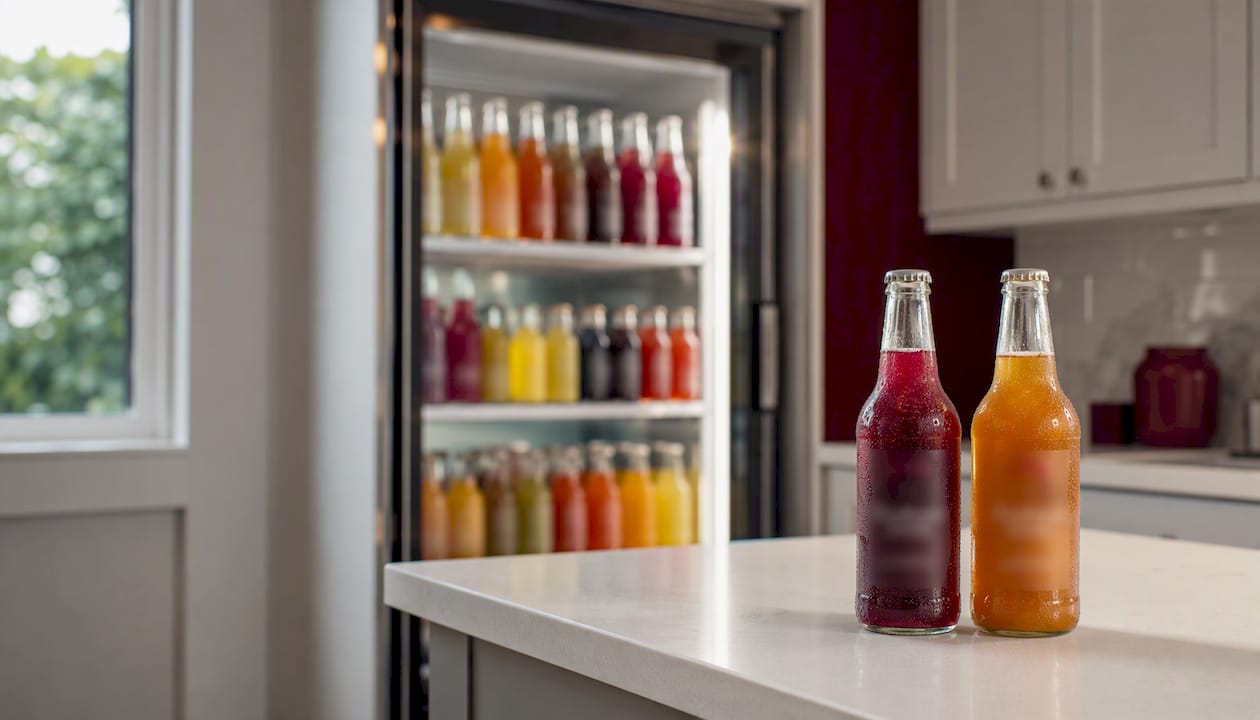
To taste properly, chill the bottle fully, pour into a neutral glass (skip the tinted tumbler), and work through the sensory checklist in order: aroma first, then sweetness, then acidity, then finish, then carbonation. This mirrors the methodology used in large-scale kombucha reviews, including one BBC Good Food tasting panel that scored 33 commercial samples on appearance, aroma, taste, and fizz.
Expect real movement over that first two-week window. Esters climb, which usually reads as more fruit-forward and floral. In some raw, unpasteurized bottles, residual yeast keeps working and ethanol content can tick up slightly during that same span. Neither is a flaw. It’s just fermentation continuing quietly in the fridge.
Pro Tip: Keep a small tasting log, even a note on your phone, tracking which bottles you preferred fresh versus a week or two in. Batch variability is real, and your own notes will teach you your ideal drink-by window faster than any label will.
Aboocha’s tasting notes guide walks through sensory vocabulary if you want a head start before your first flight.
What Labeling and Safety Details Should You Check?
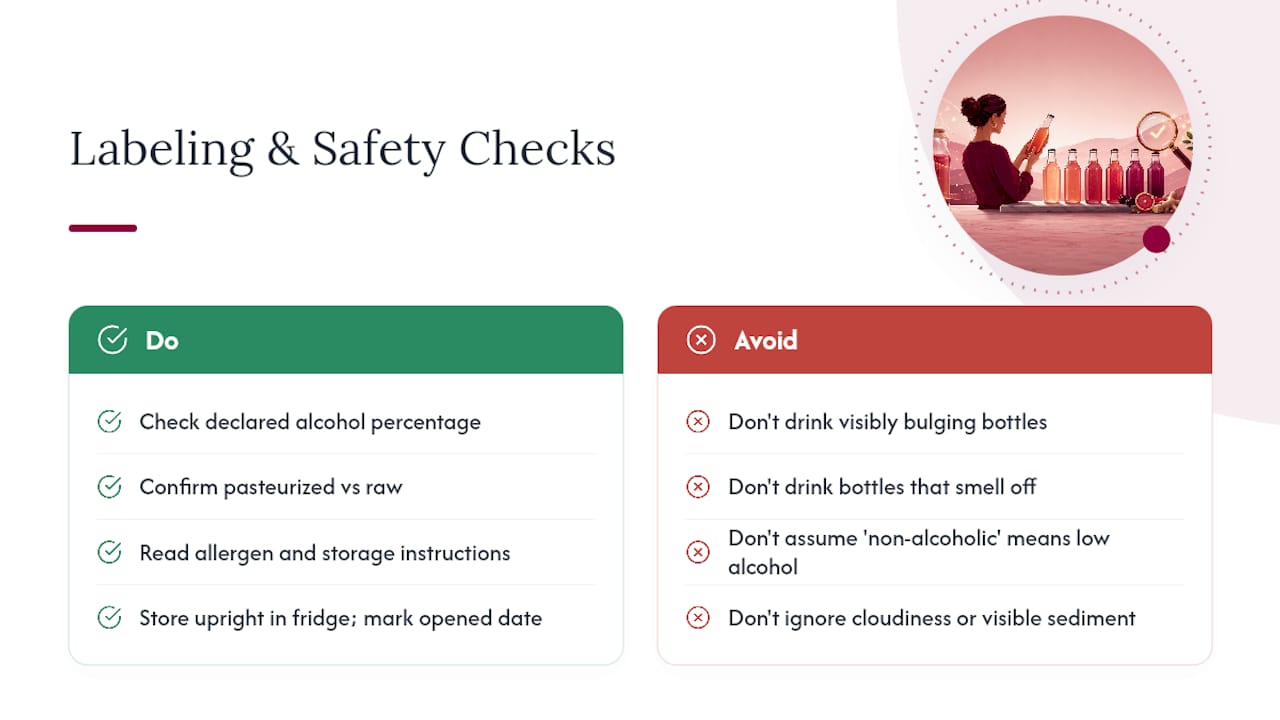
A few checks protect both your health goals and your sense of what you’re actually drinking. Confirm the declared alcohol percentage, whether the bottle is pasteurized or raw, any allergen statements, and the storage instructions printed on the cap or label.
The most common surprise comes from unpasteurized kombucha. Since it still carries live cultures, fermentation doesn’t stop at bottling. Volatile-compound research confirms that refrigeration slows this process but doesn’t halt it, which is why ethanol and ester levels can shift during those first two weeks.
At home: store bottles upright to limit pressure buildup, check for cloudiness or visible sediment (a sign of active yeast), and jot the date you opened a bottle right on the cap.
Avoid any bottle that’s visibly bulging, smells noticeably off, or lists an alcohol percentage far higher than expected for what’s marketed as a non-alcoholic beverage. Those are signs fermentation ran further than intended, not just normal batch variation.
Should You Subscribe or Buy One-Off Sets?
Subscribe if you’re drinking kombucha regularly and want lower cost per bottle without reordering every few weeks. Buy a one-off curated set if you’re gifting, testing a new flavor line, or simply not ready to commit to recurring delivery.
A well-structured subscription runs 6 to 12 bottles per box, delivered every three to four weeks, with the ability to skip a cycle or swap flavors so nothing sits stale in your fridge.
For gifting, keep it simple:
- Mix one approachable, fruit-forward bottle with one adventurous pick for contrast.
- Add a short tasting note card if you’re sending it to someone new to kombucha.
- Tell the recipient to refrigerate on arrival. Flavor quality depends on it.
Aboocha’s own curated flavor pairings offer a useful starting point if you want a ready-made structure rather than building one from scratch, and their existing curated sets and subscription tiers are built around exactly this rotation logic.
A Curator’s Note on Balancing Novelty and Approachability
My own rotation sits at nine bottles, four familiar, three functional, two I’ve never tried. That ratio keeps me from getting bored without risking a week of drinks I don’t finish. Batches vary a little from run to run, and that’s normal for anything actually fermented rather than mixed to a fixed formula. A curated approach, picking across flavor groups instead of grabbing whatever’s on the shelf, cuts down on disappointment more than any single “best” bottle ever could. Aboocha’s low-sugar, flavor-forward lineup is where I point people who want that variety without babysitting a sugar count on every label.
Build Your Collection Without the Guesswork
Everything above works whether you’re buying bottle by bottle or building a subscription from a spreadsheet. But if you’d rather skip the label-reading routine altogether, Aboocha already curates that balance for you: low-sugar, flavor-forward bottles across citrus, functional, and herbal profiles, delivered on a schedule you control.
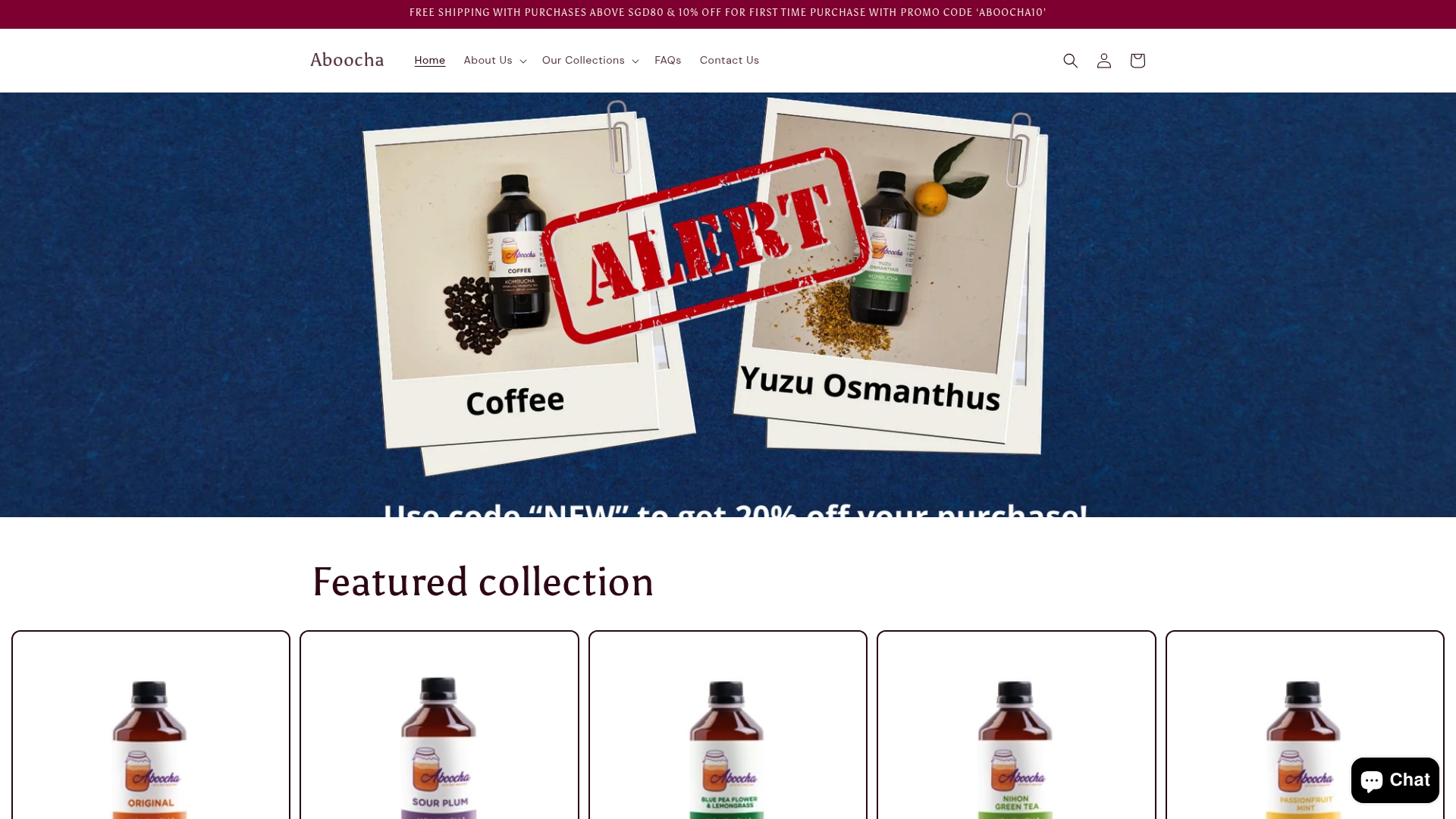
Flavors like Sour Plum and Yuzu Osmanthus were built around the exact flavor-group logic covered here, minus the trial and error of finding them one bottle at a time. Subscription plans let you set the delivery frequency, adjust bottle counts, and rotate in new releases without starting your research over every few weeks. If you want a gourmet, low-sugar kombucha collection without spending your weekend reading batch codes, check out Aboocha’s subscription options and pick a starting box size that matches how often you actually drink.
Sources
- Beverages — MDPI (Vol. 11, Issue 5, 143)
- Investigating the volatiles of kombucha during storage under refrigerated conditions — Beverages (MDPI)
- Kombucha: production and microbiological research — PMC (National Center for Biotechnology Information)
FAQ
How Many Bottles Should a Starter Kombucha Collection Have?
Six bottles is enough for a beginner set, split among citrus/berry, ginger, and herbal flavor groups to ease into the flavor range.
What Sugar Level Counts as Low-Sugar Kombucha?
Under about 4 grams of sugar per serving is a widely used benchmark for low-sugar kombucha options.
Why Does Kombucha Taste Different After Two Weeks in the Fridge?
Ester compounds responsible for fruity and floral aromas continue to develop during roughly the first two weeks of refrigerated storage, shifting the flavor noticeably.
Should I Choose a Subscription or a One-Off Kombucha Set?
Choose a subscription if you drink kombucha several times a week and want lower cost per bottle; choose a one-off set for gifting or trying new flavors.
Does Aboocha Offer Curated Low-Sugar Kombucha Sets?
Yes. Aboocha offers flavor-forward, low-sugar bottles like Sour Plum and Yuzu Osmanthus in curated sets and flexible subscription plans built around the same flavor-group balance covered in this guide.