If you want a ready-to-drink kombucha that delivers both tart acidity and a savory, umami-like depth, these five bottles are worth starting with:
- Aboocha Sour Plum — sharp plum tartness up front, with a fermented black-tea backbone that carries a distinctly savory, almost brothy finish. The umami contributor here is tea polyphenols amplified by extended fermentation.
- Aboocha Yuzu Osmanthus — bright citrus tartness from yuzu, softened by osmanthus’s floral-savory mouthfeel. The osmanthus provides herbal, slightly honey-like umami notes that linger after the acidity fades.
- Aged black-tea kombucha with seaweed botanicals — longer fermentation on a black-tea base deepens tannin-driven savory notes; any added kelp or seaweed ingredient pushes the umami signal further.
- Oolong-base second-fermentation kombucha — oolong sits between green and black tea in oxidation, producing a roasted, mineral savory quality alongside moderate tartness.
- Tart plum + fermented tea blend — plum concentrate adds malic and citric acid for sourness while the fermented tea base provides the savory backbone.
Pro Tip: If a bottle lists both a fruit acid source (plum, yuzu, tamarind) and a tea type (black, oolong), you are almost certainly looking at a sour + umami profile. Those two ingredients together are the clearest label shorthand.
Key Takeaways
Kombucha that combines tart acidity with savory umami notes is produced through black or oolong tea bases, extended fermentation, and controlled acid development that lets tea polyphenols and VOCs surface.
| Point | Details |
|---|---|
| Start with these two bottles | Aboocha Sour Plum and Yuzu Osmanthus are the clearest ready-to-drink examples of sour + umami profiles. |
| Read the label before buying | Check sugar per 100 mL, alcohol percentage, and “live cultures” vs. “pasteurized” on every bottle. |
| Tea base drives savory depth | Black and oolong tea bases produce more sour, savory kombucha; green tea trends fruitier and milder. |
| Health benefits require habit | Cohort data linking fermented-food microbial richness to modest cardiometabolic improvements applies to regular habitual intake, not single servings. |
| Aboocha ships within Singapore | Order Sour Plum or Yuzu Osmanthus online with subscription delivery for consistent access. |
Table of Contents
- How do sour and umami flavors develop in kombucha?
- What flavor examples show sour and umami together in kombucha?
- How do you choose a sour + umami kombucha in Singapore?
- How should you serve sour + umami kombucha to appreciate the savory notes?
- What does the evidence say about kombucha and health?
- Why sour + umami kombucha deserves more attention than it gets
- Ready to try Aboocha’s sour + umami flavors?
- Sources
- FAQ
How do sour and umami flavors develop in kombucha?
Sourness in kombucha comes primarily from organic acids produced as bacteria metabolize sugars and ethanol. The main contributors are acetic acid (sharp, vinegar-like), gluconic acid (mild, smooth tartness), glucuronic acid (slightly bitter-sour), lactic acid (soft, dairy-like acidity), malic acid (crisp, apple-like), and succinic acid (faint, briny-savory). That last one is worth noting: succinic acid is the same compound that gives shellfish and aged wine their characteristic savory depth.
Umami in kombucha is subtler. It emerges from tea-derived polyphenols, amino acids released during fermentation, and a shifting profile of volatile organic compounds (VOCs). One study detected a large number of volatile organic compounds (VOCs), including many aroma-active compounds such as 2-phenylethanol and linalool, during kombucha fermentation. Early fermentation produces citrus-floral notes. As fermentation continues, those shift toward citrus-herbal and eventually sweet-floral or savory registers. The key mechanism: yeast alcohols get oxidized by bacteria into aromatic volatile acids, and mixed cultures (Saccharomyces, Zygosaccharomyces, Komagataeibacter) enrich that VOC profile further.
| Acid | Primary sensory note | Fermentation stage |
|---|---|---|
| Acetic | Sharp, vinegar | Mid to late |
| Gluconic | Smooth, mild sour | Early to mid |
| Glucuronic | Bitter-sour | Mid |
| Lactic | Soft, dairy-like | Early |
| Malic | Crisp, apple-like | Early |
| Succinic | Briny, savory | Mid to late |
Temperature is the most powerful single control. At 30°C, titratable acidity rises sharply and vinegar notes dominate; at 20°C, sweetness and apple-like flavors are preserved. Tea type and inoculum age also matter: black-tea kombucha trends more sour and yeasty than green-tea kombucha, which ferments slower and stays fruitier. Older inocula accelerate acid production and can push a batch toward overly sharp acidity if not controlled. Producers targeting a sour-plus-savory profile typically use black or oolong tea, moderate fermentation temperatures, and carefully timed inoculum to let organic acids build without overwhelming the delicate umami notes underneath.
What flavor examples show sour and umami together in kombucha?
The clearest way to understand these profiles is through tasting notes tied to specific ingredients. Here is what to look for:
- Aboocha Sour Plum — tart front from plum concentrate (malic and citric acids), savory tea backbone from extended black-tea fermentation. Expect a dry, slightly brothy finish.
- Aboocha Yuzu Osmanthus — yuzu delivers sharp citrus tartness; osmanthus adds a floral-savory mouthfeel with faint honey-like umami. The combination reads as elegant rather than aggressive.
- Barrel-aged black-tea kombucha — wood contact adds tannin depth and a faint vanilla-savory note; acidity is present but rounded.
- Oolong + ginger second fermentation — roasted mineral quality from oolong, ginger’s spicy-savory warmth, and secondary carbonation that lifts both.
- Green-tea kombucha with umami botanicals (seaweed, shiso) — green tea’s lighter acidity lets added savory botanicals read clearly; expect a clean sour-then-savory sequence.
- Aged pu-erh tea kombucha — earthy, almost mushroom-like savory depth; tartness is moderate but the umami signal is the strongest of any tea base.
On the label, look for these production signals: “aged,” “barrel fermented,” “second fermentation,” “tea blend: black/oolong,” or “contains live cultures.” Each phrase is a reasonable indicator that savory notes have had time to develop. Words like “pasteurized” or “heat-treated” suggest the microbial activity has been stopped, which can flatten the more delicate umami registers. You can read more about how tannins shape savory mouthfeel in kombucha to understand why tea base matters so much.
Sensory panels consistently show that sweetness is the strongest predictor of overall liking, while high astringency and sharp vinegar flavor reduce it. The best sour + umami kombuchas keep tartness as a structural frame rather than the dominant note, so the savory tea-derived character can actually be perceived.
How do you choose a sour + umami kombucha in Singapore?
Six things to check, in priority order:
- Sugar per 100 mL — aim for products with lower residual sugar; less sweetness lets tartness and savory notes come through more clearly, and it aligns with a health-conscious intake pattern. Singapore’s Nutri-Grade rating on the label (A to D, based on sugar and saturated fat) is a quick reference point.
- Alcohol percentage — check the label for ABV disclosure; most commercial kombucha sits below 1%, but some live-culture bottles can drift higher.
- Live vs. pasteurized — “live cultures” or “unpasteurized” means active microbes are present, which contributes to both flavor complexity and potential probiotic benefit. Pasteurized versions are shelf-stable but lose some of that sensory depth.
- Tea base — black or oolong tea bases trend more sour and savory; green tea tends fruitier and milder.
- Fermentation descriptors — “aged,” “barrel,” or “second fermentation” on the label suggests deeper umami development.
- Best-by date and storage — live-culture kombucha needs refrigeration and has a shorter window; check the date and storage instruction before buying.
In Singapore, specialty grocers, health food stores, and select supermarkets carry a range of premium kombucha. For the widest flavor selection, including sour + umami profiles, direct-to-consumer online orders typically offer more variety. GST applies to online purchases as with any other retail transaction, and shipping costs vary by retailer and order size.
| Label signal | Likely sensory outcome | Buying tip |
|---|---|---|
| “Barrel-aged” | Deeper umami, rounded acidity | Try chilled, in a wine glass |
| “Second fermentation” | Higher carbonation, brighter tartness | Open slowly; serve immediately |
| “Black tea base” | More sour, yeasty, savory | Pair with umami-rich foods |
| “Live cultures” | Complex flavor, shorter shelf life | Check best-by; refrigerate on arrival |
How should you serve sour + umami kombucha to appreciate the savory notes?
Serving temperature and glassware shape what you actually taste. Follow this sequence:
- Serve cold (4–8°C), but not ice-cold; extreme cold suppresses aroma.
- Open the bottle gently and let it rest 60 seconds before pouring to settle carbonation.
- Pour into a tulip glass or white-wine glass; the narrowing rim concentrates volatile aromatics.
- Look at the color and clarity — deeper amber often signals black-tea base and longer fermentation.
- Swirl once, then take a short sniff before sipping. You should detect the acid note first, then a secondary herbal or savory register.
- Take a small sip and hold it briefly before swallowing. The umami note typically arrives mid-palate and lingers.
For food pairings, umami-rich hard cheeses, miso-glazed nuts, and light proteins like steamed fish or tofu work well because they share the savory register without competing with the acidity. Tart fruit-based dishes, such as a plum compote or citrus salad, echo the sour notes and make the kombucha taste rounder. For creative pairing ideas that go beyond the basics, the range of culinary combinations is wider than most people expect. Chefs are increasingly pairing sour + umami fermented beverages with composed dishes, a trend reflected in current gastronomy directions globally.
Pro Tip: Let the bottle warm 2–3 minutes after opening, then pair with a small pinch of flaky sea salt on the side. Salt suppresses bitterness and elevates savory perception, making the umami notes in the kombucha noticeably more distinct.
What does the evidence say about kombucha and health?
Kombucha may contribute live microbes and fermented-food diversity to your diet. It is not a cure for anything, and single-serving effects are not clinically established. Benefits, where they exist, are associated with habitual consumption over time.
One relevant piece of international research comes from a study of 440 adults in the Swiss Kidney Stone Cohort: higher microbial richness in fermented-food intake was associated with modestly lower systolic blood pressure and lower glycated hemoglobin after adjustment. These are associations, not causal proof, but they support the case for including fermented foods regularly rather than occasionally.
Practical safety notes:
- Watch total sugar per serving, especially if you drink more than one bottle daily.
- Check alcohol content; people who avoid alcohol for health, religious, or pregnancy-related reasons should verify the label.
- Immunocompromised individuals should consult a healthcare provider before consuming live-culture kombucha.
- Minors should consume kombucha only with parental awareness of the alcohol content.
- If you notice digestive discomfort when starting, reduce serving size and increase gradually.
This article provides general nutritional information, not medical advice. Consult a healthcare professional for guidance specific to your situation.
Why sour + umami kombucha deserves more attention than it gets
Most kombucha on the market chases sweetness because sweetness drives immediate liking scores in sensory panels. That is a reasonable commercial decision, but it leaves a real gap: the most interesting flavor territory in fermented tea sits at the intersection of tartness and savory depth, and most brands never go there.
Aboocha’s focus on profiles like Sour Plum and Yuzu Osmanthus reflects a different priority. Rather than masking fermentation character with added sugar, these flavors are built to let the tea’s natural savory notes surface. The plum’s malic acid provides structure without sharpness; the osmanthus adds a floral-savory register that most drinkers have never encountered in a beverage. That combination is genuinely unusual in the ready-to-drink category.
The practical implication for you: if you have only tried sweet or fruit-forward kombucha and found it underwhelming, a sour + umami bottle is a different sensory experience entirely. It rewards attention the way a good natural wine does. Pair it with food, use the right glass, and give it two minutes after opening. The savory notes are there; they just need the right conditions to show up.
Ready to try Aboocha’s sour + umami flavors?
Aboocha Sour Plum and Yuzu Osmanthus are two of the most direct ready-to-drink examples of tart acidity paired with savory depth available for Singapore shoppers. Both are formulated with lower sugar content than most commercial kombucha, so the fermentation character comes through clearly rather than being sweetened into submission.
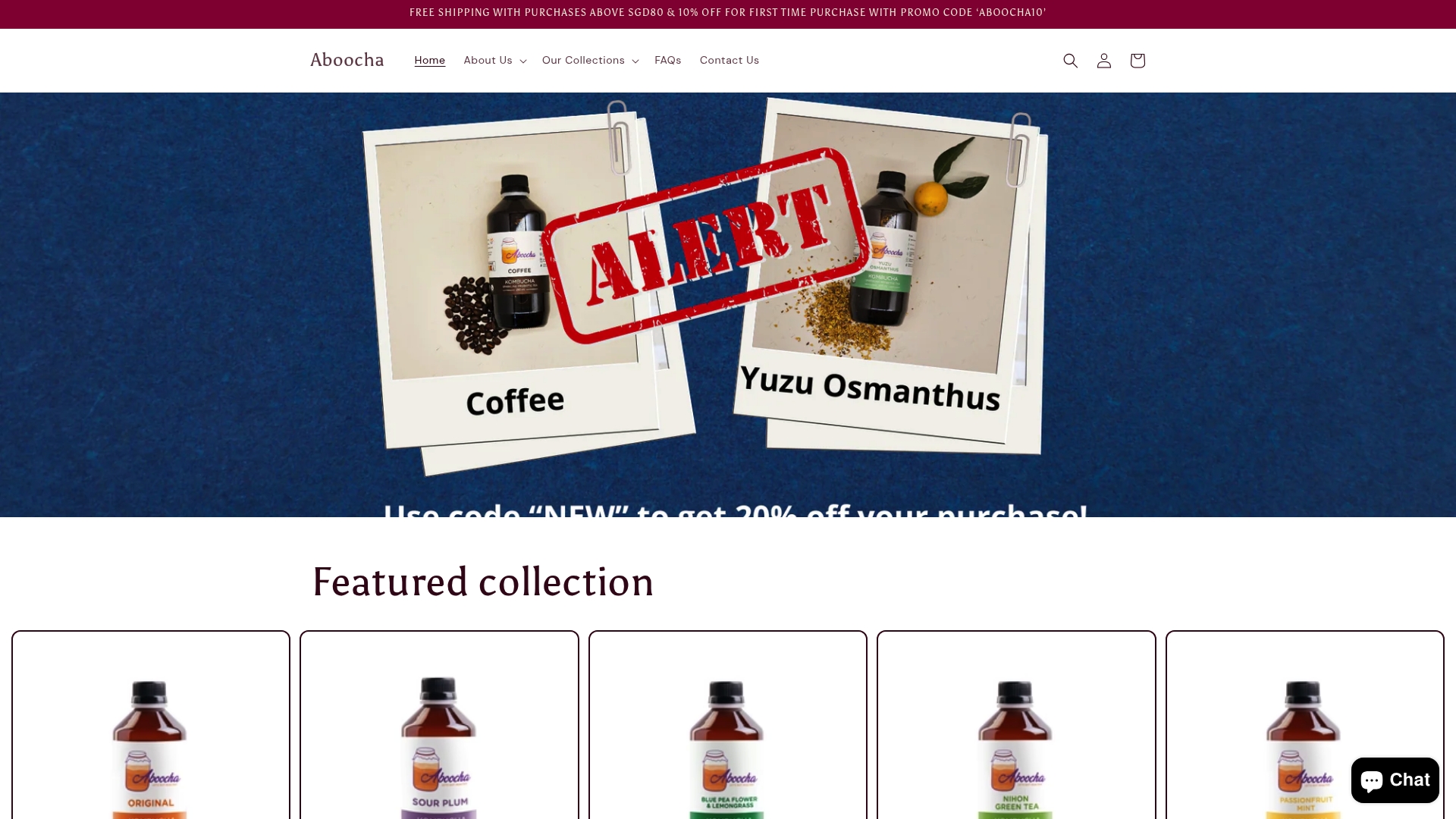
Customers in Singapore can order directly through Aboocha’s online store. Product pages list sugar per 100 mL, alcohol content, and culture status so you can verify before purchasing. A subscription option is available for regular delivery, which is the most practical way to build the habitual consumption pattern that the fermented-food research supports. Check the product pages for current delivery timelines.
Sources
- Characterization of aroma active compound production during kombucha fermentation: towards the control of sensory profiles
- Associations of dietary intake of live microorganisms and fermented foods with cardiometabolic health in a Swiss cohort
- Key kombucha process parameters for optimal bioactive compounds and flavor quality
For Singapore-specific product availability, check retailer websites and Aboocha’s product pages directly for current stock, alcohol labeling, and sugar content per serving.
FAQ
What makes a kombucha taste both sour and umami?
Sourness comes from organic acids (acetic, gluconic, malic) produced during fermentation; umami emerges from tea polyphenols, amino-acid-derived VOCs, and succinic acid. Black or oolong tea bases and longer fermentation times favor both.
Which ready-to-drink kombucha examples combine sour and umami flavors?
Aboocha Sour Plum and Aboocha Yuzu Osmanthus are two direct examples. Aged black-tea kombucha, oolong second-fermentation bottles, and any product listing osmanthus or plum concentrate alongside a black-tea base are also strong candidates.
How do I check if a kombucha is suitable for health-conscious drinking in Singapore?
Does kombucha actually have health benefits?
Cohort research has linked higher microbial richness from fermented-food intake to modestly lower blood pressure and glycated hemoglobin. Benefits are associated with regular consumption over time, not single servings, and product composition varies, so check labels.
How should I store live-culture kombucha after delivery?
Refrigerate immediately on arrival and consume before the best-by date. Live-culture kombucha continues fermenting slowly at room temperature, which can increase acidity and alcohol content if left unrefrigerated for extended periods — a bigger concern in Singapore’s warm, humid climate than in a temperate one.