Deliberately exploring diverse, low-sugar kombucha flavors does more than keep your palate interested. It helps you stick with a gut-supporting habit long enough for it to matter, and a systematic review of clinical trials tied regular fermented-food intake to better bowel frequency and stool consistency. The one-line verdict: rotate flavors instead of drinking the same bottle on repeat, and track how your body responds over a few weeks.
Three moves to start with:
- Sample one new flavor family each week instead of committing to a single favorite.
- Choose bottles with less than 5 grams of sugar per serving where possible.
- Keep a short log of bowel frequency and comfort for two to four weeks.
Key Takeaways
Deliberately rotating diverse, low-sugar kombucha flavors sustains long-term intake, and sustained intake is what current clinical evidence links to better bowel frequency and stool consistency.
| Point | Details |
|---|---|
| Flavor variety supports adherence | Rotating flavor families prevents palate fatigue and keeps a gut-focused habit going past the first few weeks. |
| Diversity may matter more than volume | Microbial richness from varied fermented foods tracks with cardiometabolic markers better than total intake. |
| Fermentation chemistry drives both taste and function | Organic acids, esters, and polyphenols shape flavor while also influencing motility and gut metabolism. |
| Low sugar is the top purchase driver | Consumer data shows reduced sugar, followed by natural fruity flavor, as the leading factors in kombucha choice. |
| Aboocha offers a flavor-forward, low-sugar option | Bottles like Sour Plum and Yuzu Osmanthus support a rotation plan through individual sets or subscriptions. |
Table of Contents
- The Role of Taste Exploration in Wellness Habits
- What in Kombucha Links Flavor to Gut Benefits?
- How Do You Explore Kombucha Flavors Safely?
- How to Choose a Quality Low-Sugar Kombucha
- Building a Weekly Flavor Rotation for Gut Support
- What Does the Evidence Actually Show?
- Why Deliberate Tasting Changed How I Think About Kombucha
- Where Aboocha Fits Into Your Flavor Rotation
- Sources
- FAQ
The Role of Taste Exploration in Wellness Habits
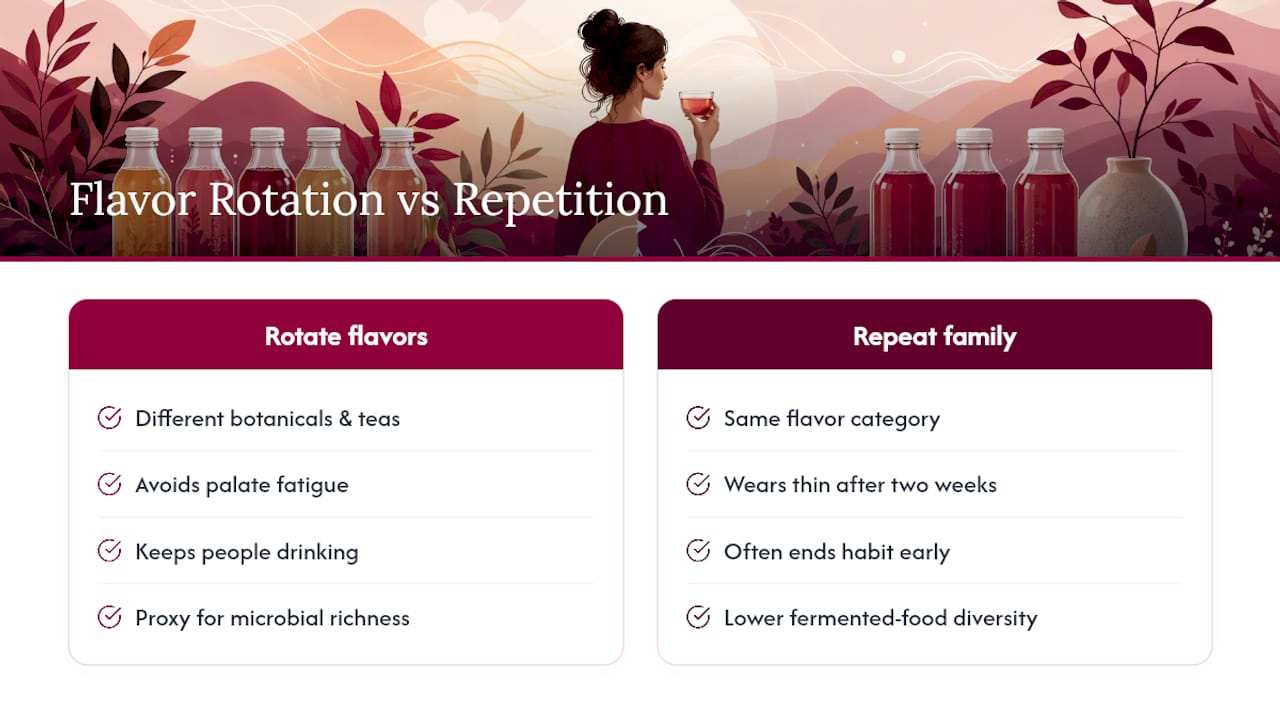
The role of taste exploration in wellness comes down to a simple behavioral fact: variety keeps people drinking. A single kombucha flavor, no matter how good, wears thin after two weeks. Boredom is often what ends a health habit before any physiological benefit has a chance to show up.
There’s a physiological argument too. A Swiss study on fermented-food diversity found that microbial richness from eating a variety of fermented foods tracked more closely with better cardiometabolic markers than the total volume consumed. Flavor diversity in kombucha is a reasonable proxy for that same principle. Different flavors often mean different botanicals, teas, and fermentation runs, each contributing a slightly different mix of organic acids and plant compounds.

Consumer data backs this up from the preference side. A 2025 conjoint analysis of Southeast Asian shoppers found reduced sugar was the top factor driving kombucha purchases, with natural fruity flavors ranking second. People aren’t choosing gut health despite flavor. They’re choosing it because of flavor.
Pro Tip: Rotate between at least three flavor families (fruity, floral, herbaceous) rather than three variations of the same one, like three different berry blends. True palate fatigue comes from repeating a flavor category, not just a specific bottle.
What in Kombucha Links Flavor to Gut Benefits?
Flavor and function come from the same fermentation process, not two separate things bolted together. The main players:
- Acetic and gluconic acids from Acetobacter give kombucha its tang and may influence gut transit.
- Lactic acid from Lactobacillus rounds out sourness and softens sharp edges.
- Esters and volatile compounds from Saccharomyces and Komagataeibacter create fruity, floral aromas.
- Polyphenols from the tea base carry antioxidant activity that shifts with brewing choices.
The tea base itself changes both taste and function. Industry analysis on tea base selection notes that green and oolong bases tend to score higher in antioxidant assays and deliver fresher, more floral notes, while black and pu-erh produce heavier, earthier profiles with different polyphenol compositions.
A 2025 fermentation review found that organic acid concentration, shaped directly by fermentation time and temperature, can influence intestinal motility and microbial metabolism downstream. Pleasant acidity, balanced carbonation, and a tea backbone you can actually taste through the fruit aren’t just quality markers. They’re signals the fermentation did its job.
How Do You Explore Kombucha Flavors Safely?
Tasting with intention beats grabbing whatever’s on sale. Here’s a method that won’t shock your gut or your palate:
- Chill it properly. Serve kombucha cold, around 38 to 45°F, in a clear glass so you can see carbonation and clarity.
- Taste light to intense. Start with citrus or floral flavors, move toward fruitier blends, and finish with bold or spiced varieties like ginger or turmeric.
- Reset between samples. Plain water or an unsalted cracker clears residual acidity so the next flavor registers accurately.
- Portion for testing, not indulgence. Two to four ounces per new flavor is plenty for a first tasting.
For the first two to four weeks, add one new flavor at a time rather than switching your entire rotation overnight. A sudden jump from zero kombucha to five different flavors a week can make it hard to tell which one, if any, is behind a change in comfort or bloating.
Track it simply. A daily note on stool frequency, consistency, and any bloating gives you real data instead of a vague impression. Most people who notice a change report it within one to two weeks of consistent intake, matching the timelines seen in clinical trials on kombucha and GI symptoms.
Pro Tip: Introduce bitter or pungent flavors, like turmeric or ginger blends, last in your rotation. Fermentation tends to soften harsh plant compounds over time, so a turmeric kombucha often tastes rounder after a few weeks in the bottle than it did fresh.
How to Choose a Quality Low-Sugar Kombucha
Reading a label well takes less time than reading a nutrition panel for cereal, but it matters more here. Check for:
- Sugar per serving under 5 to 7 grams, ideally, since reduced sugar is what consumers actually prioritize when picking gut-focused kombucha.
- Live culture claims and a tea base listed by name, not just “brewed tea.”
- Ethanol percentage, which should sit well under 0.5% for a non-alcoholic classification.
- A recent production or batch date, since kombucha keeps fermenting in the bottle.
On the sensory side, a good bottle has balanced acidity, not a sharp vinegar bite, along with clean carbonation and an aroma that matches its named flavor. Red flags include cloudy mold films, a nail-polish or solvent-like smell, or an overwhelming yeasty funk. Any of those mean the bottle should go back on the shelf, not in your glass.
Building a Weekly Flavor Rotation for Gut Support
A four-week rotation spreads exposure across tea bases and flavor families instead of locking you into one lane:
- Week 1: Green tea base with a citrus or floral flavor, served chilled with lunch.
- Week 2: Oolong base with a light fruity blend, taken between meals.
- Week 3: Black tea base with a spiced or herbaceous flavor, paired with a fiber-rich snack.
- Week 4: Pu-erh or darker base with a bold fruit or botanical blend, served slightly less cold to soften intensity.
Pairing matters more than most people assume. Floral and citrus flavors work well alongside light meals, while spiced or earthier blends hold up better next to heartier food. If you want to dig deeper into how tea flavor families differ, matching carbonation level to the meal helps too. Lighter, brighter flavors tend to suit higher carbonation and cooler serving temperatures, while heavier, earthier ones taste better slightly warmer with gentler fizz.
What Does the Evidence Actually Show?
The most consistent finding across current research is modest but real. The systematic review covering multiple clinical trials reported a modest improvement in bowel movement frequency among people consuming fermented foods regularly, kombucha included.
A separate review of eight kombucha trials running from 10 days to 10 weeks found promising effects on constipation-related symptoms alongside modest, inconsistent shifts in gut microbiota. That’s the honest limit of the science right now.
- Trials remain short, often under 10 weeks.
- Sample sizes are small and kombucha formulations vary widely between studies.
- Bold claims about kombucha as a broad probiotic or a long-term cardiometabolic fix outrun what the current data supports.
What’s reasonably supported: GI comfort improvements for some people with regular intake. What’s still speculative: sweeping probiotic or long-term metabolic claims.
Why Deliberate Tasting Changed How I Think About Kombucha
Most people treat kombucha like medicine, something to choke down because it’s “good for you.” That mindset rarely lasts. Treating each bottle as worth actually tasting, noticing the acidity, the tea backbone, the way a flavor lands, is what makes the habit stick past the first case. Start with one new flavor this week and pay attention. That’s the whole practice.
Where Aboocha Fits Into Your Flavor Rotation
Aboocha builds its entire kombucha lineup around the idea that gut-focused kombucha doesn’t have to taste like a compromise. Each bottle keeps sugar low while leaning into bold, distinct flavor profiles, so your weekly rotation doesn’t run out of variety after the second bottle.
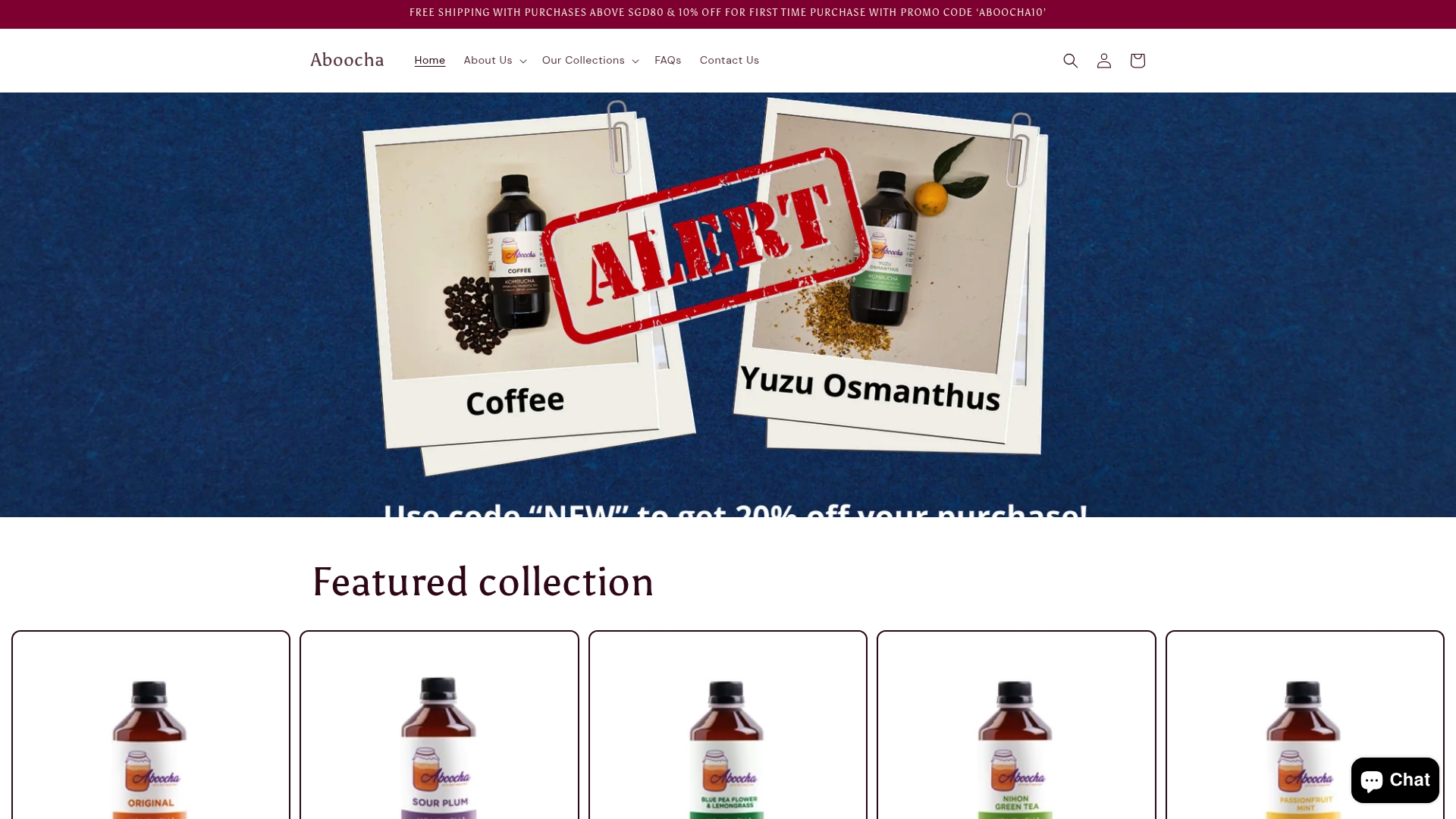
If you’re putting together a four-week rotation, Sour Plum offers the tart, acidic profile that works well early in a tasting sequence, while Yuzu Osmanthus brings a floral, citrus-forward note suited to lighter meals. Both fit a low-sugar approach without sacrificing the kind of layered taste that keeps you reaching for the next bottle instead of abandoning the habit. A subscription plan takes the guesswork out of restocking, delivering a rotating flavor set so you’re never stuck rebuying the same bottle out of convenience. Check current flavor sets and subscription options to build your own rotation starting this week.
Sources
These sources back the clinical and consumer-behavior claims used throughout this guide:
- Systematic review (2025) reporting gastrointestinal symptom improvements with fermented foods, including kombucha
- Swiss study linking fermented-food microbial richness with cardiometabolic outcomes
- 2025 conjoint analysis: sugar reduction and fruity flavors drive kombucha choice
- Review: microbial interactions and how fermentation conditions affect kombucha bioactive components (2025)
- Systematic review (2025) synthesizing clinical trials of kombucha and reporting GI symptom improvements and modest microbiota effects
This article is general information, not a substitute for advice from a qualified doctor. Consult a qualified healthcare professional about your own circumstances before acting on anything here.
FAQ
Does Kombucha Flavor Variety Actually Affect Gut Health?
Flavor variety itself doesn’t directly change gut bacteria, but it supports the consistent intake that clinical trials link to improved bowel frequency and stool consistency.
How Much Sugar Should Low-Sugar Kombucha Contain?
Look for under 5 to 7 grams of sugar per serving, the range that consumer preference research identifies as the top factor in kombucha purchase decisions.
How Long Before I Notice Digestive Changes From Kombucha?
Most people who notice a change report it within one to two weeks of regular intake, based on timelines from clinical trials lasting 10 days to 10 weeks.
What Are the Warning Signs of a Spoiled Kombucha Bottle?
Watch for cloudy mold films, a solvent or nail-polish smell, or an overpoweringly yeasty, vinegary aroma. Any of these mean the bottle should be discarded.
Can Aboocha Help Me Build a Flavor Rotation?
Yes. Aboocha’s individual bottles, flavor sets, and subscription plans are built specifically to support a rotating, low-sugar tasting routine without sacrificing flavor.