The best low-calorie flavorful drink options span six categories: sparkling and infused water, herbal and iced teas, kombucha, low-calorie electrolyte drinks, low-calorie mocktails and lighter alcoholic choices, and unsweetened plant or dairy milks. Each delivers real flavor with minimal calories because they rely on natural aromatics, carbonation, fermentation, botanical infusions, or low-energy sweeteners rather than added sugar. The Swiss Federal Food Safety and Veterinary Office (BLV) recommends adults drink 1–2 liters of unsweetened beverages daily, with sugary drinks kept to a small portion. That guidance leaves plenty of room for variety, as long as you know where to look.
- Sparkling/infused water: 0–10 kcal per serving, 0 g added sugar
- Herbal and fruit teas: 0–5 kcal, 0 g added sugar
- Low-sugar kombucha: roughly 15–50 kcal, 2–8 g residual sugar
- Low-cal electrolyte drinks: 0–30 kcal, 0–5 g sugar
- Low-cal mocktails and lighter alcoholic options: 40–120 kcal, varies
- Unsweetened plant/dairy milks: 10–50 kcal per 100 ml, 0–1 g added sugar
Key Takeaways
The most reliable strategy for staying hydrated with flavor and minimal calories is to build your daily routine around unsweetened water, tea, and low-sugar kombucha, and use electrolyte drinks or mocktails only when the situation calls for them.
| Point | Details |
|---|---|
| Prioritize unsweetened drinks | Water, herbal tea, and cold-brewed tea cover daily hydration at near-zero calories. |
| Read labels carefully | Check sugar per 100 ml; many “low-cal” drinks still contain 5–10 g sugar per serving. |
| Use electrolytes selectively | Reserve low-cal electrolyte drinks for heat exposure or exercise sessions over 60 minutes. |
| Kombucha as a daily option | Low-sugar kombucha (15–50 kcal per 250 ml) delivers fizz and flavor with modest calories. |
| Aboocha for consistent quality | Aboocha offers lower-sugar kombucha with flavors like Yuzu Osmanthus, available by subscription for Swiss customers. |
Table of Contents
- At a glance: which category fits your goal?
- Sparkling, mineral, and infused water: making zero-calorie taste great
- Herbal, fruit, green, and black tea: low-calorie hot and iced choices
- Kombucha and low-sugar fermented drinks: flavor depth and label points
- Low-calorie electrolyte drinks: when to use them in Switzerland
- Low-calorie alcoholic choices and nonalcoholic mocktails
- Low-calorie dairy and plant-based milk options
- Five quick low-calorie recipes to make at home
- Calorie and sugar reference by drink category
- What Swiss health authorities actually recommend on fluids
- Why low-sugar kombucha stands out as a flavorful daily option
- The low-calorie drink routine that actually holds up
- Aboocha low-sugar kombucha: a straightforward option for Swiss drinkers
- Sources
- FAQ
At a glance: which category fits your goal?
A quick scan before you commit to a category:
- Still/sparkling water: ~0 kcal, 0 g sugar. Best for everyday hydration. The gold standard.
- Infused water: 0–10 kcal, 0 g added sugar. Best for flavor variety without any compromise.
- Herbal/fruit tea (unsweetened): 0–5 kcal, 0 g sugar. Best for hot or iced flavor with zero calories.
- Green/black tea (unsweetened): 0–5 kcal, 0 g sugar. Adds light caffeine and antioxidants.
- Low-sugar kombucha: 15–50 kcal, 2–8 g sugar. Best for fizzy, complex flavor with gut-health interest.
- Coconut water (plain): 40–60 kcal, 6–10 g natural sugar. Best for post-exercise mineral replenishment.
- Low-cal electrolyte drinks: 0–30 kcal, 0–5 g sugar. Best for heat or long workouts.
- Low-cal mocktails/lighter alcohol: 40–120 kcal, varies. Occasional flavor treat.
- Unsweetened plant milks: 10–50 kcal per 100 ml. Best for creaminess in coffee or blended drinks.
Serving sizes vary widely across these categories, so a calorie flag only means something when you check the label for the actual portion. The PSGZ guidance notes that many commercial sodas contain around 10 g of sugar per 100 ml. That single figure puts the gap between a soda habit and an infused-water habit in sharp relief.
Quick rule: use water, tea, and unsweetened kombucha for daily hydration. Reserve mocktails, coconut water, and electrolyte drinks for specific occasions (exercise, heat, social settings).
Sparkling, mineral, and infused water: making zero-calorie taste great
Plain water is not boring if you treat it like a recipe. A few slices of cucumber and a sprig of fresh mint steeped for 30 minutes in cold still water produces something that genuinely refreshes. Citrus (lemon, lime, blood orange) works faster, around 15–20 minutes. Bruising herbs like basil or rosemary before dropping them in releases more aromatic oils. No sugar needed.
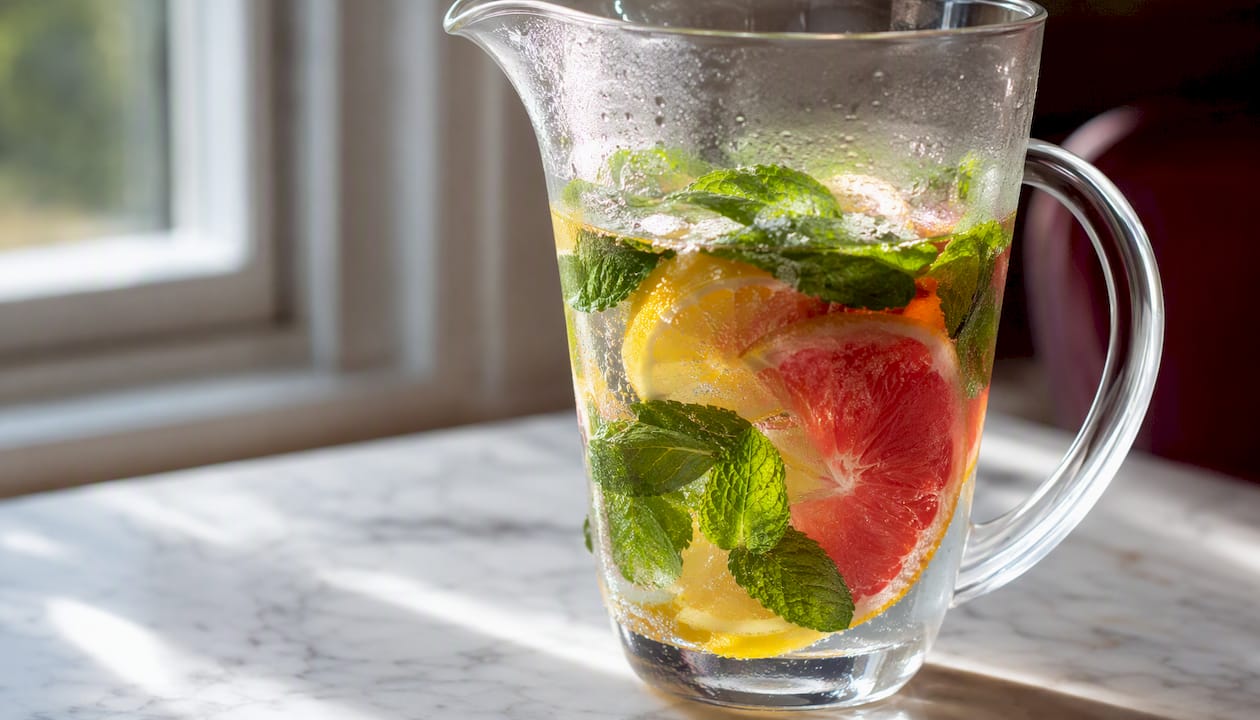
Sparkling mineral water adds another dimension. Swiss mineral waters vary in mineral content, and a higher magnesium or calcium level creates a slightly fuller mouthfeel that makes plain sparkling feel more satisfying than a zero-mineral soda water. Brands available across Swiss supermarkets and Coop or Migros shelves differ noticeably in taste, so it is worth trying a few.
Pro Tip: Chill your glass in the freezer for five minutes before pouring sparkling water. Cold glass slows CO₂ release, so the fizz lasts longer and the flavor hits harder. Add citrus after pouring, not before, to preserve carbonation.
- Fruit infusions: 2–4 slices per 500 ml, steep 15–30 min refrigerated
- Herb infusions: 3–5 sprigs per 500 ml, steep 20–40 min refrigerated
- Spice infusions (ginger, cinnamon): 3–4 thin slices or one small stick per 500 ml, steep 1–2 hours
- Combine citrus + herb for layered flavor without a single extra calorie
Herbal, fruit, green, and black tea: low-calorie hot and iced choices
Herbal and fruit infusions are calorie-free by default. Hibiscus, chamomile, rooibos, peppermint, and berry blends all deliver strong flavor without any sugar. Cold-brewed iced tea, made by steeping tea bags in cold water for 6–8 hours in the fridge, produces a smoother, less bitter result than hot-brewed tea poured over ice. No sugar required to make it drinkable.
Green and black teas carry a light caffeine load and contain polyphenols with potential antioxidant activity. Keep additions minimal: a slice of lemon or a small piece of fresh ginger adds flavor without calories. A splash of milk or a teaspoon of honey, however, can push a “zero-calorie” cup past 30–50 kcal quickly.
Coffee follows the same logic. Black coffee and Americanos sit at 2–5 kcal per cup. Cold brew, popular in Swiss specialty cafés, is naturally less acidic and often tastes slightly sweeter without any added sugar. A pinch of cinnamon or a strip of orange peel stirred in changes the flavor profile entirely.
Caffeine note: people sensitive to caffeine should stick to herbal infusions after 2:00 PM. Green tea is a gentler option than black coffee for an afternoon pick-me-up.
Kombucha and low-sugar fermented drinks: flavor depth and label points
Kombucha delivers something that plain water and tea cannot: natural acidity, light carbonation, and botanical complexity from the fermentation process itself. The organic acids produced during fermentation (primarily acetic and gluconic acid) give kombucha its characteristic tang. Many commercial products add fruit, flowers, or spices after fermentation for additional flavor, which is how you get profiles like yuzu, osmanthus, or sour plum without loading in sugar.
What the research actually says: a review published in PMC reports that fermented beverages like kombucha often contain live microbial cultures and organic acids, and some studies suggest possible digestive benefits. The evidence is mixed, however, and more high-quality trials are needed before strong health claims can be made.
Label-reading checklist for kombucha:
- Calories per 100 ml or per bottle: aim for under 25 kcal per 100 ml for a genuinely low-cal option
- Sugar (g) per serving: residual sugar below 5 g per 100 ml is a reasonable target
- Live cultures: look for “raw,” “unpasteurized,” or “live cultures” if gut-health interest is your reason for buying
- Pasteurization: pasteurized kombucha is safer for people with sensitive GI tracts or compromised immunity
On the home-brew question: a Bellevue NZZ feature on homemade kombucha notes that fermentation requires careful temperature control and strict hygiene. Commercial, quality-controlled kombucha removes that variable entirely. For most people, that consistency is worth choosing a trusted brand over a home batch.
Low-calorie electrolyte drinks: when to use them in Switzerland
Plain water handles most hydration needs most of the time. Electrolyte drinks earn their place in specific situations: heavy sweating during long exercise, outdoor work in summer heat, or recovery after illness. The Federal Office of Public Health (BAG) recommends replacing both fluids and minerals during high-heat periods, noting that drinks containing sodium, potassium, magnesium, and glucose can be useful when heavy sweating occurs.
What to look for on the label when choosing a low-calorie electrolyte product:
- Sodium: the primary electrolyte lost in sweat; look for at least 200–400 mg per serving
- Potassium and magnesium: support muscle function; useful for longer exercise sessions
- Carbohydrate/sugar: for sessions under 60 minutes, choose a zero- or low-sugar formula; for endurance exercise over 90 minutes, some carbohydrate is appropriate
| Situation | Electrolyte drink useful? | Format to choose |
|---|---|---|
| Short walk or desk work | No | Plain water |
| 60+ min moderate exercise | Yes | Low-sugar powder or tablet |
| Heat wave, heavy sweating | Yes | Low-sugar formula with sodium + potassium |
| Post-illness rehydration | Yes | Low-sugar oral rehydration formula |
For a curated look at sugar-free electrolyte options available in 2026, Nuka Love’s guide covers several formats worth comparing. Electrolyte powders and tablets dissolve in water and let you control the concentration, which is often more practical than buying pre-mixed bottles.
Low-calorie alcoholic choices and nonalcoholic mocktails
Lower-calorie alcoholic drinks exist, but the approach matters more than the brand. A spirit (gin, vodka, tequila) with sparkling water and a squeeze of citrus runs roughly 65–90 kcal per serving. Dry white or rosé wine sits around 80–100 kcal per 120 ml glass. The calories climb fast when you add sweet mixers, syrups, or liqueurs, so the simplest rule is: spirit + soda + citrus, nothing else.
Mocktails are where the real creativity lives. A few combinations that work without any added sugar:
- Sparkling water + muddled cucumber + lime + a few drops of bitters (around 5–10 kcal)
- Cold-brewed hibiscus tea + sparkling water + fresh mint + a slice of blood orange (0–5 kcal)
- Coconut water + lime + ginger + sparkling water (40–50 kcal, natural sugar from coconut water)
One practical note: alcohol affects appetite and metabolism in ways that go beyond the calories in the glass. Even a low-calorie drink can lower inhibitions around food choices. Counting liquid calories alongside food calories gives a more accurate picture of total intake.
Low-calorie dairy and plant-based milk options
Skim (nonfat) dairy milk runs around 35 kcal per 100 ml with no added sugar. Among plant milks, unsweetened almond milk is typically the lightest at 10–20 kcal per 100 ml, followed by unsweetened soy milk at around 30–40 kcal per 100 ml. Oat milk, even unsweetened, tends to run higher at 40–60 kcal per 100 ml because of its natural starch content.
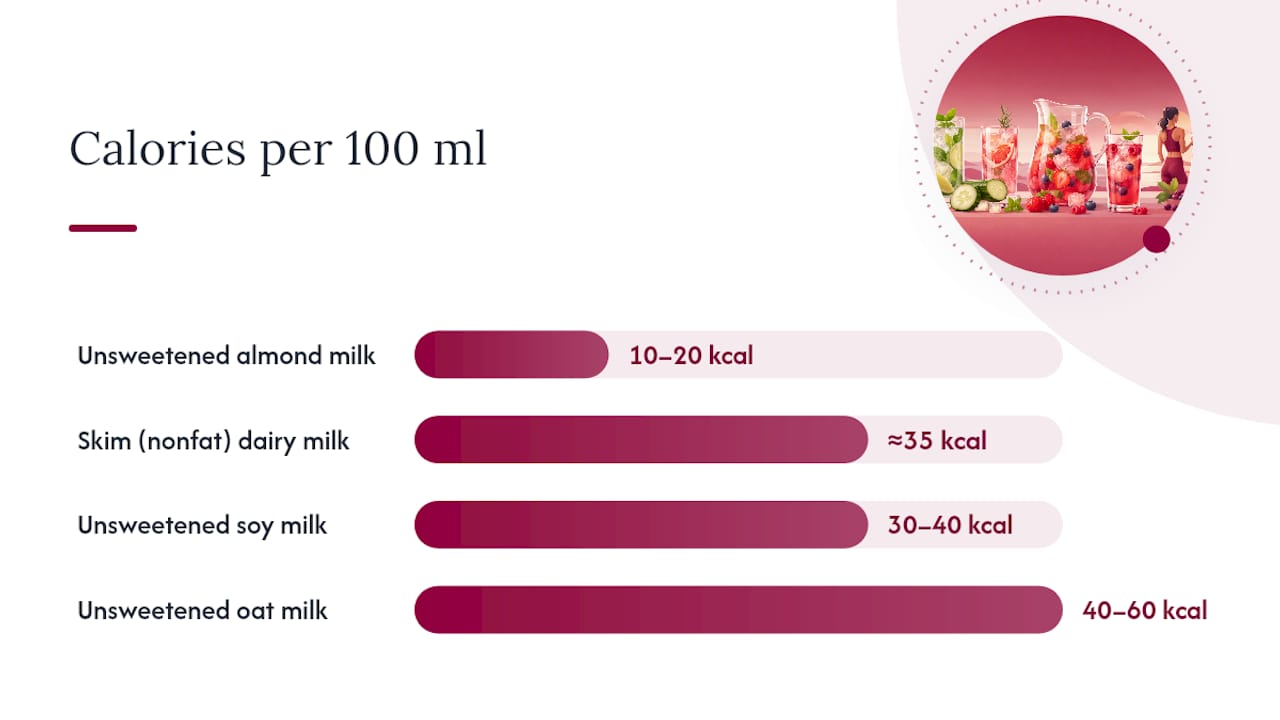
The key word on every label is “unsweetened.” Sweetened versions of almond, oat, or soy milk can add 5–10 g of sugar per 100 ml, pushing a “light” choice into the same calorie territory as a regular beverage. A small splash (30–50 ml) in coffee or a blended iced drink adds creaminess without meaningfully increasing the calorie count of the drink.
Pro Tip: Compare calories per 100 ml across plant milks, not per serving, since serving sizes vary by brand. The “unsweetened” label is necessary but not sufficient: check the sugar line on the nutrition panel to confirm.
Unsweetened almond milk in Switzerland is widely available at Migros, Coop, and Alnatura stores. Soy milk is the most protein-dense plant option at roughly 3–4 g per 100 ml, which can add a small satiety benefit.
Five quick low-calorie recipes to make at home
1. Citrus-herb infused water
Slice half a lemon and half a lime. Add 4–5 fresh mint leaves (bruised). Steep in 1 liter of cold still or sparkling water for 30 minutes in the fridge. Serve over ice. ~2 kcal per glass.
2. Cold-brewed green tea spritz
Place 2 green tea bags in 500 ml cold water. Refrigerate 6–8 hours. Remove bags. Top with sparkling water (50/50 ratio). Add a strip of lemon peel. ~3 kcal per glass.
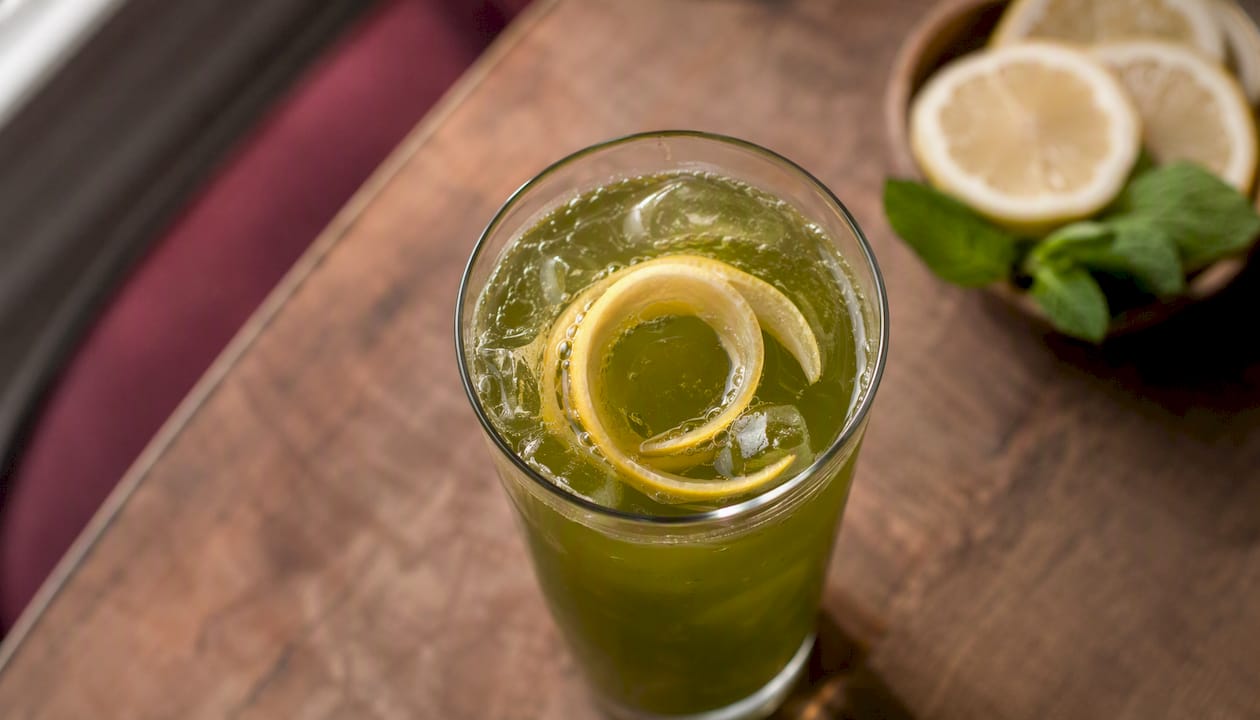
3. Spirit-free cucumber-bitters mocktail
Muddle 4 thin cucumber slices in a glass. Add ice, 150 ml sparkling water, juice of half a lime, and 2–3 drops of aromatic bitters. Stir gently. ~8 kcal.
4. Coconut-water lime refresher
Combine 150 ml plain coconut water with 100 ml sparkling water, juice of one lime, and a few thin slices of fresh ginger. Serve over ice. ~40 kcal.
5. Kombucha citrus spritz
Pour 150 ml low-sugar kombucha into a chilled glass over ice. Top with 50 ml sparkling water. Add a slice of blood orange. ~20–30 kcal depending on the kombucha brand.
Pro Tip: Scale any of these to a 2-liter pitcher for the week. Infused waters keep well for up to 48 hours refrigerated. Swap the herb or citrus variety each batch to keep the routine from going stale.
Calorie and sugar reference by drink category
These are typical ranges per standard serving. Always check the label for the exact product you buy, since formulations vary.
What Swiss health authorities actually recommend on fluids
The BLV and PSGZ guidance is consistent and practical. Adults should drink 1–2 liters of unsweetened beverages daily, with tap water, mineral water, and herbal or fruit teas as the preferred choices. Sugary drinks should be limited to a small daily portion. The PSGZ guidance puts the sugar content of many commercial sodas at around 10 g per 100 ml, which adds up fast across a day.
Swiss tap water is among the highest quality in Europe, safe to drink directly from the tap in virtually every municipality. It is also free. Using it as the base for infusions or cold-brewed teas is both the cheapest and the most calorie-efficient hydration strategy available.
During summer heat waves, the BAG recommends increasing fluid intake and replacing minerals lost through sweating. Electrolyte drinks become relevant here, but the low-sugar versions are sufficient for most people who are not doing prolonged endurance exercise.
Practical tips for Swiss readers:
- Carry a reusable bottle and refill from tap water throughout the day
- Keep a pitcher of cold-infused water in the fridge for easy access
- Switch to herbal teas in the evening to avoid caffeine disruption
- During July and August heat, add a low-sugar electrolyte tablet to one bottle per day if you are sweating heavily
Why low-sugar kombucha stands out as a flavorful daily option
Among the categories covered here, kombucha occupies a unique position. It delivers carbonation, natural acidity, and botanical flavor complexity that plain water and tea cannot match, while staying well below the calorie and sugar load of juice or soda. Research on fermented beverages points to live cultures and organic acids as potentially beneficial for digestion, though the evidence remains preliminary.
The label-reading checklist matters here more than in any other category, because commercial low-sugar beverages vary considerably in residual sugar even when marketed as “low-cal.” Check calories, sugar content, and whether the product lists live cultures.
Aboocha’s kombucha is formulated with lower sugar and a range of flavor-forward profiles including Yuzu Osmanthus and Sour Plum. These are not novelty flavors added to mask a bland base. They reflect a deliberate approach to making a low-sugar drink genuinely satisfying to drink every day. For anyone comparing kombucha options, the difference between fermented drinks and sodas is worth understanding before buying.
On choosing commercial over home-brewed: quality-controlled commercial kombucha removes the contamination risk that comes with home fermentation. For people with sensitive digestion or any immune considerations, a consistent, tested product is the safer starting point.
Research on non-nutritive sweeteners shows mixed evidence on metabolic and gut-microbiome effects. This is a reason to prefer naturally fermented, low-residual-sugar kombucha over “zero” drinks that rely heavily on artificial sweeteners for their flavor profile.
The low-calorie drink routine that actually holds up
The drinks that work long-term are the ones you actually want to reach for. That sounds obvious, but it is where most hydration advice falls apart: it tells you what is optimal and ignores whether you will drink it.
My honest daily rotation: cold-brewed hibiscus tea in the morning (zero calories, genuinely beautiful color, tastes like a drink worth having), sparkling mineral water with a squeeze of lime through the afternoon, and a low-sugar kombucha in the late afternoon when I want something with more character than water but less than a snack. That covers flavor, fizz, and variety without a single gram of added sugar before dinner.
The routine that tends to stick is simple: one infused or sparkling water always in the fridge, one herbal tea option ready to cold-brew overnight, and a low-sugar kombucha for the moments when plain water feels like a chore. Rotate the flavors weekly. The variety is what keeps it from feeling like a restriction.
Aboocha low-sugar kombucha: a straightforward option for Swiss drinkers
If you want a ready-to-drink kombucha that actually delivers on the low-sugar promise without sacrificing flavor, Aboocha is worth trying. The range includes profiles like Yuzu Osmanthus and Sour Plum, both formulated with lower residual sugar than most mainstream kombucha brands.
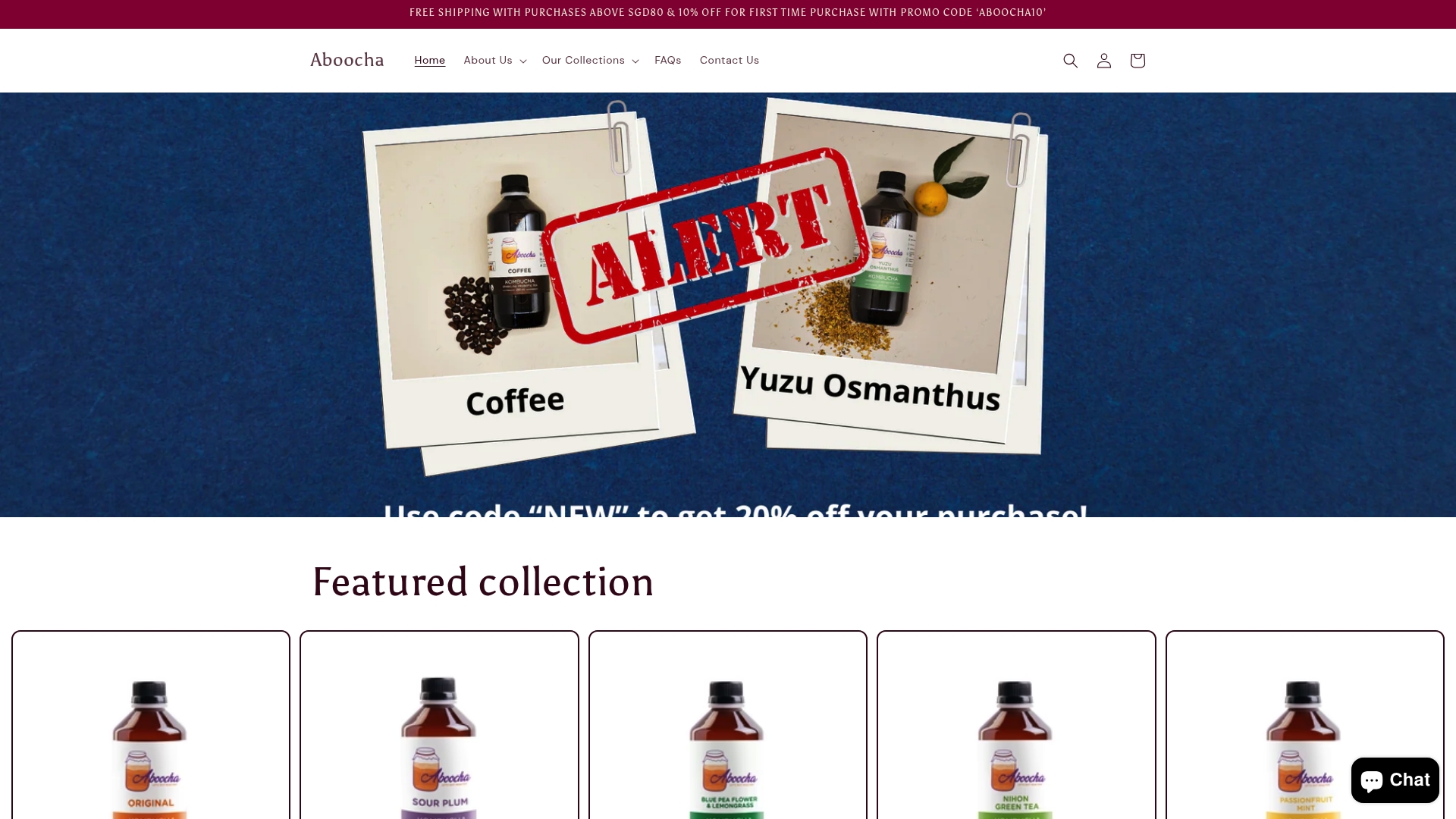
Aboocha ships directly to customers and offers a subscription plan for regular delivery, which removes the friction of remembering to reorder. For Swiss readers looking for a consistent, quality-controlled kombucha option, the subscription is the most practical way to keep it stocked. Visit Aboocha to browse the current flavor range and subscription options.
Sources
- Schweizer Ernährungsempfehlungen
- Pmc
- Ncbi
- Frontiersin
- Merkblatt Flüssigkeitsbedarf und Getränke (PSGZ)
FAQ
What is the best-tasting low-calorie drink?
Cold-brewed hibiscus or fruit tea, low-sugar kombucha, and citrus-infused sparkling water consistently rank as the most satisfying low-calorie options because they deliver real flavor complexity without added sugar. Taste is personal, but these three categories cover the widest range of preferences.
What is a good low-calorie alcoholic drink?
A spirit (gin, vodka, or tequila) with sparkling water and fresh citrus runs roughly 65–90 kcal per serving and is one of the lowest-calorie ways to drink alcohol. Dry white or rosé wine at 120 ml is another practical option at around 80–100 kcal.
What are some healthy, flavorful drinks with few calories?
Unsweetened herbal teas, cold-brewed green tea, infused water, and low-sugar kombucha are all flavorful, low-calorie beverages. The BLV recommends unsweetened drinks as the daily base, and low-sugar kombucha like Aboocha adds fermented complexity at 15–50 kcal per 250 ml serving.
Are “zero” drinks with artificial sweeteners a good choice?
They can help reduce sugar intake, but a review of non-nutritive sweeteners shows mixed evidence on metabolic and gut-microbiome effects. Treat them as an occasional option rather than a daily hydration staple.