Yes, kefir can trigger a Herxheimer-type die-off reaction, though it’s more accurate to call it a probiotic adjustment response rather than a true clinical Jarisch-Herxheimer reaction. People most likely to experience it are those with existing gut dysbiosis, Candida overgrowth, or a compromised gut lining, where a sudden influx of live cultures disrupts a fragile microbial balance.
If you’ve just started kefir and feel worse, here’s what matters immediately:
- Reduce your dose or pause entirely for 48–72 hours before reintroducing
- Drink more water to support your body’s clearance of microbial byproducts
- Track your symptoms with a simple log: what you took, how much, and when symptoms appeared
- Most mild reactions resolve within several days once you reduce intake
Pro Tip: If symptoms appeared within the first two days of starting kefir, check the dose first. A tablespoon is enough to start for anyone with a sensitive gut.
Key Takeaways
Kefir can trigger a Herxheimer-type die-off reaction in people with existing gut dysbiosis, but it differs from the clinical Jarisch-Herxheimer reaction in timing, severity, and mechanism, and most cases resolve within 1–4 days with dose reduction and supportive care.
| Point | Details |
|---|---|
| Die-off vs. clinical JHR | Kefir die-off is milder and slower than true JHR; onset is typically 2–5 days, not hours. |
| Common symptoms | Bloating, headaches, fatigue, skin breakouts, and mild flu-like symptoms are most reported. |
| First response | Pause or reduce kefir, hydrate to at least 2 liters daily, and rest until symptoms clear. |
| Singapore emergency care | Call 995 for an ambulance in a medical emergency; call 999 for police. Both are toll-free, 24 hours a day. |
| Aboocha as a starting point | Lower-sugar, ready-to-drink options offer more consistent dosing than home-brewed kefir. |
Table of Contents
- What is the Herxheimer reaction, and how does it differ from kefir die-off?
- Why does kefir trigger die-off-type symptoms in some people?
- What symptoms do people report, and when do they appear?
- How to manage kefir die-off symptoms at home
- When should you seek medical care in Singapore?
- How to introduce kefir safely and avoid die-off
- What does the clinical literature actually say?
- One person’s experience with kefir die-off
- The case for cautious, curious experimentation
- Lower-sugar fermented drinks as a gentler starting point
- Sources
- FAQ
What is the Herxheimer reaction, and how does it differ from kefir die-off?
The Jarisch-Herxheimer reaction (JHR) is a specific, clinically defined event. It occurs when antibiotics rapidly kill spirochetal bacteria (such as those causing syphilis or Lyme disease), releasing a flood of microbial debris that triggers an acute inflammatory response. According to NCBI Bookshelf, symptoms, including fever, chills, headache, tachycardia, and hypotension, typically appear within 24 hours and resolve within a day. This is not an allergic reaction. It’s an immune system responding to a sudden surge of bacterial breakdown products.
The colloquial “die-off” or “herx” that people describe after starting kefir or other fermented foods borrows this clinical name but describes something different. There’s no antibiotic, no rapid spirochete lysis, and no acute hypotension. Instead, the ScienceDirect review of JHR describes the clinical version as a predictable, transient event with onset within hours of treatment, while practitioner sources place probiotic-related die-off onset days after starting fermented foods.
The core distinction: A true Jarisch-Herxheimer reaction is an acute, potentially severe medical event requiring clinical monitoring. A probiotic or kefir die-off reaction is usually milder, slower to develop, and manageable at home with dose reduction and supportive care.
The distinction matters for safety. Someone experiencing true JHR after antibiotic treatment needs medical supervision. Someone experiencing kefir-related die-off symptoms usually needs a smaller dose and more time, not an emergency room.
Why does kefir trigger die-off-type symptoms in some people?
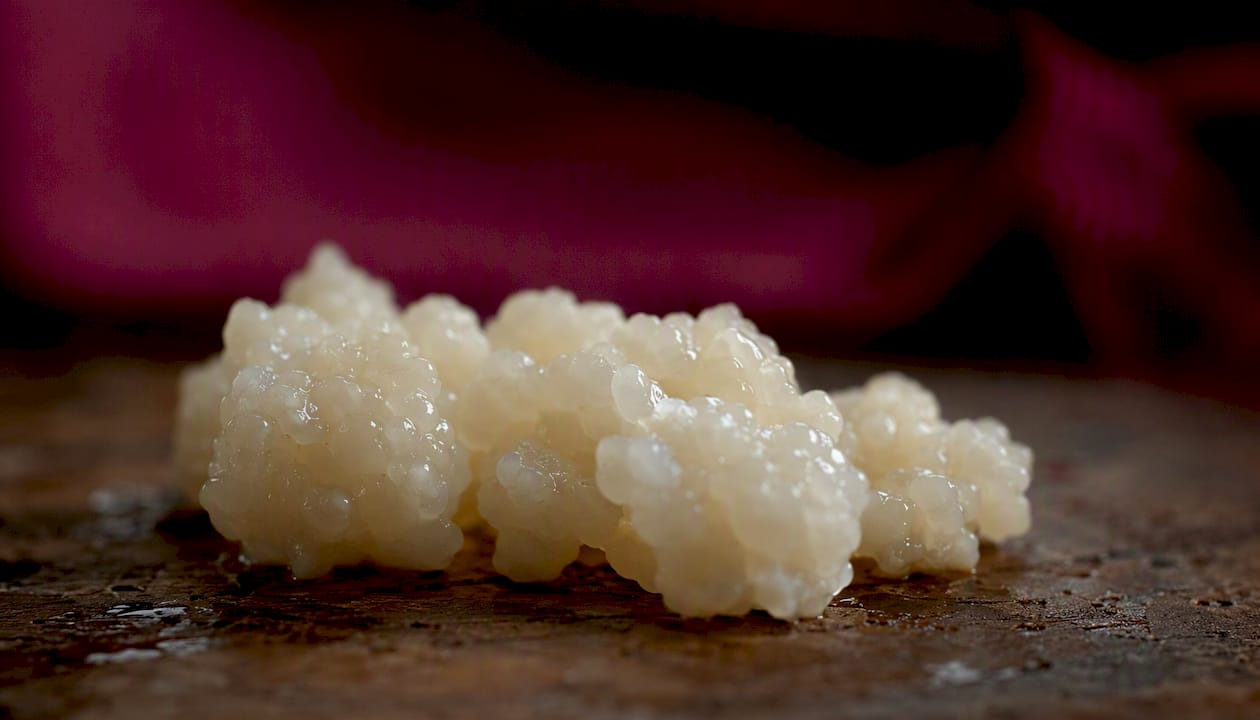
Kefir contains dozens of live bacterial and yeast strains. When these hit a gut that’s already out of balance, several things can happen at once.
The main biological mechanisms include:
- Endotoxin and LPS release: When microbes die or are outcompeted in the gut, they release lipopolysaccharides (LPS) and other cellular debris. As Biomedicus explains, this debris can trigger immune activation and produce flu-like symptoms systemically.
- Cytokine and immune activation: The innate immune system responds to microbial debris with inflammatory cytokines. This is the same mechanism behind clinical JHR, just at a lower intensity.
- Histamine from fermentation: Kefir is a fermented product and contains histamine. People with histamine intolerance or slow DAO enzyme activity may react with headaches, skin flushing, or digestive upset that looks like die-off but is actually a histamine response.
- Rapid microbiome disruption: A sudden shift in microbial populations stresses the existing ecosystem. Gut Health SA notes that a fragile gut is more likely to show a pronounced Herx-type response when potent microbes are introduced quickly.
Concentrated probiotic supplements tend to deliver a higher CFU load in a single dose than whole fermented foods like kefir. But kefir’s live cultures are embedded in a dairy matrix with proteins, fats, and fermentation byproducts, which can make the overall gut impact less predictable than a standardized capsule.
Pro Tip: If you have a history of slow detox (sluggish liver, constipation, or known methylation issues), your body may clear microbial byproducts more slowly, making die-off symptoms more pronounced and longer-lasting. This group benefits most from a very gradual introduction.
What symptoms do people report, and when do they appear?
Chuckling Goat’s consumer guidance and practitioner sources consistently report the following symptoms after starting kefir:
- Bloating and excess gas (most common, especially in the first week)
- Headaches and brain fog
- Fatigue and low energy
- Skin breakouts or changes in body odor
- Mild flu-like symptoms: muscle aches, low-grade fever, general malaise
| Symptom Type | Typical Onset | Usual Duration |
|---|---|---|
| Digestive (bloating, gas) | Within 24–48 hours | 3–5 days |
| Headache / brain fog | 2–5 days after starting | 1–4 days |
| Fatigue / flu-like | 2–5 days after starting | 1–4 days |
| Skin breakouts | 3–5 days after starting | Variable |
Michael Ruscio’s practitioner guidance](https://drruscio.com/herx-reaction/) reports that probiotic die-off reactions typically begin 2–5 days after starting and last 1–4 days, though some people report longer courses.
Distinguishing die-off from intolerance: An immediate reaction within minutes to an hour of drinking kefir, especially with hives, throat tightness, or severe cramping, points toward dairy intolerance or a casein/lactose sensitivity rather than die-off. Die-off tends to be delayed, systemic, and flu-like. Intolerance tends to be immediate and gastrointestinal.
How to manage kefir die-off symptoms at home
If you’re already experiencing symptoms, here’s a prioritized response:
- Pause or reduce your kefir dose. Drop to a tablespoon or less, or stop entirely for 48–72 hours. This is the single most effective step.
- Hydrate aggressively. Aim for at least 2 liters of water daily. Microbial debris clears faster when your kidneys and lymphatic system have adequate fluid.
- Rest. Your immune system is working. Treat it like a mild illness: reduce strenuous exercise, prioritize sleep.
- Manage symptoms directly. For headaches, standard over-the-counter options like paracetamol are appropriate. Avoid ibuprofen on an empty stomach if gut irritation is already present.
- Consider activated charcoal cautiously. Some practitioners suggest activated charcoal as a binder to absorb LPS and microbial debris. If you use it, take it at least 2 hours away from any medications or supplements, as it binds indiscriminately. Do not use it if you are on prescription medication without checking with a pharmacist first.
- Support your gut gently. Plain rice, cooked vegetables, and bone broth reduce the digestive load while your gut adjusts.
Key cautions:
- Do not use activated charcoal long-term or daily
- Do not restart kefir at the same dose that triggered symptoms
- Do not combine charcoal with medications without pharmacist clearance
Pro Tip: When reintroducing kefir after a reaction, pair it with a meal rather than drinking it on an empty stomach. Food slows gastric transit and reduces the concentration of live cultures hitting your gut lining at once.
When should you seek medical care in Singapore?
Most kefir die-off reactions are mild and self-limiting. These symptoms, however, require immediate medical attention:
- High fever above 39°C that doesn’t respond to paracetamol
- Difficulty breathing or throat tightness
- Fainting or severe dizziness
- Chest pain
- Severe drop in blood pressure (feeling faint when standing)
- New rash combined with breathing difficulty (possible anaphylaxis)
In Singapore, call 995 for an ambulance in a medical emergency. This is the Singapore Civil Defence Force’s emergency medical and fire line, available 24 hours, toll-free from any phone. Call 999 for police. For non-emergency medical concerns outside a clinic’s operating hours, a 24-hour polyclinic or hospital emergency department, or a general practitioner’s after-hours line, is the appropriate next step rather than the emergency number.
To find a general practitioner (GP) or the nearest 24-hour clinic, the Ministry of Health’s clinic directory and polyclinic locator can help you identify options by location.
When you contact a clinician, tell them: the product name and brand, the dose you were taking, when you started, and when symptoms appeared. This timeline helps triage distinguish a food reaction from an unrelated illness.
Pro Tip: Singapore’s emergency and healthcare services are staffed in English, so there is no language barrier to describing your symptoms clearly when you call 995 or visit a clinic.
How to introduce kefir safely and avoid die-off
The most reliable way to avoid a strong reaction is a low-and-slow introduction. Here’s a practical schedule:
- Week 1: Start with 1 tablespoon (15 ml) of kefir per day, taken with food.
- Week 2: If no symptoms, increase to 2–3 tablespoons daily.
- Week 3: Move to 100 ml (roughly half a small glass) if week 2 was comfortable.
- Week 4 onward: Gradually increase toward a full serving (150–200 ml) as tolerated.
Monitor for symptoms at each stage before increasing. If symptoms appear, hold the current dose for an extra week before moving up.
Milk kefir vs. water kefir: Milk kefir generally contains a higher density of live cultures and also introduces dairy proteins, which can confound reactions in lactose-sensitive people. Water kefir is dairy-free and often better tolerated as a starting point. Commercial ready-to-drink fermented beverages with lower sugar content and standardized culture levels (like those in Aboocha’s range) give you more control over your starting dose than home-brewed kefir, where potency varies batch to batch. For a broader overview of fermented drink varieties, including milk kefir, water kefir, and kombucha, Aboocha’s guide covers the practical differences.

Pro Tip: Take your kefir in the morning with breakfast rather than on an empty stomach or at night. Morning timing gives your digestive system the full day to process it, and any mild symptoms are easier to monitor when you’re awake.
What does the clinical literature actually say?
The clinical evidence for JHR is solid and well-characterized. The NEJM trial on anti-TNF-α Fab showed that blocking TNF-α reduced JHR incidence from 90% to 50% in louse-borne relapsing fever patients, with corresponding drops in IL-6 and IL-8 peaks. This confirms that JHR is cytokine-driven, not allergic.
Separately, bioRxiv research on leptospirosis models found that bactericidal agents (specifically β-lactams) triggered stronger TLR2-dependent inflammatory responses than bacteriostatic agents, because rapid microbial lysis releases more debris at once. This mechanistic point helps explain why die-off intensity correlates with how quickly microbes are killed or displaced.
Evidence gap: No randomized controlled trials directly measure cytokine responses to kefir introduction in humans with dysbiosis. The die-off framework for fermented foods is extrapolated from antibiotic JHR research and practitioner case series, not direct RCT evidence.
Where the evidence is weaker:
- The claim that kefir “detoxes” the body or “cleanses parasites” has no clinical trial support
- The severity of fermented-food die-off is not well-quantified in the literature
- Individual variation in gut microbiome composition makes predicting who will react difficult
The Aboocha overview of fermented drinks and immunity summarizes what the science does and doesn’t support for immune responses to fermented beverages.
One person’s experience with kefir die-off
The following is a first-person account shared for E-E-A-T purposes. It is personal experience, not medical advice.
What helped, mapped to the management steps above:
- Stopping the full dose immediately (Step 1)
- Increased hydration (Step 2)
- Extra rest (Step 3)
- Reintroduction at a fraction of the original dose (prevention protocol)
This is personal experience. If your symptoms are more severe, include fever above 39°C, or don’t improve within 4–5 days of stopping kefir, contact a clinician.
The case for cautious, curious experimentation
Fermented foods are worth trying. The evidence for their gut health benefits is real, even if the die-off framework is borrowed from clinical territory where it doesn’t perfectly apply. What I’d push back on is the idea that a strong reaction means kefir is “working.” Sometimes it means the dose was too high, the gut wasn’t ready, or the product was simply the wrong starting point.
Start small, track what happens, and treat your body’s signals as data rather than obstacles. For readers who want a lower-risk entry point into fermented drinks, low-sugar fermented beverage options offer a gentler starting point than high-potency home-brewed kefir.
Lower-sugar fermented drinks as a gentler starting point
If home-brewed kefir triggered a reaction, or if you want to build gut tolerance before committing to a high-potency fermented dairy product, ready-to-drink fermented beverages with lower sugar content and controlled culture levels are worth considering.
Aboocha’s kombucha range is formulated with lower sugar than conventional fermented drinks, with flavor profiles like Sour Plum and Yuzu Osmanthus that make the daily habit genuinely enjoyable rather than medicinal. Because the culture load is more consistent than home-brewed kefir, it’s easier to titrate your intake and identify your personal tolerance threshold. These are not medical treatments and won’t cure dysbiosis, but as a starting point for building fermented-drink tolerance, they’re considerably more predictable than a jar of homemade kefir with variable potency. Browse Aboocha’s range and find the option that fits your gut health goals.
Sources
The clinical sources below cover the verified JHR mechanism; the practitioner sources address the fermented-food die-off extrapolation. Use clinical sources for mechanism and severity context, and practitioner sources for practical titration guidance.
- Jarisch–Herxheimer reaction — NCBI Bookshelf
- Effect of anti–TNF-α Fab on the Jarisch–Herxheimer reaction — NEJM
- Why do I feel worse after taking probiotics? — Biomedicus
- What’s the best way to take kefir without side effects? — Chuckling Goat
- Understanding strong reactions to fermented foods — Gut Health SA
This article is general information, not a substitute for advice from a qualified doctor. Consult a qualified healthcare professional about your own circumstances before acting on anything here.
FAQ
Can kefir cause a detox reaction?
Yes, in a limited sense. Kefir can trigger a probiotic adjustment response sometimes called die-off, where rapid microbiome shifts release microbial debris that provokes mild immune activation. This is not a medically defined “detox” but a real physiological response in people with existing gut imbalance.
Does kefir cleanse parasites?
No clinical evidence supports kefir as a parasite treatment. Kefir’s live cultures may compete with some harmful microbes in the gut, but this is not the same as antiparasitic therapy, and no controlled trials confirm a parasite-cleansing effect.
Does kefir survive stomach acid?
Some strains in kefir are acid-tolerant and do reach the intestine alive, though survival rates vary by strain and individual gastric pH. The dairy matrix in milk kefir offers partial buffering that improves survival compared to some probiotic supplements taken on an empty stomach.
Does kefir raise cortisol?
No direct clinical evidence links kefir consumption to elevated cortisol. Gut-brain axis research suggests that improving gut microbiome diversity may support stress regulation over time, but kefir itself has not been shown in trials to raise cortisol levels.