The most practical sustainable packaging choices for ready-to-drink kombucha are lightweight rPET bottles, aluminum cans, aseptic cartons, and concentrate or bag-in-box refill systems for on-premise use, since each keeps weight low while meeting the barrier and pressure demands acidic, carbonated kombucha requires. Glass still has a place, but its weight usually erases any reuse advantage once transport enters the picture. The real deciding factor is rarely the material alone. It’s the combination of local recycling infrastructure and how far the bottle has to travel to reach a shelf.
TL;DR:
- Lightweight recycled PET bottles, aluminum cans, and aseptic cartons are generally the most sustainable choices for kombucha packaging, balancing weight, barrier, and recyclability.
- Glass bottles often have limited sustainability benefits due to their weight, unless used in short-distance reuse systems, and transportation emissions usually outweigh reuse advantages.
- Packaging must be tested for migration considering kombucha’s acidity and carbonation to ensure safety and prevent leaching or seal failures over shelf life.
- The environmental impact of packaging depends heavily on local recycling infrastructure and transportation distances, often outweighing the material’s inherent recyclability.
- Brands should verify recycled content claims with certification, assess local processing capabilities, and prioritize formats with established recycling pathways to truly reduce their footprint.
Table of Contents
- What Are the Most Sustainable Packaging Options for Kombucha?
- Why Does Kombucha’s Chemistry Complicate Packaging Choices?
- Environmental Trade-Offs and Lifecycle Realities
- How Should Brands Vet Sustainable Packaging Suppliers?
- Beyond Materials: Practical Ways to Cut Packaging Footprint
- What Happens to Kombucha Packaging After Recycling Fails?
- Does Better Labeling Actually Change Recycling Behavior?
- What Certifications Matter for Sustainable Beverage Packaging?
- What New Sustainable Packaging Technologies Are Emerging for Kombucha?
- Aboocha’s Perspective: Balancing Flavor Integrity and Sustainability
- Sample Aboocha’s Sustainably Packaged Kombucha
- Sources
- FAQ
What Are the Most Sustainable Packaging Options for Kombucha?
Every kombucha packaging format trades off differently between weight, barrier strength, and recyclability. Here’s how the main contenders stack up:
- Glass bottles: Inert and impermeable, so flavor stays true and there’s zero migration risk. But glass is heavy, which raises transport emissions, and reuse-refill loops only pay off when bottles travel short local distances.
- rPET plastic bottles: Light, shatterproof, and widely recyclable in beverage-specific collection streams. PET beverage bottles are broadly recyclable, though only PET collected from beverage containers typically qualifies for high-quality recycled resin, so contamination from other plastics undermines the loop.
- Aluminum cans: Excellent barrier against light and oxygen, lightweight, and infinitely recyclable in theory. Practical recycling rates vary a lot by region, and liner chemistry needs checking for acid compatibility.
- Aseptic beverage cartons: Low weight and a high renewable-fiber share make cartons perform surprisingly well in lifecycle terms, particularly when a functioning recycling system exists. They struggle more in markets without carton-specific recycling infrastructure.
- Concentrate and bag-in-box: Built for cafés and on-premise pouring rather than retail shelves, these cut shipped volume dramatically since you’re transporting concentrate, not finished liquid.
Retail buyers gravitate toward cans and rPET bottles for convenience and shelf appeal. On-premise venues and corporate accounts are where refill and concentrate models earn their keep.
Why Does Kombucha’s Chemistry Complicate Packaging Choices?
Kombucha isn’t a neutral beverage, and that changes the packaging math. Its acidity, typically in a pH range that sits well below neutral, combined with natural carbonation from fermentation, puts real stress on materials and closures that a still, near-neutral drink never encounters.
Acidic liquids are more prone to leaching trace compounds out of certain plastics and can liners, a process packaging scientists call migration. Food-packaging safety guidance generally recommends testing migration risk under the specific storage time and temperature conditions a product will actually face, not just generic lab defaults. A bottle that passes migration testing for a mild juice can still behave differently against kombucha’s organic acid profile, which is one reason Aboocha’s own breakdown of organic acids in kombucha matters for anyone evaluating packaging, not just brewing.
Carbonation adds a second layer of difficulty:
- Closures need to hold pressure without failing over months of storage and shipping.
- Can seams and bottle threads must resist gradual gas loss, which flattens flavor and dulls the drinking experience.
- Any recycled-content material needs food-grade certification precisely because acidic, pressurized contents are less forgiving of manufacturing inconsistencies.
Recycled PET is safe for drinking when it comes through a regulated, food-grade recycling system with proper quality and hygiene controls, but that certification step is non-negotiable for a beverage this acidic.
Pro Tip: Don’t trust a generic recyclability claim on a spec sheet. Ask the supplier for migration-test data run at kombucha’s actual pH and expected shelf time, not the industry-standard neutral-beverage baseline.
Environmental Trade-Offs and Lifecycle Realities
Sustainable packaging decisions live and die on logistics, not just material choice. A heavier “reusable” glass bottle can lose to a lighter single-use rPET bottle once you factor in the fuel burned moving it hundreds of miles. Transport distance and package weight frequently dominate a package’s total carbon footprint, often outweighing whatever benefit comes from a material being technically reusable.
Recycling systems only deliver their promised benefit when collection actually works in the market where the bottle ends up. A carton or can that’s “100% recyclable” on paper does nothing for the environment if the local facility can’t process it. This is exactly why the 2024 Swiss lifecycle comparison found cartons performing well in some categories: the analysis assumed a functioning collection system, not just theoretical recyclability.
Before trusting a supplier’s sustainability pitch, run through this:
- Ask whether the environmental claim is backed by an actual lifecycle assessment (LCA) or just marketing language.
- Confirm the percentage of recycled content and whether it’s certified food-grade for beverage contact.
- Check whether the packaging format is realistically collected and processed in the markets you distribute to, not just theoretically recyclable somewhere.
- Compare shipped weight per case across material options, since that number often predicts carbon impact better than the material’s “greenness” reputation.
How Should Brands Vet Sustainable Packaging Suppliers?
Choosing a packaging partner for kombucha means going past the sustainability pitch and into the technical specifics that determine whether the product survives the shelf.
Start with these selection criteria:
- Barrier performance against oxygen and light, since both degrade kombucha’s flavor and probiotic activity over time.
- Certification for recycled content, ideally with documented chain-of-custody so you can verify the material is genuinely food-grade rPET rather than a mixed-stream product.
- Local recyclability, meaning the packaging format is actually collected and processed where your customers live, not just recyclable in theory.
- Estimated CO2 per case shipped, factoring in package weight and typical distribution distance.
- Refill or concentrate feasibility if you sell through cafés, offices, or other on-premise accounts.
When you’re evaluating a specific vendor, request migration-test reports run at kombucha’s actual pH and carbonation level, not generic beverage benchmarks. Ask for closure retention and pressure specs, since a cap rated for still water won’t necessarily hold gas over a multi-month shelf life. Also ask what fill-line adjustments the packaging requires, because switching formats often means retooling equipment, not just swapping a supplier invoice.
Pro Tip: Run a small pilot before committing to a full production switch. Track sensory quality after accelerated aging, shelf-life loss rate, customer returns, and carbon per case shipped. A packaging change that looks great on a spec sheet can still fail in the field if carbonation retention drops or flavor shifts after eight weeks in transit.
Red flags include vague recycled-content percentages with no certification attached, suppliers who can’t produce migration data specific to acidic beverages, and claims about “biodegradable” plastic with no compostability standard cited.
Beyond Materials: Practical Ways to Cut Packaging Footprint
Material swaps get most of the attention, but plenty of lower-effort changes move the needle just as much, sometimes more.
- Lightweighting: Shaving grams off a bottle or can without sacrificing barrier strength reduces both material use and transport weight simultaneously.
- Higher rPET content: Increasing recycled content in bottles, provided it’s certified food-safe, cuts virgin plastic demand without changing the format customers already recognize.
- Concentrate and bag-in-box for on-premise: Shipping concentrate instead of finished liquid can cut transport-related footprint substantially, since you’re moving a fraction of the volume for the same number of servings.
- Logistics consolidation: Shorter distribution loops and fuller truckloads reduce emissions independent of what the packaging is made from.
- Clear disposal labeling: A can or bottle that clearly states how to recycle it gets recycled more often than one with ambiguous or absent instructions.
- Deposit and takeback programs: These work especially well for glass in tight geographic markets where return logistics stay short.
Track progress with a handful of KPIs rather than a sprawling dashboard: package weight per unit sold, percentage recycled content, estimated CO2 per case, and customer-reported recycling confusion if you’re running a labeling test.
What Happens to Kombucha Packaging After Recycling Fails?
Recycling isn’t the end of the story, and it’s not always the outcome. Packaging that misses the recycling stream, whether from contamination, poor labeling, or a facility that simply can’t process it, ends up in landfill or, worse, as litter.
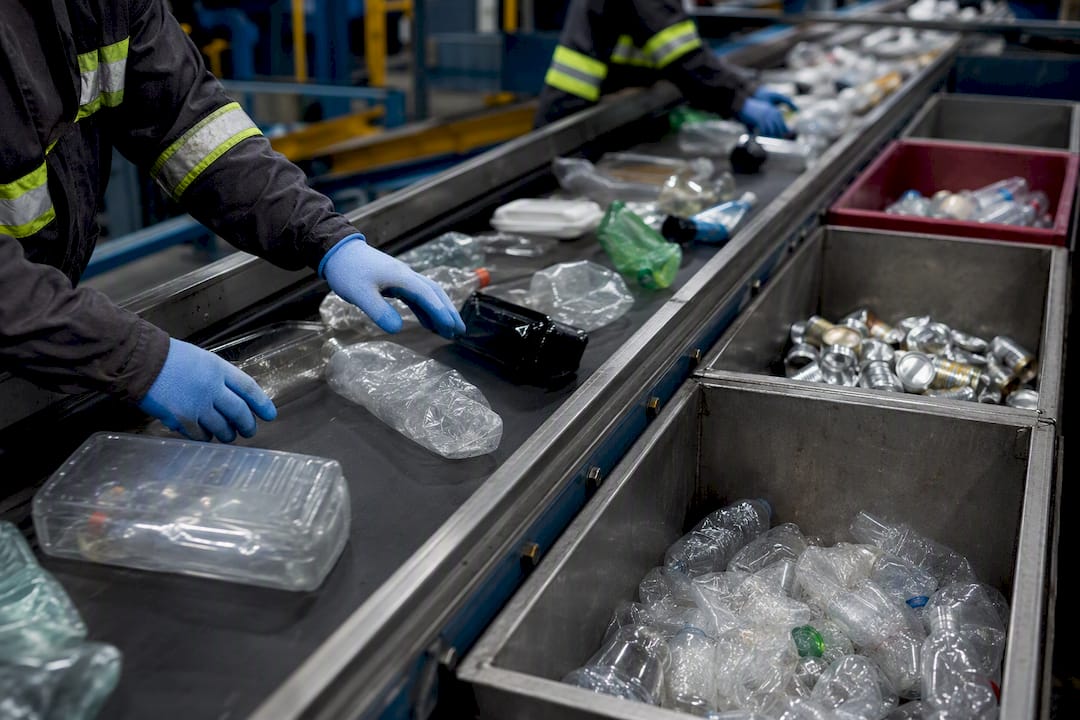
Biodegradable and compostable claims get thrown around loosely in beverage packaging, and the distinction matters more than most labels admit. A material that’s biodegradable in an industrial composting facility running at specific temperatures often won’t break down meaningfully in a backyard compost bin or, certainly, if it ends up as roadside litter. True compostability claims should reference a recognized standard rather than a vague “eco-friendly” label, since unverified compostability claims can mislead buyers into thinking a bottle will vanish harmlessly if it’s littered.
For kombucha specifically, litter prevention starts with format choice. Cans and cartons tend to break down faster and cause less persistent environmental harm than plastic if they do escape the waste stream, though neither is designed to be littered intentionally. The most realistic end-of-life strategy for most brands right now combines strong recyclability with clear labeling that reduces contamination, rather than betting on compostable formats that may not perform as promised outside controlled facilities.
Does Better Labeling Actually Change Recycling Behavior?
Yes, and the effect is larger than most brands assume. Confusing labeling is one of the most common reasons recyclable packaging ends up in the wrong bin, which contaminates entire batches of otherwise recyclable material at sorting facilities.
Kombucha buyers who care enough to choose a lower-sugar, gut-health-focused drink tend to also care about what happens to the bottle afterward. That makes clear, simple disposal instructions a meaningful trust signal, not just a compliance checkbox. A label that says “rinse and recycle, cap on” performs better than one that just prints a recycling symbol with no context, because most consumers don’t actually know local sorting rules by material type.
Ease of recycling also shapes purchase decisions more than brands often realize. A shopper standing at a shelf choosing between two kombucha brands, one in a widely accepted format and one in packaging their local system can’t process, will often pick the easier option once they know the difference. That’s a reason to favor formats like aluminum cans and standard PET bottles that already have established collection infrastructure over novel materials that sound sustainable but lack a real recycling pathway where customers actually live.
What Certifications Matter for Sustainable Beverage Packaging?
Certification separates a genuine sustainability claim from a marketing one, and beverage brands should know which standards actually apply to their category.
Food-contact safety certification is the baseline requirement, confirming that a package, recycled or virgin, meets regulatory limits for chemical migration into the beverage it holds. This matters even more for kombucha given its acidity. Beyond safety, recycled-content certification verifies that a stated percentage of recycled material genuinely came from post-consumer sources rather than pre-consumer manufacturing scrap, which is a meaningfully weaker claim.
Compostability standards, where a brand pursues that route, require testing against recognized industrial-composting benchmarks rather than a self-assigned “compostable” label with no third-party verification. Chain-of-custody certification for recycled PET adds another layer of accountability, tracing material from collection through processing so a brand can confirm what’s actually inside the bottle. None of these certifications are legally mandatory everywhere, but buyers and retailers increasingly treat their absence as a red flag rather than a neutral omission.
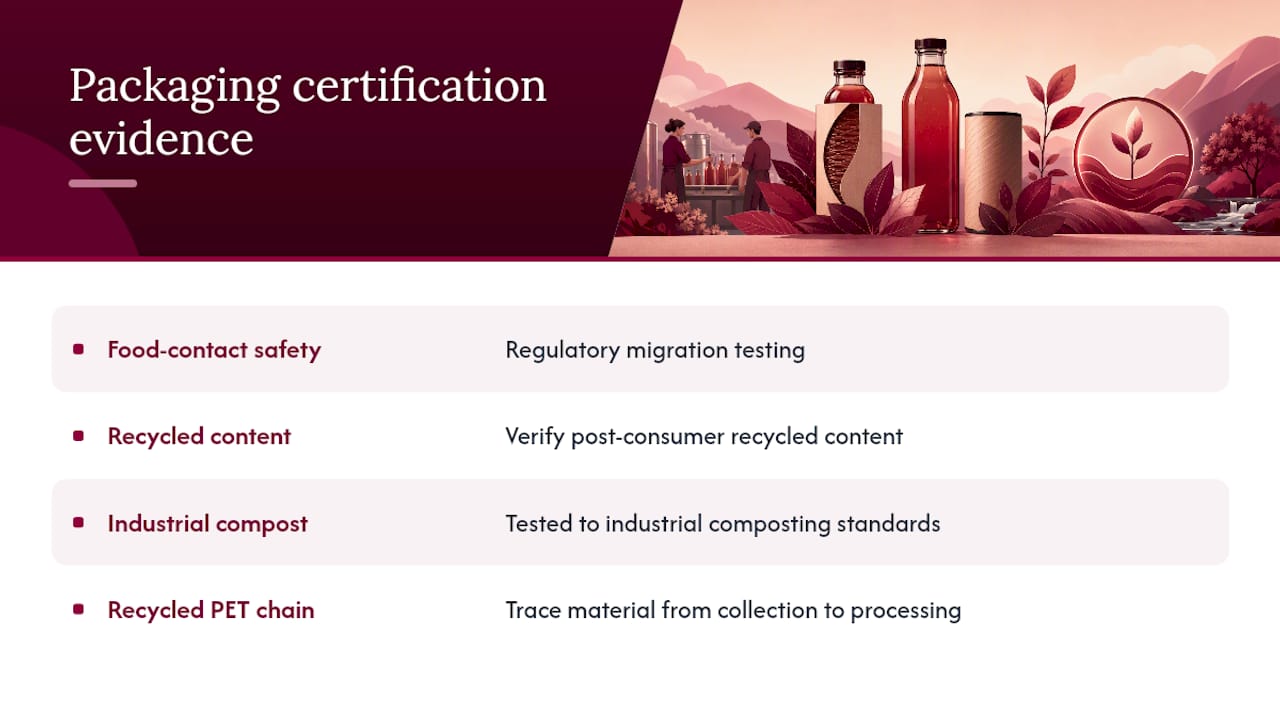
For a beverage category as chemically sensitive as kombucha, certification isn’t a marketing nicety. It’s the evidence that a packaging claim survived contact with the actual product.
What New Sustainable Packaging Technologies Are Emerging for Kombucha?
A handful of newer materials are worth watching, though most remain early-stage for a beverage as demanding as kombucha.
Bio-based plastics made from plant sources rather than petroleum are gaining traction across the beverage industry, offering a lower-carbon production footprint. The catch is that many bio-based plastics still require the same recycling infrastructure as conventional plastic, so they don’t automatically solve the end-of-life problem, and food-safety testing for acidic, carbonated contents is still catching up in many cases.
Edible or dissolvable coatings, mostly explored for shipping and secondary packaging rather than the primary bottle, promise a zero-waste layer that disappears entirely. For kombucha, any coating touching the beverage directly would need extensive migration and stability testing given the drink’s acidity, so this stays a longer-horizon possibility rather than a near-term option.
Fiber-based bottles, essentially a molded paper structure with a thin internal barrier, are entering pilot programs at a few larger beverage companies. They’re promising for weight reduction but currently face real questions about barrier performance against carbonation loss over a multi-month shelf life, which makes them a tougher fit for kombucha than for still beverages.
None of these technologies currently outperforms certified rPET, aluminum, or well-managed cartons for a fermented, carbonated product on the market today. They’re worth tracking, not yet worth betting a full production line on.
Aboocha’s Perspective: Balancing Flavor Integrity and Sustainability
Aboocha builds every packaging decision around one constraint that never moves: protecting the flavor and gut-health benefits our lower-sugar kombucha is made for. A packaging change that dulls the Sour Plum profile or flattens carbonation isn’t a sustainability win, it’s a quality loss dressed up as progress.
That’s why the choices we test favor certified food-grade rPET and can formats with proven barrier performance over novel materials without an established track record for acidic, carbonated beverages. Fermentation science backs every one of those calls. Understanding how fermentation actually behaves in packaged conditions tells you far more about which container will hold up than a sustainability slogan ever will.
The honest tension in this category is that the greenest-sounding option on paper isn’t always the one that keeps kombucha tasting like it should six weeks after bottling. We’d rather choose the format that’s genuinely sustainable in practice.
— Luna
Sample Aboocha’s Sustainably Packaged Kombucha
Aboocha applies the same packaging logic covered above to every bottle it ships: certified, food-grade materials chosen for flavor integrity first, sustainability built in rather than bolted on. If you want to taste the difference that careful packaging makes, the bundles collection is the easiest way to sample flavors like Sour Plum and Yuzu Osmanthus across multiple bottles at once.
For something more limited, the Aboocha x Deefruit collaboration set showcases how thoughtful packaging pairs with flavor-forward, lower-sugar recipes. Offices and businesses looking to stock kombucha regularly, or brands curious about refill and pantry-style sustainable packaging at scale, can explore the corporate orders and pantry system and reach out directly to discuss custom sustainable-packaging arrangements for bulk or recurring orders.
Sources
- Getränkekarton-Recycling: Der Getränkekarton: Mit Recycling ökologischer Spitzenreiter
- Trinken aus rezykliertem PET ist sicher – Swiss Recycle
- Nachhaltigkeit – Grapos Soft Drinks
FAQ
What Is the Most Sustainable Packaging for Kombucha?
Certified rPET bottles, aluminum cans, and aseptic cartons are generally the most practical sustainable choices, since they balance low shipping weight against the barrier and pressure needs kombucha’s acidity and carbonation demand.
Is Glass or Plastic Better for Kombucha Sustainability?
Glass is inert and reusable, but its added weight usually raises transport emissions enough to offset that reuse benefit unless bottles travel very short distances in a real reuse-refill loop.
Can Recycled PET Be Used Safely for Kombucha?
Yes. Recycled PET is considered safe for drinking when it’s certified food-grade and processed through a regulated recycling system with proper quality controls.
How Does Kombucha’s Acidity Affect Packaging Choice?
Kombucha’s low pH raises the risk of chemical migration from certain plastics and can linings, so brands need migration-test data specific to acidic, carbonated beverages rather than generic packaging certifications.
Does Aboocha Use Sustainable Packaging?
Aboocha prioritizes certified food-grade materials that protect flavor integrity and gut-health benefits first, choosing packaging formats with proven barrier performance for acidic, carbonated kombucha over unproven alternatives.