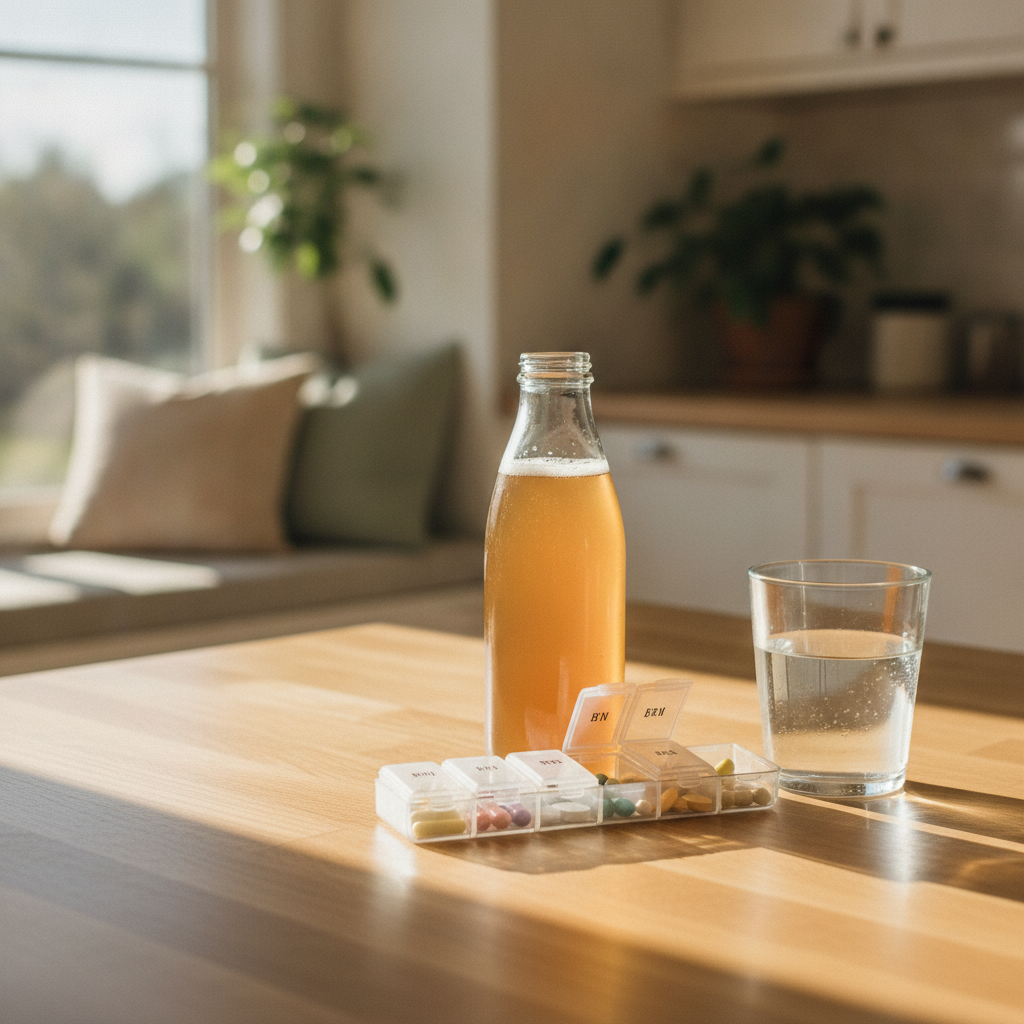
Kombucha is fermented, but it's far from the only fermented food or drink in a typical Singapore kitchen. From the tempeh in your mee goreng to the kimchi at the Korean restaurant down the road, fermentation has quietly shaped a lot of the food already on your table. Here's a practical look at what fermented foods are, which ones are easy to find in Singapore, and how kombucha fits into that wider picture.
What actually counts as a fermented food?
Fermentation is a process where bacteria, yeast, or mould break down sugars and starches in food, producing acids, gases, or alcohol along the way. It's one of the oldest food preservation methods, used long before refrigeration existed, and it's why so many traditional cuisines -- including many Southeast Asian ones -- have fermented staples.
Some fermented foods contain live cultures by the time they reach you (unpasteurised kimchi, raw kombucha, live-culture yoghurt); others are fermented during production but no longer contain live cultures once cooked or processed (soy sauce, tempeh once cooked, sourdough bread once baked). Both types can be part of a varied diet, but only the live-culture ones are typically discussed for their probiotic content.
Fermented foods you can find in Singapore
- Tempeh -- fermented soybean cake, a staple in many local and Indonesian dishes, sold fresh in most wet markets and supermarkets.
- Kimchi -- fermented cabbage with chilli and other seasonings, widely available given Singapore's large Korean food scene; look for unpasteurised versions if you want live cultures.
- Miso and soy sauce -- fermented soybean pastes and liquids used throughout Japanese and broader Asian cooking.
- Belacan and other fermented shrimp pastes -- a fermented staple in Malay and Peranakan cooking, used in small quantities as a flavour base.
- Yoghurt and kefir -- fermented dairy products with live cultures, sold in most supermarkets.
- Kombucha and jun tea -- fermented tea drinks, made by fermenting sweetened tea with a live bacteria-and-yeast culture (a SCOBY). Jun tea is typically made with green tea and honey rather than black tea and sugar.
Why people look for fermented foods in the first place
The main reason people seek out fermented foods with live cultures is gut health -- the idea that introducing more diverse bacteria to your diet may support digestion. Research on fermented foods and the gut microbiome is still developing, and effects can vary between products and individuals, but reviews such as the one published in Nutrients have looked specifically at fermented tea beverages like kombucha in this context.[1]
Beyond the health angle, fermented foods are also valued simply for the flavour fermentation creates -- the sourness in kimchi, the umami depth in miso, the tang in kombucha -- flavours that are difficult to replicate any other way.
Starting with fermented drinks if you're new to this
If solid fermented foods feel like a bigger jump (belacan isn't for everyone), fermented drinks like kombucha and jun tea are often a more approachable starting point -- they're sold ready to drink, come in flavours closer to what people already enjoy, and don't require changing how you cook. Aboocha brews both kombucha and jun tea in small batches in Singapore, with real fruit, herbs, and flowers rather than concentrates.
Frequently asked questions
What is the easiest fermented food to try first?
Yoghurt, kimchi, and fermented drinks like kombucha are generally the most approachable starting points, since they're widely available and closer in taste to foods most people already eat.
Are all fermented foods good for gut health?
Only fermented foods that still contain live cultures when eaten are generally discussed for probiotic content. Foods that are cooked, pasteurised, or baked after fermentation (like bread or most soy sauce) no longer contain live cultures.
Is kombucha a fermented food or drink?
Kombucha is a fermented drink, made by fermenting sweetened tea with a bacteria-and-yeast culture. It's grouped alongside other fermented drinks like kefir and jun tea.